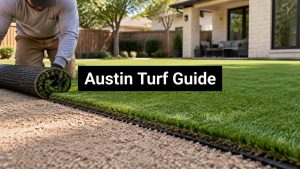

Saturday in Austin starts with a clean patio, the grill warming up, and a lawn that still looks as green as the day it was installed. Then real life hits. Somebody spills a drink near the seating area. A dry stretch leaves a film of dust across the fibers. The dog picks the same corner of the yard again, and by midweek that spot doesn't smell as fresh as it should.
That's the moment many homeowners realize artificial turf is low maintenance, not no maintenance.
A good synthetic lawn should be easy to live with. It should also hold its shape, drain properly, and stay pleasant for kids, pets, and guests. But that only happens when the cleaning method fits the turf, the stain, and the amount of use the lawn gets. The wrong astro turf cleaner, or the right cleaner used the wrong way, can leave residue, flatten fibers, lock odors into the backing, or create the kind of avoidable wear that shortens the life of the installation.
That's especially true with newer materials. Modern turf systems are built to perform well, but they still need correct care. If you clean gently and consistently, you preserve the look and feel you paid for. If you overdo it with harsh chemicals or underdo it with weak spot fixes, you usually end up spending more time and money later trying to undo the damage.
Your Beautiful Turf Deserves the Best Care
Austin yards take a beating in quiet ways. Wind pushes dust into the pile. Oak debris and pollen settle in. Backyard traffic builds up around the grill, pool edge, and dog run. None of that means your lawn is failing. It means your lawn is being used exactly the way it should be.
That's why cleaning matters. Turf doesn't need mowing or watering like natural grass, but it still collects debris, residue, and organic waste. If those materials sit too long, they don't just affect appearance. They start affecting drainage, odor, and the way the fibers stand up.
What homeowners usually notice first
It's not usually a synthetic lawn's obvious dirtiness that draws attention. Instead, smaller signs are noticed first:
- Flattened walk paths where the fibers no longer bounce back
- A dull surface after dust, pollen, and cookout traffic
- A recurring smell in the same pet area even after rinsing
- Debris buildup around edges, drains, or hardscape transitions
Those are maintenance signals, not failures.
A clean turf lawn should still feel easy to own. If upkeep starts turning into repeat odor control, heavy scrubbing, or guesswork with cleaning products, the routine needs to change.
Why proper care protects the investment
Artificial turf is built in layers. You're not only cleaning blades on the surface. You're also protecting infill movement, the drainage path below, and the backing that holds the system together. That's why a casual “just spray something on it” approach often causes problems.
What works best is a simple rule. Match the cleaner to the issue. Dust and light spills need one approach. Pet urine needs another. Old organic staining may need a stronger treatment, but only within safe limits.
Homeowners who understand that usually avoid the most expensive mistakes. They don't strip the fibers with aggressive chemicals. They don't mask urine odor and assume it's solved. And they don't wait until the lawn smells bad before giving it real attention.
Choosing the Right Astro Turf Cleaner
The best astro turf cleaner depends on what you're trying to remove. Dirt, drink spills, pet urine, and old organic grime don't respond the same way. The safest results come from using the mildest effective option first, then stepping up only when the problem calls for it.
Start with the gentlest option
For ordinary dust, surface grime, and fresh light spills, a mild soap-and-water mix is usually enough. That's your maintenance cleaner, not your heavy-duty fix. Use it when the lawn looks tired but doesn't have a persistent smell or visible staining.
This is also where good habits matter more than product hype. A quick rinse and light cleaning done regularly often prevents the need for stronger treatments later.
For homeowners comparing turf products and maintenance expectations, it helps to understand how construction affects cleaning needs. Different pile heights, face weights, and intended uses all change how a lawn responds to traffic and residue. This overview of artificial grass types is a useful reference before you buy or when you're trying to care for what you already have.
Where vinegar helps, and where it doesn't
Vinegar gets mentioned in almost every homeowner conversation about turf care. It can help with light surface freshening in some situations, but it doesn't solve chronic urine odor because it doesn't break down the uric acid crystals causing the problem.
That's a big distinction. A cleaner that changes the smell for a short time is not the same as a cleaner that removes the source. If you've ever rinsed a pet area, added a household mixture, and then noticed the odor return, that's usually why.
If you want a clear explanation of why common DIY ingredients behave the way they do, this breakdown of the baking soda and vinegar cleaner truth is worth reading. It helps separate cleaning chemistry from internet folklore.

Use enzyme cleaners for pet-related problems
Pet odor is where specialized cleaners earn their place. An enzyme-based product is designed to break down organic waste instead of covering it up. That's the right category for urine zones, recurring dog spots, and any area where rinsing alone isn't getting the job done.
Modern turf care has also changed with the material itself. AstroTurf, the pioneering brand, eliminated PFAS from its products in 2020, and the current standard recommends bi-weekly applications of approved cleaners in high-traffic areas to keep grime and odors from embedding in modern PFAS-free fibers, according to AstroTurf's PFAS-free synthetic turf guidance. That shift matters because old solvent-heavy cleaning habits aren't the standard for current turf systems.
What to avoid
What to avoid: Bleach, harsh solvents, and overly aggressive hot-water pressure cleaning can damage fibers, affect backing performance, and create warranty problems. If the product label isn't clearly compatible with synthetic turf, don't assume it's safe.
A few red flags show up again and again:
- Strong solvent cleaners can be too aggressive for modern synthetic materials.
- Undocumented household mixes create unpredictable results on backing, color, and infill.
- Very high pressure and heat can distort the pile or drive contamination deeper instead of flushing it out.
- Using the strongest product first often fixes the wrong problem while creating a new one.
The safest cleaner is the one that removes the issue without leaving residue or stressing the turf system. That's the standard to use every time.
A Simple Routine for a Flawless Lawn
Turf stays attractive when cleaning becomes routine instead of reaction. Most homeowners don't need a complicated schedule. They need a rhythm they can keep up with.
The routine that keeps problems small
A manageable maintenance schedule looks like this:
| Frequency | Task | Pro Tip |
|---|---|---|
| Daily | Remove solid pet waste and handle fresh spills | Don't grind debris into the fibers while cleaning. Lift first, then rinse. |
| Weekly | Rinse dust-prone or pet-use zones and brush high-traffic areas with a stiff non-metal broom | Brush against the grain to help fibers stand upright. |
| Monthly | Give the full lawn a closer cleaning, inspect edges, and clear drainage paths | Look for trapped debris near borders, hardscape lines, and low spots. |
| Seasonal | Check infill condition and overall appearance after weather shifts or heavy use periods | If the lawn feels compacted or looks uneven, it may need more than brushing. |
That schedule won't feel excessive once it becomes habit. Most tasks are short, and they stop buildup before it turns into odor or matting.
If you want a broader homeowner reference on upkeep basics, this guide on how to clean artificial turf covers the fundamentals well.
Why brushing matters more than people expect
Many homeowners rinse regularly and skip brushing. That's usually why one section starts looking worn before the rest of the yard.
Brushing does three useful things:
- Lifts matted blades in paths where people and pets repeat the same route
- Redistributes infill so the surface performs more evenly
- Loosens dry debris that a hose alone may not fully remove
Use a stiff, non-metal broom or turf brush. Metal bristles are too aggressive for synthetic grass and can damage the surface.
Brush the lawn before it looks flat, not after. Once fibers stay compressed for too long, restoring the look takes more work.
What homeowners should check every month
Monthly maintenance is where you catch the quiet problems. The yard may still look green from the patio, but a closer walk-through tells the full story.
Check these areas first:
- Pet corners and fence lines where repeat use concentrates waste.
- Patio and grill transitions where food, grease, and foot traffic collect.
- Drainage outlets and low spots where debris can block flow.
- Shaded edges where moisture lingers longer than expected.
If those spots stay clean and open, the whole lawn performs better. If they're ignored, you end up chasing smell, compaction, and surface wear that could've been prevented with a simple routine.
Conquering Pet Stains and Odors for Good
Pet urine is the issue that frustrates turf owners most because the smell doesn't always stay on the surface. Water can rinse away fresh residue, but persistent odor usually comes from what's left behind deeper in the system.
Why water alone doesn't solve the problem
Urine odor lingers because of uric acid crystals. They don't disappear with a hose-down. That's why the lawn can smell fine right after rinsing, then heat and humidity bring the odor back.
Enzyme-based cleaners are the right tool here because they break down the organic material causing the problem. Used correctly, they achieve a 95% success rate and need a 10 to 15 minute dwell time, followed by a rinse, according to US Turf San Diego's guide to cleaning fake grass from dog urine. The same source says high-use pet areas need daily rinsing and weekly enzymatic deep cleaning, and skipping that can lead to a 60% increase in ammonia buildup and permanent odor retention within 3 to 4 months.

A step-by-step approach that works
For typical pet spots, use this order:
- Remove solids first. Don't start rinsing until the area is clear.
- Rinse the spot thoroughly. This clears loose surface residue and prepares the fibers.
- Apply the enzyme cleaner generously. The goal is coverage into the affected zone, not just the tips of the blades.
- Let it dwell for 10 to 15 minutes. That contact time matters.
- Rinse again. You're flushing out broken-down material, not just wetting the area.
- Optional finishing step. A short baking soda application can help absorb remaining moisture before final cleanup, when appropriate to the product directions and turf type.
Many DIY efforts fail because people either under-apply the cleaner, shorten the dwell time, or stop after the first rinse.
When an older stain needs stronger treatment
Some pet areas have been neglected long enough that enzyme cleaner alone won't fully reset the space. In those cases, professionals may use diluted hydrogen peroxide for severe organic contamination. That treatment requires more care because concentration, dwell time, and rinsing all matter.
A carefully diluted 6 to 10% hydrogen peroxide solution can be used on heavy organic contamination with a 15 to 20 minute dwell time, followed by thorough rinsing to protect the fibers, according to Alliance Chemical's professional guide to cleaning artificial turf with hydrogen peroxide. Concentrations above 12% are prohibited in that guidance because they can cause irreversible color fading and fiber brittleness. The same source notes that keeping the blades wet during dwell time, along with mechanical agitation, correlates to a 90%+ reduction in bacterial load and odor molecules.
If a peroxide treatment dries on the turf before the dwell period is finished, the process is already off track. The surface has to stay wet for the chemistry to work as intended.
The mistake that causes bigger problems
The most common DIY error isn't choosing the wrong cleaner. It's failing to rinse thoroughly after treatment.
Residual cleaner, loosened contamination, and trapped soap can settle into the drainage layer. That leaves the surface slippery, encourages infill compaction, and turns one odor problem into a broader system problem. This is why stubborn pet zones often need a more deliberate flush than homeowners expect.
For pet owners weighing turf care decisions, this explainer on whether dogs can pee on artificial turf is a practical companion read. It addresses the practical side of pet use without pretending the answer is “just spray it off and forget it.”
If you're dealing with a mixed mess that includes indoor and outdoor pet accidents, product-selection advice from carpet care can still be useful. Pet Magasin's stain remover guide is one of the better examples because it helps you think in terms of stain type and odor source, not just scent cover-up.
The Modern Yard Landscapes Deep Cleaning Process
A lot of Austin homeowners call after trying the usual fix. They rinsed the turf, sprayed a cleaner, maybe scrubbed the obvious spot, and the lawn still smells off or feels packed down underfoot. At that point, the issue usually sits below the surface, and the cleaning method matters as much as the product.
Deep cleaning is about protecting the whole turf system. The face fibers, infill, backing, and drainage layer all have to be treated correctly. Use too much pressure, the wrong chemistry, or a weak rinse, and you can shorten the life of the turf or create problems that are harder and more expensive to correct later.
What a real deep clean includes
The process starts with dry debris removal and fiber lifting. A commercial power broom pulls up matted blades, opens compressed traffic areas, and brings buried debris to the surface where it can be removed. If that step gets skipped, cleaning solution often stays on top while the contamination remains down in the infill.
After grooming, the turf gets treated in stages, not with a quick blanket spray. High-use paths, shaded corners, and pet zones need a different level of attention because buildup is rarely uniform across the yard. The goal is even coverage, controlled dwell time, and enough agitation to break contamination loose without being rough on the fibers or backing.

Rinsing is where deep cleaning either works or falls short.
A proper rinse has to carry residue, loosened organics, and cleaner out through the drainage system instead of pushing them deeper into the turf base. That is one reason many manufacturer care guidelines caution against aggressive DIY methods and unapproved chemicals. A turf warranty can depend on using the right products, dilution rates, and tools for the material that was installed.
Why professionals handle stubborn organic buildup differently
Stubborn organic buildup needs more than surface treatment. The visible stain is only part of the problem. The bigger risk is what remains after an incomplete cleaning cycle.
That is why severe odor and stain zones are handled with measured dilution, controlled contact time, mechanical agitation, and a full flush of the affected area. In practice, that means treating the contamination in the fibers and infill while also protecting glue seams, backing integrity, and drainage performance. If the method is too aggressive, fibers can flatten, infill can shift unevenly, and the backing can hold residue that keeps producing odor.
Homeowners can absolutely handle regular upkeep. Fresh spills, light dust, and routine brushing are good DIY jobs. Restoration work is different because the margin for error is smaller, especially on older turf, pet-heavy yards, and installations with compacted infill.
The trade-off between DIY and professional service
DIY cleaning makes sense when the lawn still drains well, smells normal after rinsing, and the fibers recover with brushing. A restoration-level clean makes more sense when the turf needs correction, not just maintenance.
Professional service is usually the better call when you notice:
- Fibers staying flat after brushing or light grooming
- Odor returning fast after a surface rinse
- Compacted or gritty areas that feel different from the rest of the lawn
- Set-in staining that keeps surfacing after spot treatment
- Drainage that has slowed down in pet zones or traffic lanes
A proper deep clean finishes with final grooming and infill adjustment so the turf looks right and performs the way it should. If you want that done without guessing which products or methods are safe for your install, our professional turf cleaning services in Austin, TX are built for exactly that kind of reset.
When to Call the Professionals for Turf Cleaning
Some turf issues are routine. Others are warning signs that the lawn needs more than household cleanup.
Signs that it's time to stop experimenting
If any of these sound familiar, it's probably time to bring in help:
- Persistent odor despite DIY cleaning means the source likely sits deeper than the surface.
- Heavily matted fibers usually point to compaction that a simple broom won't fully correct.
- Post-construction dust and debris can settle into the turf and backing in ways a light rinse won't undo.
- Visible moss, weeds, or repeat buildup suggests the lawn needs a more complete reset.
- A big event is coming up and you want the yard to look, feel, and smell right the first time.

What professional service typically costs
Cost matters, and it's better to be clear about it than vague. Professional artificial turf cleaning is typically priced at $0.10 to $0.25 per square foot, with most homeowners paying $200 to $350 for a standard service, according to Turfresh's breakdown of artificial turf cleaning cost. The same source notes that pet odor treatments often fall at the higher end, and homeowners with large dogs are advised to schedule a professional deep clean every three to six months to prevent permanent biofilm development.
That doesn't mean every lawn needs professional cleaning on a strict calendar. It means some lawns, especially pet-heavy yards, save money by avoiding the cycle of repeated DIY treatments that never fully solve the issue.
Trust comes from clarity, not pressure
The best service experience starts before any cleaner hits the turf. Clear communication about date, time, scope, and price before the first visit is the most controllable factor in whether a new customer commits long term, according to RealGreen's guidance on impressing lawn care clients. That's exactly how turf cleaning should be handled too.
If you're comparing options locally, reviewing a dedicated page for turf cleaning services in Austin, TX can help you understand what a serious service should include before you book.
A good contractor should make it easy to ask questions, understand the plan, and know what result is realistic. If the answer to every problem is “just spray this on it,” keep looking.
If your lawn smells off, looks matted, or just isn't responding to the usual rinse-and-brush routine, Modern Yard Landscapes can help you sort out what's worth doing yourself and what's better handled professionally. Reach out for a clear, no-obligation quote and straightforward advice on restoring your turf without risking the investment you made in it.