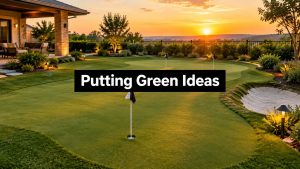

Backyard putting greens usually cost $15 to $40 per square foot for a complete installation, and a widely cited U.S. benchmark puts total project cost at $3,500 to $9,000, with an average installed price of about $4,300. That's a wide range, and for good reason. The final number depends on what's happening under the turf, how the green is shaped, how easy your yard is to work in, and whether you want a simple practice surface or something that feels like a short-game feature integrated into the property.
If you're reading this, you're probably in the same place most Austin homeowners start. You've got the idea in your head already. A clean green near the patio. A few cups. Maybe a little fringe. Maybe a place to work on five-footers after dinner instead of driving to the course.
The question isn't whether a backyard green would be fun. It's whether it makes sense for your yard and your budget.
That's where most online pricing advice gets fuzzy. You'll see ranges, but not much explanation of why one quote is manageable and another feels far higher than expected. A good installer's job isn't just laying turf. It's helping you understand the trade-offs before you spend money.
Your Dream Green From Fantasy to Financial Plan
A lot of Austin homeowners start the same way. They walk out to the patio, look at an underused corner of the yard, and picture a clean putting surface with a couple of cups, a little fringe, and a spot to practice without leaving home.

That idea is usually the easy part. The harder part is turning it into a real plan with a price that makes sense for your property.
The biggest mistake I see is treating a putting green like a simple turf purchase. It is a built surface. If the base is wrong, the grade is off, or water has nowhere to go, the green may still look good on install day and disappoint you a year later. A trustworthy quote should show you what is being built below the turf, how the shape will affect play, and which details are increasing the cost.
That matters even more in Austin, where two yards on the same street can price very differently. One may have flat access and clean soil. The next may need hand-carried material, root work around mature trees, drainage correction, or edge detailing to tie into existing hardscape and planting beds.
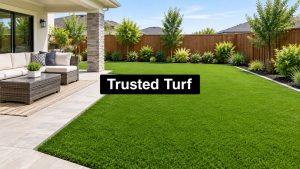
A putting green also works better when it belongs to the yard as a whole. In many projects, the best result comes when it helps create a functional outdoor extension instead of feeling like a random patch of synthetic turf set off by itself.
Why trust gets built during the quote
Homeowners rarely object to paying for real work. They object to vague numbers.
A good quote explains where the money goes and what can change the total:
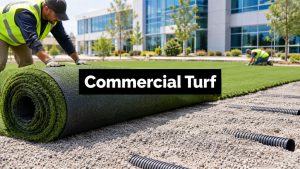
- Site preparation: excavation, grading, compacted base, drainage corrections, edging, and haul-off
- Putting surface construction: turf selection, seam work, cup placement, fringe, contours, and speed expectations
- Yard-specific conditions: limited access, rocky soil, tree roots, irrigation lines, slope, and retaining requirements
- Optional upgrades: chipping areas, bunker styling, tighter finish detailing, lighting, or surrounding patio integration
A low number on paper often means someone left out the work that keeps the green stable, drains properly, and putts true.
That is why quote ranges can feel confusing until someone walks the yard with you and explains the trade-offs. At Modern Yard, that conversation is where homeowners usually get clarity. You can also review backyard putting green designs and installation options before pricing discussions, because once you know the level of finish and playability you want, the estimate becomes much more accurate.
The Price on the Scorecard Typical Cost Ranges
A homeowner in Austin might call and ask a simple question. “What does a backyard putting green cost?” The honest answer starts with a range, but the useful answer comes from explaining why one yard lands near the lower end and another does not.

What most homeowners pay
For a professionally installed backyard putting green, homeowners usually see pricing discussed in two ways. Cost per square foot, and total project investment.
As noted earlier, national pricing ranges can be broad. In real projects, a simple practice green usually stays on the lower end of the range, while a custom green with stronger contours, cleaner detailing, and more site work climbs quickly.
In Austin, I tell homeowners to treat any early number as a planning range, not a final quote. A small, clean rectangle in an accessible yard is one job. A green tucked behind a pool, cut into slope, and blended into the rest of the yard design is a very different job, even if the square footage looks similar on paper.
Why local quotes vary so much
Austin properties rarely behave the same way from one block to the next.
Flat lots with wide access are usually more efficient to build. Tight side yards, limestone, roots, irrigation reroutes, drainage corrections, and elevation changes all add labor before the turf crew even starts shaping the green. That is why two neighbors can ask for “about a 300 square foot green” and get very different numbers.
The biggest pricing swings usually come from site conditions and finish level, not from turf alone. Homeowners are often surprised by that.
A useful way to read a quote is this:
| Budget lens | What it usually means |
|---|---|
| Lower end of the range | Smaller practice green, simple shape, easier access, light contouring |
| Middle of the range | Moderate size, sharper finish details, some shaping, integrated fringe or transitions |
| Upper end of the range | More custom design, heavier grading or drainage work, added short-game features, premium garden or yard design integration |
A wide price gap between two quotes usually points to scope differences. One contractor may be carrying proper excavation depth, base compaction, drainage work, and detailed shaping. Another may be pricing a thinner build with fewer finish details. On day one, both proposals can look close enough. A year later, they often do not perform the same way.
For homeowners comparing broader turf pricing before narrowing the plan to golf performance, this guide to artificial turf installation cost factors helps explain where the money usually goes.
We prefer to show homeowners what is included, what is optional, and what is driving the number. That makes the quote process far easier to trust, and it leads to a price that fits the yard instead of a generic national average.
Whats Behind the Price A Factor by Factor Breakdown
A putting green quote only makes sense when you know what's inside it. Such knowledge distinguishes experienced installers from commodity turf crews. The visible surface is the part you admire. The hidden work is the part you pay for over time if it's done poorly.
Size changes the unit cost
Bigger greens often cost less per square foot than small ones. That sounds backward until you see how much fixed labor goes into layout, excavation, hauling, compaction, edging, cups, seams, and cleanup.
One industry guide places 2,000+ square foot greens at roughly $20 to $25 per square foot, 400 to 2,000 square feet at $25 to $30 per square foot, and under 400 square feet at $30 to $35 per square foot, according to Tour Greens' cost breakdown.
That's why a compact green can feel “expensive for its size.” It still needs a proper foundation.
Base preparation decides whether the green plays well
The biggest insider truth in this business is simple. Homeowners tend to compare turf samples, but performance comes from the base.
If the excavation is shallow, the compaction is inconsistent, or water has nowhere to go, the surface won't stay true. You may not notice every flaw on day one. You'll notice them later when low spots form, seams shift, edges soften, or a rainstorm leaves parts of the green slow and spongy.
The foundation usually includes:
- Excavation: removing existing sod, soil, and unstable material
- Base build-up: installing compactable aggregate in controlled lifts
- Fine grading: shaping the sub-surface for drainage and intended break
- Compaction: creating a stable, consistent platform
- Edge restraint: holding the geometry over time
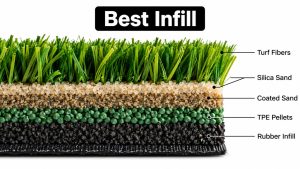
If you want a deeper understanding of what sits under synthetic turf, this guide to base materials for turf installation is worth reviewing before you compare proposals.
Practical rule: If a contractor can't explain the base in plain language, they probably don't build enough greens to price one accurately.
Design complexity moves the quote more than most people expect
A flat oval with one cup is one thing. A green with multiple pinnable locations, a collar, subtle fall lines, and realistic approach angles is another.
The labor difference shows up in shaping and finish detail. Clean contouring takes planning. It also takes restraint. Too much break and the surface becomes gimmicky. Too little and it feels like a carpeted patch with a cup cut into it.
The design side of the quote usually expands when you add:
- Multiple hole placements
- Fringe or rough transitions
- Chipping lanes
- Tiered elevations
- Bunker styling or decorative edging
- Tight tie-ins to patios, pavers, or planting beds
Some features are worth it. Some aren't.
What works and what doesn't
Here's where homeowners save money by making smart choices instead of just cutting scope blindly.
What tends to work well
- A modest footprint with intentional shaping: better practice value than a larger but flat layout
- A defined fringe around the green: looks finished and improves the transition visually
- Fewer cups in better locations: easier to maintain a clean design
- A layout that fits natural drainage patterns: cheaper and more durable than forcing the yard to do something unnatural
What often disappoints
- Overdesigned contours: dramatic on paper, awkward in play
- Trying to squeeze a green into a bad drainage pocket: the quote may look lower than the future repair bill
- Ultra-cheap turf over a rushed base: it rarely stays attractive or consistent
- Ignoring access during planning: crews need room to move material, tools, and waste efficiently
A good quote should tell you where to spend and where to simplify. That's not upselling. That's design judgment.
DIY vs Professional Installation A True Cost Comparison
A homeowner in Austin will often ask for two numbers right away. What does it cost if I build it myself, and what does it cost if I hire a crew?
That is a fair question, but the actual comparison is not just installation price. It is finished performance, how long the green stays true, and how much risk sits on your side of the table.

DIY usually saves money upfront
For a small, simple practice area, DIY can reduce the initial bill. That is the best-case version. Flat yard, easy access, basic shape, no drainage issues, and expectations centered on casual practice rather than a refined putting experience.
The quote process often makes DIY look even cheaper because homeowners compare material pricing against a professional proposal without accounting for the full build sequence. Excavation, base depth, compaction, cup installation, waste haul-off, tool rentals, edge restraint, seam work, and cleanup all carry real cost. In Austin, clay soil and sudden rain can expose shortcuts fast.
Where DIY projects usually go sideways
The turf is rarely the part that fails first. The base does.
If the subgrade is soft, the stone base is too shallow, or compaction is uneven, you get low spots, edge movement, and inconsistent roll. If water has nowhere to go, the surface may still look fine on day one and disappoint after the first heavy storm. By the time a homeowner calls us to repair a DIY green, the fix often means pulling turf back, rebuilding the base, and reinstalling sections that were already finished once.
That is why the cheapest quote can become the most expensive route.
Hiring a pro makes more financial sense when the yard has complications
Professional installation tends to pay off when the project includes any of the following:
- Drainage concerns, especially low areas, runoff paths, or heavy clay soil
- Grade changes that require shaping the base so the green plays correctly
- Tight curves, collars, or fringe transitions that need clean cuts and stable edges
- Cup placement and contour work where playability matters more than just appearance
- Difficult access that slows material movement and increases labor time
- A finished look near patios, pools, or other built features
These are the details that separate a practice mat in the yard from a green that feels built for the property.
What a professional quote is really covering
A good quote should explain where the money is going. Homeowners deserve that level of clarity.
Part of the price is labor, but a large part is judgment. How much to excavate. What base material fits the soil. Where water will move during a storm. How aggressive the contours should be so the ball breaks naturally instead of unpredictably. A seasoned crew is not only installing turf. They are reducing the odds of settlement, drainage trouble, and expensive rework.
If you want to see the construction sequence before deciding, our guide on how backyard putting greens are built walks through the process in plain terms.
Modern Yard provides custom putting green installation in Austin for homeowners who want that kind of site-specific planning. The smartest next step is not guessing from average numbers. It is getting a quote built around your yard, your access, your drainage conditions, and the kind of green you want to use.
Sample Budgets Visualizing Your Backyard Green
A homeowner in Austin might call asking for a "small putting green," and two projects with that label can end up thousands of dollars apart. One yard is flat, open, and easy to reach. Another needs hand-carried material through a side gate, drainage correction, and edge work around an existing patio. That is why sample budgets help with planning, but they should never be mistaken for a real quote.
The better way to use budget examples is to match them to the kind of green you want to live with and use.
Sample Austin Putting Green Budgets 2026 Estimates
| Project Type | Size (Approx.) | Key Features | Estimated Cost Range |
|---|---|---|---|
| Compact Practice Pad | Around 200 sq ft | Simple shape, one or two cups, light contouring, basic fringe transition | Often starts in the lower project range, with final pricing depending heavily on access, excavation needs, and edge detailing |
| Family Fun Zone | Around 450 sq ft | Softer movement in the surface, several putting angles, more finished transitions into the yard | Commonly lands in the middle range for residential greens because the layout is larger and the finish work is more involved |
| Large Custom Showcase | 1,500 sq ft and up | Multiple hole locations, more dramatic shaping, integrated fringe and short-game feel | Usually carries a much wider range because design complexity, shaping, drainage planning, and site logistics start to drive the budget as much as size |
What these budgets look like in real life
A compact practice pad is usually the most efficient build. It suits homeowners who want reliable reps, a clean look, and a green that fits into an unused side yard or a smaller backyard corner. If the site is accessible and the grades are cooperative, this type of project often delivers the best cost-to-use ratio.
A family fun zone is where many backyards start to feel intentional rather than tucked in. There is enough room for different putts, enough presence to read as a natural part of the surroundings, and enough flexibility that guests and kids will use it too. This is also the point where details start adding up. More cups, more fringe, more transitions, and more shaping all affect labor.
Large custom showcase greens are a different category. At that scale, homeowners are usually asking for a feature that ties into the rest of the yard, not just a place to practice. The design has to read well from the house, play well underfoot, and connect cleanly to patios, pools, or surrounding lawn areas. A big green with weak shaping or awkward edges looks expensive in the wrong way.
One insider point that helps during budgeting. Square footage matters, but it is not the whole story. A plain 400 square foot green can cost less than a smaller green built into a difficult yard with tight access, retaining needs, or heavy contouring. That is why a low online estimate often changes after a site visit.
A sample budget gives you a planning range. A real quote should show how your yard, your design choices, and your installation conditions affect the number.
At Modern Yard, we use examples like these to help homeowners narrow the conversation before we price anything. Then we measure the yard, study access, and talk through how the green will be used. That is how you get a number you can trust.
Beyond Installation Understanding Lifetime Value
A backyard putting green isn't just an install-day purchase. It's a long-term surface that should still look clean and play consistently after years of sun, rain, foot traffic, and regular use.
That's why the cheapest quote can be the most expensive version of the project. If the base is weak or the layout ignores drainage, you don't just lose appearance. You lose function.
What homeowners actually value over time
A well-built synthetic green is attractive because upkeep stays light. You're usually dealing with basic care such as brushing, removing debris, and keeping the surface clean. You're not trying to maintain a live putting surface in Texas heat.
The bigger value is consistency. Homeowners want the ball to roll the same way next month that it did the week after install. They want edges to stay crisp and transitions to remain intentional.
Cost matters less when the design is right
A smart project usually has three traits:
- It fits the yard: the green works with grade and drainage instead of fighting them
- It fits the homeowner: serious practice surface, casual family feature, or outdoor focal point
- It fits the maintenance tolerance: no unrealistic expectations, no delicate details that become a headache
That's how you avoid buyer's remorse. Not by finding the lowest number, but by making sure the project matches the way you'll use it.
Your Next Step Get an Accurate Quote for Your Yard
Before you hire anyone, ask better questions. Most homeowners ask about turf brand and price first. Those matter, but they shouldn't be the first filter.
They should ask how the contractor builds the green.
Questions worth asking any installer
- How will you prepare the base: What gets removed, what gets added, and how is it compacted?
- How do you handle drainage: Where does water go during a heavy Austin rain?
- How do you create contours: Are they shaped in the base, the pad, the turf system, or some mix of all three?
- What does the quote include: Excavation, haul-off, edging, cups, fringe, cleanup?
- What site conditions can change price: Access, roots, rock, irrigation lines, slope, retaining needs?
- How do seams and edges get finished: What keeps the green looking tight over time?
If a contractor answers those clearly, you're dealing with someone who understands the full build. If the answers stay vague, the quote usually is too.

What an accurate quote should feel like
It should feel specific. Not rushed. Not generic. Not pulled from a square-foot guess without seeing the yard.
A real quote should account for where the green sits, how it drains, how people will move around it, what finish level you want, and which details are worth paying for. That's especially true in Austin, where soil, slope, trees, and access can change a straightforward install into a more technical one.
If you've been wondering how much do backyard putting greens cost, the honest answer is this. There is a reliable national range, but your real number comes from your property, your priorities, and the quality of the build plan.
If you want a quote that explains the why behind the price, contact Modern Yard Landscapes for a no-obligation consultation in the Austin area. A site visit is the fastest way to turn rough national ranges into a practical plan for your yard, your budget, and the kind of green you'll enjoy using.