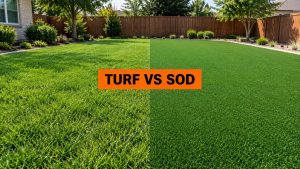

You're probably dealing with the same cycle most Austin property managers face. The entry looks tired by midsummer. Turf near the front doors gets chewed up by foot traffic. Irrigation keeps running because nobody wants brown patches visible from the street. Then a storm hits, runoff pools in the wrong places, and suddenly “landscaping” turns into a maintenance problem, a tenant complaint, and a budget problem at the same time.
That cycle isn't a landscaping issue. It's an asset management issue.
Commercial property landscaping should support leasing, protect the site, and lower avoidable operating headaches. If it's doing the opposite, the design is wrong, the materials are wrong, the drainage is wrong, or the maintenance plan is wrong. Usually, it's a mix of all four.
Stop Draining Your Budget on Landscaping Headaches
A property manager calls because the grounds “just need cleanup.” What that usually means is something more expensive. The lawn at the monument sign is thin. Seasonal color at the main entrance burned out fast. Crews keep revisiting the same bare spots. Water use stays high, but the property still looks inconsistent.
That's not bad luck. That's a site that was set up to consume budget.
Commercial landscaping is too large an operating category to treat like a cosmetic afterthought. Grand View Research notes that the U.S. landscaping services industry reached $176.7 billion in 2026 in its landscaping services market report. If you manage office, retail, multifamily, or mixed-use property, that number matters because it reflects the size and seriousness of the function. Grounds management isn't fringe work. It's part of how a property performs.
The expensive pattern most managers know well
You approve routine maintenance. Then you pay again for corrective work. Then you pay again when the same area fails.
Common examples look like this:
- Frontage that never stabilizes: High-visibility areas get overused and underplanned, so crews keep patching appearance problems instead of fixing the cause.
- Water bills doing all the work: Irrigation covers for poor plant selection, poor grading, or too much natural turf in punishing sun.
- Seasonal replacements that feel mandatory: Beds are chosen for looks at install, not durability through heat, traffic, and service cycles.
- Vendor risk you didn't price in: If a contractor damages paving, irrigation, or a common area, insurance matters. Property teams should verify coverage and understand basics like liability coverage for contractors before they sign anything.
A landscape that needs constant rescue isn't an amenity. It's a recurring failure with a nice invoice.
The better way to think about it
Treat commercial property landscaping like any other asset system. Ask what it costs to operate, what it protects, and what it contributes to tenant perception.
That shift changes your decisions fast. You stop asking, “What's the cheapest install?” and start asking better questions:
- Where does the property need appearance to hold year-round?
- Which areas justify irrigation and labor?
- What materials survive Austin heat and traffic without constant intervention?
- What hidden site issues are driving repeat expense?
If you want dependable grounds, stop chasing short-term beauty fixes. Build a grounds design that fits the property, the climate, and the budget you have.
From Curb Appeal to Strategic Asset Planning
The biggest mistake in commercial property landscaping happens before the first plant goes in. Too many projects start with a palette board. They should start with a site read.
A successful commercial grounds design starts with site analysis of topography and soil, then zones the property for service frequency. High-traffic areas like entryways need different treatment because they affect tenant perception and customer experience, as outlined in Minick Materials' commercial landscape design guide.
Start with the site, not the plant list
If you skip the site analysis, you're guessing. And guesses get expensive on commercial property.
You need clear answers on:
- Topography: Where does water move during a heavy rain, and where does it sit?
- Soil conditions: Does the site drain, compact, crust over, or stay unstable?
- Microclimate: Which zones bake in reflected heat, and which get partial shade or wind exposure?
- Existing structures: Curbs, sidewalks, utilities, retaining edges, and foundations all shape what will work.
Those factors decide more than survival. They determine how much labor the site will demand later.
Zone the property by business value
Not every square foot deserves the same maintenance standard. Property managers waste money when they spread labor evenly across areas with totally different visibility and use.
Break the site into zones:
- Arrival zones: Main entries, monument signage, leasing paths, customer-facing edges. These areas carry the visual load of the whole property.
- Circulation zones: Walkways, building perimeters, and shared-use areas that must stay clean, safe, and consistent.
- Utility and low-visibility zones: Rear setbacks, service corridors, side yards, and areas where function matters more than ornament.
Planning tools are useful. If your team is reviewing concepts early, organized design plans for landscapers can help clarify layout priorities before installation choices lock you into years of maintenance.
Practical rule: Spend your precision budget where people form opinions. Simplify everywhere else.
Define the job your landscape needs to do
A commercial site doesn't need “nice landscaping.” It needs landscaping with a job description.
For one property, that might mean a polished frontage that supports leasing. For another, it might mean durable amenity space, cleaner drainage paths, or reduced irrigation dependence in non-critical areas. The right design brief usually includes three goals only. More than that, and the project gets muddy.
Use this filter before approving any concept:
| Question | Why it matters |
|---|---|
| What area shapes first impressions? | That's where visual consistency matters most |
| What area creates the most upkeep? | That's where redesign beats repeated maintenance |
| What area creates liability or drainage concerns? | That's where site prep must lead the plan |
Good planning isn't decorative. It's operational. If your site plan doesn't reflect traffic, heat, drainage, and maintenance frequency, it's not a strategy. It's a rendering.
Choosing Your Materials for the Austin Climate
Austin punishes weak material choices. Long heat stretches, water pressure, hard rain events, and heavy foot traffic expose every shortcut fast. A material that looks fine on install day can become a budget leak within one season of real use.
That's why material selection should be ruthless. If a surface or planting scheme can't handle heat, use intensity, and uneven weather without constant intervention, it doesn't belong on a commercial site.
In water-stressed markets like Austin, owners are shifting toward grounds designs that survive heat and conserve water. The Minnesota Nursery & Landscape Association notes in its commercial landscaping strategies article that “more green” isn't always best, and that resilient materials like artificial turf can improve reliability and reduce long-term operating costs in high-traffic commercial settings.

What works better in Austin
Austin sites usually perform better when you reduce dependency on thirsty, fragile elements and increase the share of durable surfaces and drought-tolerant planting.
That often means choosing:
- Drought-tolerant plants over water-intensive ornamental beds in broad exposure zones
- Permeable paving where runoff management matters
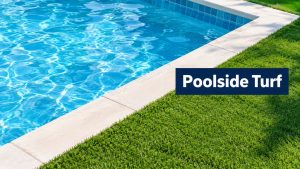
- Modern artificial turf in high-traffic visual zones where natural grass repeatedly fails
- Simpler palettes instead of overdesigned beds that need constant replacement and pruning
The goal isn't to strip the grounds down. The goal is to remove parts that create permanent maintenance drag.
Natural grass vs modern artificial turf
For commercial properties, natural grass and modern artificial turf solve different problems. Natural grass can work in the right site conditions, but it usually asks for more water, more labor, and more recovery time than managers want to keep paying for.
| Metric | Natural Grass | Modern Artificial Turf |
|---|---|---|
| Appearance consistency | Varies by season, traffic, irrigation, and shade | Stays visually consistent year-round |
| Water demand | Ongoing irrigation need | No routine irrigation for appearance |
| Wear tolerance | Can thin, rut, and turn patchy in high-use areas | Handles repeated foot traffic more reliably |
| Recovery after stress | Requires regrowth and repair | Doesn't need regrowth cycles |
| Maintenance profile | Mowing, edging, fertilization, weed control, irrigation checks | Cleaning, grooming, and periodic inspection |
| Best commercial use | Lower-traffic areas with strong irrigation and maintenance support | Entries, courtyards, dog relief zones, play areas, and high-visibility wear zones |
If you're comparing product categories, this guide to artificial grass types is useful for understanding how pile height, face weight, and intended use affect performance.
Don't buy “fake grass.” Buy the right system.
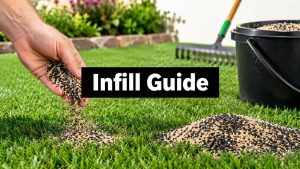
Property managers get into trouble when they treat turf like a commodity. Modern commercial turf isn't just green carpet. The system includes the turf face, the backing, edge restraint, infill choice, sub-base, and drainage strategy.
Ask direct questions before approving it:
- Will the fibers hold up under UV exposure?
- Is the product built for commercial foot traffic, not just residential display?
- What infill is being specified for heat, stability, and use type?
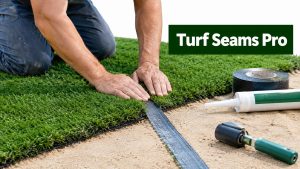
- How will seams, edges, and transitions be handled near pavement and beds?
A cheap turf product installed over a weak base is just a delayed replacement project.
My recommendation for Austin properties
Use natural grass only where the site can support it and where the use case justifies the ongoing maintenance. In the zones that absorb the most foot traffic and carry the most visual importance, modern artificial turf often makes more sense.
That's especially true for office entries, retail edges, common courtyards, and shared-use spaces where dead patches and muddy wear zones hurt the property more than the upfront savings ever helped it.
Site Prep and Drainage The Unseen Foundation
Most grounds failures start below the surface. The grass gets blamed. The plants get blamed. The installer gets blamed last. But the actual issue is often site prep that was rushed or value-engineered into weakness.
Commercial property landscaping works like a building. If the base is unstable, the finish won't save it.

What proper site prep actually includes
Good prep is not just “clearing the area.” It means shaping the site so the finished outdoor area can drain, stay stable, and carry use without shifting.
That usually includes:
- Excavation to the right depth: Enough material has to come out to allow a proper base, not just enough to make the new surface sit flush.
- Base selection: The sub-base has to match the application. Traffic zones, turf, pavers, and bed edges don't all need the same build.
- Compaction in lifts: Dumping in base material and smoothing it out isn't compaction. If the base isn't compacted correctly, settling follows.
- Final grading: Water should move intentionally, not hopefully.
Drainage is where cheap installs unravel
Austin doesn't just bring heat. It also brings heavy rain events that expose every drainage shortcut. Water that ponds near entrances, hardscape edges, or foundations does more than look bad. It shortens material life and creates avoidable repair costs.
French drains, drainage tile, catch points, and corrected slope matter. If water has no planned route, it creates one.
For property teams evaluating corrective work, these drainage solutions for yards show the kinds of systems commonly used to move water away from problem zones.
Don't judge a bid by the finish layer alone. Ask what's underneath, how deep it goes, and where the water goes next.
Red flags that tell you prep was skipped
You don't need to be a contractor to spot the warning signs. Watch for these:
- Sinking edges: Turf, pavers, or borders that drop near the perimeter
- Recurring puddles: Water sitting in the same place after routine rain
- Loose transitions: Wobble where softscape meets concrete or hardscape
- Mud bleed: Soil washing onto paved surfaces from bed failure or poor containment
This is the part of the project where one disciplined contractor usually saves the client from years of nuisance repairs. It's also where one rushed crew creates a property manager's recurring headache list.
Calculating Your Landscape's Total Cost of Ownership
The install quote is the wrong number to focus on by itself. It tells you what the project costs to start, not what the property will keep paying to live with it.
For commercial property outdoor areas, the smarter financial view is total cost of ownership. That means looking beyond installation and tracking the operating burden attached to each design choice over the next few years. An outdoor arrangement that looks inexpensive upfront can become the most expensive option on the site if it needs constant irrigation, repeated replacements, and frequent corrective labor.
The costs most managers undercount
A lot of landscaping proposals hide the full spend inside recurring line items. They don't look large in isolation, which is why they slip through budgeting.
Typical hidden costs include:
- Water use: Especially where natural turf and seasonal beds are carrying too much visual responsibility
- Mowing and edging labor: Repetitive, predictable, and permanent
- Weed management: Not just treatment, but the labor required to keep visible areas clean
- Fertilization and turf recovery: Necessary when natural grass has to stay presentable under stress
- Mulch refreshes and bed touch-ups: Easy to approve, easy to underestimate
- Drainage corrections and hardscape cleanup: Usually reactive, usually more expensive because they're late
Beverly Companies makes a useful point in its commercial landscaping revitalization guidance: property managers should budget for hidden lifecycle costs, not just installation and monthly maintenance, because heat, irrigation, pruning, sidewalk repair, mulch refreshes, and drainage fixes change the actual cost over time.
What a practical TCO review should compare
You don't need a complicated model. You need a disciplined one.
Review each major grounds zone and compare:
| Cost category | Natural turf and high-input beds | Durable low-input design |
|---|---|---|
| Upfront spend | Often lower | Often higher |
| Water dependence | Ongoing | Lower |
| Labor frequency | Higher | Lower |
| Seasonal correction work | Common | Reduced |
| Budget predictability | Less stable | More stable |
If you're evaluating whether a turf conversion changes that long-range math, this breakdown of the cost of artificial turf is a useful starting point.
Maintenance still matters if you keep live landscape
However, many managers make the wrong comparison. A low-input outdoor space is not a no-thought outdoor space. If you keep natural turf and planting beds, the maintenance plan has to be technically sound or you'll keep paying for decline.
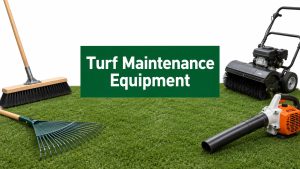
As noted in this commercial maintenance checklist, a smart program combines pre-emergent weed control, aeration, and mulch management to reduce nutrient competition and moisture loss. Those practices help lower irrigation demand and operating costs.
Cheap installation is often just prepaid maintenance debt.
My advice on budgeting
Stop approving grounds work as disconnected tasks. Front bed refresh, irrigation repair, turf patching, and drainage correction are often symptoms of one underlying design problem. Roll them up and evaluate them together.
Then separate your grounds into three buckets:
- Keep and maintain if the area is stable and justified
- Redesign and simplify if the area constantly absorbs labor
- Convert materials if the current system is mismatched to climate or traffic
That's how you get control of spend. Not by squeezing vendors harder, but by removing the reasons the site keeps needing rescue.
Maximizing ROI with Smart Landscaping Choices
Once the property's exterior stops draining budget, it can start producing return. That return shows up in a few places at once. Better presentation, lower friction in daily operations, and stronger positioning when tenants, visitors, brokers, or buyers evaluate the property.
This is not abstract. Professional landscaping can increase commercial property value by as much as 15%, and 92% of commercial real estate agents recommend it as part of value-enhancing property presentation, according to WifiTalents' commercial landscaping industry statistics.

Where the return actually shows up
The payoff from smart commercial property landscaping usually appears in four practical ways:
- Stronger first impression: Clean entries and durable year-round appearance support leasing and client-facing credibility.
- Less visible deterioration: Patchy turf, dead beds, and muddy edges create the impression of deferred maintenance elsewhere.
- More predictable operations: Lower-input zones reduce emergency fixes and recurring appearance problems.
- Better resale and repositioning story: Buyers and brokers notice when exterior systems look disciplined instead of patched together.
A retail center with clean, stable frontage doesn't need to explain away bare spots. An office property with durable outdoor common areas gives tenants something usable without turning the grounds into a weekly repair project.
Landscaping should support the full asset strategy
Property value isn't only about landscaping, but landscaping can reinforce the rest of the plan. If you're already looking for ways to improve financial performance, tax strategy matters too. Owners reviewing assessments may also want to explore how to maximize property tax savings as part of a broader property optimization effort.
Good ROI comes from selectivity, not excess
A lot of owners still think return comes from adding more plant material, more color, and more complexity. In Austin, that often backfires.
The better approach is targeted improvement:
- Upgrade the arrival and high-visibility zones first.
- Remove materials that repeatedly fail under traffic or heat.
- Simplify low-value exterior areas.
- Fix drainage and surface stability before adding decorative upgrades.
That's how you create an exterior environment that looks intentional, performs reliably, and supports asset value without turning the grounds budget into a permanent repair fund.
Partnering with the Right Landscaping Expert in Austin
Most commercial landscaping problems aren't caused by bad intentions. They're caused by shallow planning, weak prep, and vendors who know how to quote appearance but not long-term performance.
If you're hiring for commercial property landscaping in Austin, your contractor should understand heat, water stress, grading, drainage behavior, and how high-traffic commercial zones fail over time. If they can't talk clearly about those issues, keep looking.

The shortlist of non-negotiables
Use this filter before you sign any contract:
- Insurance and documentation: Verify coverage, scope, and who's responsible if site damage occurs.
- Local commercial experience: Residential experience alone doesn't prove a contractor can handle circulation patterns, drainage loads, and visual standards on a managed property.
- Site prep discipline: Ask exactly how excavation, base build, compaction, and water movement will be handled.
- Material clarity: You should know what product is being installed, why it fits the site, and what maintenance it will still require.
- Warranty terms: Get workmanship and material coverage in writing, with plain language around exclusions.
What a good contractor conversation sounds like
A serious contractor won't rush to recommend the same solution everywhere. They'll ask where the site fails now, which zones matter most, where water moves, and what level of maintenance your team can realistically support.
That's the right conversation.
If you're comparing providers for turf-heavy commercial upgrades, this directory for synthetic turf contractors near me can help frame what to look for in a specialist. One Austin-based option in this category is Modern Yard Landscapes, which handles commercial turf installation, drainage-related prep, and related exterior improvements for properties that need lower-maintenance, high-visibility outdoor solutions.
Hire the contractor who talks most clearly about failure points, not the one who talks longest about how good it will look on day one.
The right partner should make your property easier to operate. Cleaner frontage, fewer repeat repairs, better drainage behavior, and more predictable maintenance. That's the standard.
If your grounds keep eating budget, it's time for a site plan that treats your outdoor areas like an asset instead of a recurring problem. Schedule a conversation with Modern Yard Landscapes to review your property's trouble spots, material options, and long-term cost drivers, then decide what changes will improve performance.