
August in Austin has a way of making this decision for you. You step outside, see a lawn that looked decent in spring, and now it's patchy, crunchy, and begging for water you don't want to pay for. Meanwhile, the neighbor with turf still has a green yard, no mud by the back door, and no mower noise on Saturday morning.
That's why the synthetic lawn vs real lawn debate hits differently here than it does in milder climates. In Austin, this isn't just about looks. It's about heat, water, upkeep, mud, pets, kids, and whether you want to keep pouring time into a surface that fights you half the year.
Real grass still has real value. It supports carbon absorption, temperature regulation, and local ecosystems, while artificial turf gives you a uniform look without mowing, watering, or fertilizing, as noted in this comparison of natural grass and artificial turf. So no, this isn't a cartoon choice between “good” and “bad.” It's a trade.
My opinion is simple. If you love caring for a lawn, have the right site conditions, and want a living outdoor space, real grass still makes sense. If you're tired of fighting Austin weather and you want a clean, usable yard year-round, synthetic turf is usually the smarter long-term move. And if you're also weighing gravel, native beds, and other low-water options, this guide to designing a stunning, low-maintenance garden is worth your time alongside these drought-resistant lawn alternatives.
Is a Perfect Green Lawn Possible in Austin
A perfect green lawn in Austin is possible. The main question is what you're willing to spend, fix, and tolerate to get it.
For a lot of homeowners, the cycle goes like this. Spring arrives, the yard greens up, and you feel optimistic. Then summer settles in, the heat ramps up, rain gets unreliable, and your lawn starts showing every weak spot at once. Thin areas burn out. High-traffic zones turn dusty. The shady side stays uneven. Then you're standing in the driveway wondering whether you need more water, more treatment, or a completely different plan.
That frustration is valid. Austin isn't easy on grass.
What makes Austin lawns so hard to keep nice
Natural lawns ask for consistent conditions. Austin gives you swings. Long hot stretches, hard sun, heavy use from kids and dogs, and water-conscious homeowners who don't want to babysit a thirsty yard all season.
Synthetic turf changed that conversation because it solves the appearance problem fast. You get green color, a finished look, and no mowing, watering, or fertilizing. Real grass gives you the ecological benefits. Turf gives you convenience and consistency. Most homeowners aren't confused about that. They're trying to decide which trade they can live with.
A lawn isn't just decoration in Austin. It's either a living system you maintain constantly, or a built surface you choose because you're done fighting the climate.
My honest take
If your goal is a biologically active yard, stick with real grass and accept the work. If your goal is a yard that looks clean every month of the year and doesn't eat your weekends, stop forcing grass where it doesn't want to thrive.
That's usually the moment people stop asking how to “save” a struggling lawn and start asking what would work better on their property.
Quick Comparison Synthetic Turf vs Natural Grass
If you want the short version, here it is.
| Decision factor | Synthetic turf | Natural grass |
|---|---|---|
| Upfront cost | Higher upfront investment due to material, base prep, and installation | Lower upfront cost to start |
| Lifetime cost | Shifts spending toward installation, periodic care, and eventual replacement | Ongoing spending on water, mowing, fertilizer, and seasonal repair |
| Annual maintenance | Lower routine upkeep, but not maintenance-free | Regular mowing, irrigation, fertilization, and patch repair |
| Water usage | Eliminates routine irrigation for the lawn surface | Requires ongoing water to stay healthy and green |
| Year-round appearance | Consistent green look through all seasons | Changes with weather, stress, shade, and traffic |
| Cooling and ecology | Lower-input surface, but can run hotter and doesn't provide the same ecosystem functions | Cooler surface with carbon absorption, temperature regulation, and biodiversity support |

The fast read on what matters most
Appearance: Turf wins if your top priority is a lawn that looks finished every day of the year. Grass wins if you care more about a living environment than a uniform one.
Workload: Grass asks for routine attention. Turf cuts that down a lot, which is why busy homeowners keep moving in that direction. If you want a deeper look at that trade, this page on why synthetic turf fits many Austin properties lays out the practical side.
Water: In Central Texas, water isn't a side issue. It's one of the main reasons people switch.
My recommendation from the table alone
Choose real grass if you enjoy lawn care, want the cooling effect of a living lawn, and don't mind seasonal ups and downs.
Choose synthetic turf if you want a yard that stays neat with less daily effort and you'd rather make one planned investment than keep feeding a lawn that never quite settles down.
Most Austin homeowners I talk to aren't chasing a magazine lawn. They want a yard that looks good, works hard, and stops becoming a monthly problem.
The True Cost of a Perfect Lawn Upfront vs Lifetime
A lot of people ask the wrong cost question. They ask, “What does turf cost?” They should ask, “What will this yard cost me over time?”
Because real grass rarely hurts you all at once. It drains you slowly.

Upfront price is only one piece
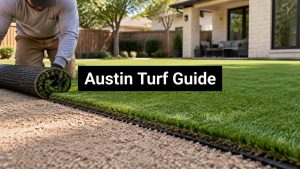
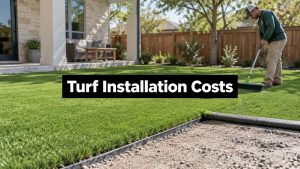
Synthetic turf usually costs more to install at the start. That's normal. You're paying for excavation, grading, base preparation, drainage planning, seaming, infill, edging, and the turf itself. Quality installation isn't cheap, and it shouldn't be.
Historically, that has always been the trade. A University of Illinois discussion of older comparison data notes that synthetic systems can carry major upfront costs, with installation potentially reaching $1 million for a field, and often lasting 10 years or less, while the broader financial shift is from recurring lawn inputs to installation and eventual replacement. The same source also cites a 2008 study showing annual labor costs averaging $6,000 and 375 hours for synthetic turf versus $4,000 and 250 hours for natural turf fields, which is a useful reminder that lower routine upkeep doesn't always mean zero labor or lower labor in every context. You can read that discussion in the University of Illinois review of synthetic and natural athletic turf.
What homeowners usually miss
Residential buyers don't manage athletic fields, but the lesson still applies. Turf changes where your money goes. Instead of constant spending on mowing, irrigation, fertilizer, patching, and seasonal rescue work, you make a larger planned investment and then manage lighter ongoing surface care.
That's why I tell homeowners to think in ownership terms, not sticker price.
- Real grass costs keep coming. Water, equipment, service visits, products, repairs, and time don't disappear.
- Synthetic turf costs are front-loaded. You pay more upfront, then deal with occasional care and eventual replacement later.
- Bad installation is expensive either way. A cheap lawn that fails is never cheap.
Where good estimates matter
A real quote should account for site conditions, access, drainage needs, slope, material quality, and how you'll use the yard. A small, flat backyard with easy access is one thing. A sloped side yard with drainage issues and pet traffic is another.
If you want to understand how those variables affect pricing, this breakdown of the cost of artificial turf is a useful place to start.
Practical rule: Don't compare turf to the cost of laying sod once. Compare turf to years of watering, cutting, repairing, and re-buying the same lawn.
My opinion is blunt. If you know you want a polished yard with less upkeep, paying more upfront for a properly built synthetic lawn is usually smarter than repeatedly spending money to keep a weak natural lawn on life support.
Your Weekends Back Maintenance Reality in Austin
The phrase “low maintenance” gets abused in this business. So let's talk about what your year looks like.
With real grass in Austin, maintenance is constant. Growth season means mowing. Dry stretches mean watching irrigation. Heavy use means bare patches, compacted spots, and that familiar mix of dirt and grass dragged into the house. If you've got pets, the mess multiplies fast. If you travel, your lawn doesn't care.
With synthetic turf, most of that routine disappears. But “less maintenance” does not mean “ignore it forever.”
The real-grass calendar
A natural lawn owner spends the year reacting. In one part of the year, you're cutting. In another, you're watering. Then you're dealing with stressed spots, weeds, reseeding, or trying to revive areas that got hammered by foot traffic.
The lawn is always asking for something.
The turf calendar
A synthetic lawn owner spends far less time on weekly yard work, but the surface still needs periodic attention. An Australian government study on synthetic surfaces notes that regularly used installations still require infill checks, brushing, and surface care to preserve performance and warranty conditions. That's the key point from the Western Australia natural grass vs synthetic turf study report.
In plain English, turf replaces horticultural tasks with surface management.
- Brushing matters when fibers start laying over in high-traffic areas.
- Infill needs checking because use and weather can shift it.
- Cleanup still happens after pets, parties, storms, and everyday life.
What that means for a homeowner
You're no longer spending Saturdays mowing in brutal heat. You're not trying to guess whether your lawn needs more water or less. You're not looking at bare dirt every time the dog makes the same turn by the fence.
You are still responsible for keeping the surface clean and performing well. That's normal. It's just a much lighter workload.
If you want a straightforward look at the basics, this guide on how to clean artificial turf covers the routine tasks homeowners should expect.
The biggest maintenance benefit isn't that turf needs nothing. It's that it stops controlling your schedule.
My recommendation is simple. If you enjoy yard work, natural grass can still be satisfying. If lawn chores feel like unpaid labor, synthetic turf is the cleaner answer.
Solving Austin's Biggest Yard Problems Heat and Drainage
Many homeowners get stuck. They've heard synthetic turf gets hot, and they've heard it can create drainage problems. Both concerns are real. Cheap products and poor installation make both worse.
That doesn't mean synthetic turf is a bad fit for Austin. It means details matter.

Heat is a real issue
Controlled rainfall and surface-performance research found artificial lawns produced greater runoff and lower water retention than living lawns, and independent guidance commonly reports synthetic grass can run 20-50°F hotter than natural grass under sun exposure. That's the technical backdrop discussed in this research summary on artificial and living lawn performance.
For Austin families, that matters. Hot turf isn't just uncomfortable. It affects whether kids can play on it, whether pets can use it, and whether the yard stays functional in peak summer.
What fixes the heat problem
You don't “eliminate” heat in full Texas sun. Anyone who tells you that is selling fantasy. You reduce it with better design choices.
Here's what helps:
- Better turf fibers that handle sun exposure without turning into stiff plastic.
- Cooling infill options that moderate surface conditions better than bare-bones systems.
- Shade planning from trees, structures, or layout choices that keep key use zones usable.
- Intended use decisions so a decorative front yard and a pet run aren't treated like the same project.
Drainage is mostly an installation issue
Drainage failures usually start below the surface. If the base is wrong, the grading is lazy, or the site prep is rushed, water will tell on you fast.
A properly prepared base and drainage layers matter more than flashy sales language. That's one reason some homeowners choose installers that also handle broader site work. Modern Yard Landscapes installs turf along with drainage-related prep and grounds construction, which is relevant when a yard has slope, runoff, or pooling issues.
If you're worried about heat or drainage, don't ask whether turf is good or bad in general. Ask how this specific yard will be built.
My direct recommendation
If your yard gets hammered by full afternoon sun and you want a cool barefoot lawn at all hours, real grass still has the edge. If your main frustration is appearance, water use, mud, and maintenance, synthetic turf can still be the right choice, but only with smart material selection and serious base prep.
In Austin, cutting corners under turf is how people end up blaming turf for installer mistakes.
Lawns for Lifestyles Pet Runs and Putting Greens
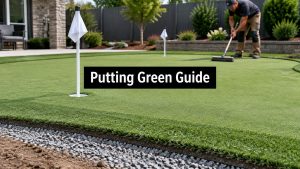
Austin yards do not all need the same answer. A dog run in full summer sun has different demands than a small practice green over hard clay. Targeted turf works well here because it solves one problem at a time instead of forcing the whole yard into a full-lawn decision.
Pet owners usually want three things. No mud, no dead patches, and no smell hanging around after a hot week. Golfers want the opposite kind of precision. They need predictable roll, clean edges, and a surface that still plays right after heat and heavy use.

Pet runs need a pet system, not standard turf
Austin heat exposes bad pet turf fast. If the surface holds urine, the smell gets stronger. If the base is sloppy, you get wet spots, bacteria, and a dog run nobody wants to use.
A good pet run should be built for cleanup and repeat abuse, not just color.
- Fast drainage under the turf. That matters more in Austin, where sudden storms can dump water fast and clay soil tends to hold it.
- Durable fibers and backing. Dogs sprint the fence line, dig at edges, and wear the same routes every day.
- Simple rinse-down cleaning. The system should let water move through and wash out waste without turning care into a chore.
Professional installation matters. Modern Yard Landscapes builds turf areas with the base, grading, and material choices matched to the use, which makes a big difference for side yards, shaded runs, and narrow dog zones that natural grass rarely survives in Texas.
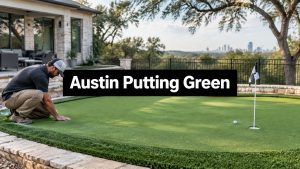
Putting greens need precision below the surface
A backyard putting green lives or dies on the base work. In Austin, soil movement and heat can expose every shortcut. If the grading is off or the surface is installed like a regular lawn project, the ball roll will tell you immediately.
The shape is the easy part. Performance is the hard part.
- Surface speed matters for practice that translates
- Base accuracy matters for a true, repeatable roll
- Cup and fringe placement matter so the space is usable, not decorative
- Transitions matter so the green feels finished and fits the yard
DIY kits usually miss the part that counts. They can look good from the patio and still play poorly every day after.
A pet lawn has to stay sanitary. A putting green has to stay true. Both depend on materials and installation that fit Austin heat, drainage, and soil conditions.
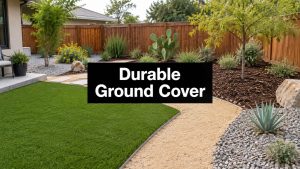
The smartest approach for many homes is mixed use. Put turf where dogs destroy grass, where a side yard stays messy, or where a putting green adds real function. Keep natural grass or planting beds where cooling and a softer look matter more. That usually gives Austin homeowners a better long-term yard than trying to make one surface do every job.
How to Choose the Right Lawn for Your Austin Home
By August in Austin, this decision gets real fast. You step outside at 6 p.m., the yard is still baking, the dog has already worn one path into dirt, and the patch you sodded in spring is struggling again. That is the moment to choose based on how your yard behaves, not on a photo you saved six months ago.
Start with the site, not the sales pitch.
Austin yards usually fail for a specific reason. Some get blasted by west sun all day. Some stay soggy after one hard rain because the grade is wrong. Some have shallow soil, tree competition, or tight side yards that never grow grass well no matter how much water you throw at them. If you pick a lawn before you identify that problem, you will spend money twice.
Here is the practical way to decide:
- Choose natural grass for areas where cooling matters most, where you want a living yard, and where you will irrigate, mow, feed, and repair it.
- Choose synthetic turf for spots that need to stay clean, usable, and green with far less routine work, especially dog runs, side yards, and high-wear zones.
- Choose a mixed plan for most Austin homes. That is usually the right answer. One surface should not have to do every job.
The key is to match the surface to the part of the yard.
A front yard with big sun exposure and curb appeal goals may benefit from real grass or a mix of grass and planting beds. A narrow side yard that turns to mud every time the sprinkler runs is usually a poor place to keep forcing natural lawn. A backyard with drainage trouble needs grading and base work first. Material choice comes second.
This is also where installation quality stops being a small detail. In Austin heat, cheap turf and sloppy prep create the exact complaints people hate. Hot surfaces, bad drainage, visible seams, and an artificial look usually come from poor product selection or weak base work. Modern materials and professional installation from Modern Yard address those problems by building for Texas conditions, not for a showroom sample.
So ask one honest question. What do you want this part of the yard to do every week?
If the answer is cool, living, and natural, keep grass where grass makes sense. If the answer is durable, tidy, and easy to manage through heat and water restrictions, use turf where turf makes sense. If your yard has multiple problem areas, stop looking for one perfect answer and build a yard with zones. That is how Austin homeowners get a lawn they still like after a few brutal summers.
Frequently Asked Questions
Does synthetic turf help or hurt property value
In Austin, a well-built yard usually helps value. Buyers like a yard that looks finished, stays tidy in brutal heat, and does not turn into a water-hungry chore by July.
The catch is simple. Quality shows. Turf that fits the home, drains correctly, and has clean edges can make the property feel easier to own. Turf with visible seams, cheap shine, or bumpy prep can make the whole yard feel cut-rate.
Will synthetic turf look fake
Cheap products look fake fast in Texas sun. Better turf looks far more convincing because the color mix, blade shape, backing, and install quality are better.
The base matters just as much as the turf itself. If the ground is uneven, the finish will look uneven. If the installer cuts corners around edges and curves, you will notice it every time you walk outside.
Ask to see completed Austin-area jobs, not a showroom sample.
What about tree roots, slopes, and awkward yards
Those yards can still work. They just need a smarter plan.
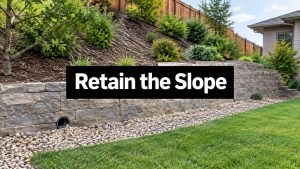
Tree roots change grading and prep. Slopes need drainage control and secure edges. Tight side yards raise labor time and make material access harder. In Austin, these problem spots are often the exact places where natural grass keeps failing, so forcing sod back into the same trouble area usually wastes more money.
Is synthetic turf really maintenance-free
Synthetic turf still needs care. Leaves need to be cleared. High-traffic areas may need brushing. Pet areas need rinsing and cleanup.
That workload is still much lighter than keeping natural grass alive and presentable through an Austin summer, especially during heat waves and watering restrictions.
How long does artificial grass last
A properly installed synthetic lawn can last for years, but lifespan depends on the product, foot traffic, pet use, sun exposure, and the quality of the base underneath.
That last part matters more than homeowners think. In Austin heat, weak prep shortens the life of the whole system. Good materials and professional installation hold up better because they are built for high temperatures, drainage swings, and heavy use.
What's the biggest mistake homeowners make
They pick a surface based on price alone.
That is how people end up disappointed with both options. Cheap turf gets hot, looks fake, and wears out early. Neglected grass burns out, turns patchy, and keeps demanding more water, fertilizer, and weekend work. The right call comes from matching the surface to the yard's job, then installing it correctly.
Who should choose real grass, and who should choose turf
Choose real grass for spaces where you care most about a living, cooler surface and you are willing to keep up with watering, mowing, feeding, and seasonal repair.
Choose turf for dog runs, side yards, shaded trouble spots, putting greens, and high-wear areas where grass repeatedly fails.
For a lot of Austin homes, the smartest answer is both. Keep grass where it earns its keep. Use turf where heat, mud, drainage, or traffic keep beating up the yard.
If you want a straight answer about what will work in your yard, talk to Modern Yard. A site visit can settle the question quickly, especially if you are dealing with heat, drainage, pets, slopes, or a lawn that keeps failing in the same spots.