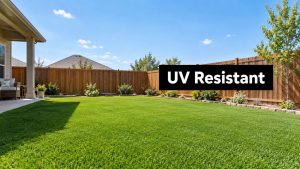

Austin evenings invite you outside. The heat finally loosens its grip, the patio starts to feel useful again, and the yard you invested in becomes part of the home instead of something you only notice in daylight. That's usually the moment homeowners realize a dark backyard is leaving a lot of value on the table.
A well-designed smart outdoor lighting system changes that experience completely. Paths feel safer, trees gain presence, walls and turf pick up texture, and the whole property looks finished after sunset instead of disappearing into shadow. In Austin, that matters more than national blogs tend to admit, because our outdoor spaces get used hard and used often.
Transform Your Austin Nights with Smart Lighting
A typical Austin evening starts the same way. The sun drops, the temperature finally becomes reasonable, and the backyard you paid to build should start working harder. If you have artificial turf, a clean patio edge, modern fencing, and a few grade changes, darkness can erase a lot of that design in minutes.
Smart outdoor lighting restores structure after sunset. It gives the turf edge definition, puts depth back into limestone and stucco, and makes a seating area feel finished instead of disconnected from the house. On properties with putting greens, pet zones, retaining walls, or narrow side yards, that added clarity improves both use and comfort.
Interest in outdoor lighting is growing well beyond custom residential work. The global market for outdoor lighting was valued at USD 15.03 billion in 2022 and is projected to reach USD 64.50 billion by 2032, with a forecast CAGR of 15.68%, according to Fact.MR's market outlook for outdoor lighting. Homeowners and design professionals are treating lighting as part of the original yard plan, not a late add-on.
Why Austin homes benefit more from evening design
Austin homes have specific nighttime needs that national articles rarely cover. We work with reflective limestone, heat-tolerant plant palettes, steel edging, synthetic turf, pool decks, and modern architectural lines. Those materials can look sharp at night, but only if the beam spread, fixture placement, and color temperature are handled carefully. Too much output creates glare on pale stone and makes turf look artificial. Too little leaves the yard flat and underused.
Local conditions also shape the plan. HOA rules may limit fixture visibility from the street. Low-voltage work still needs to respect safe installation practices and transformer sizing. Our heat, sudden rain, and hard summer sun also affect fixture selection, wire protection, and where controls should live if you want the system to last.
I also look at how the yard is used from inside the home. A good evening setup should read well from the patio, the kitchen, and the living room windows. That is often what makes the whole property feel more complete.
A well-lit yard should feel calm, usable, and clearly designed, not bright for the sake of brightness.
For many Austin projects, smart controls make that easier to maintain. Homeowners can schedule zones around dinner, dog runs, guest arrival, or late-night quiet hours, and they can build on details like exterior LED strip lighting for modern patios and outdoor features in Austin without adding control headaches. For a broader overview of what goes into installing a smart lighting system, it helps to understand how fixtures, controls, and power all need to work together.
What clients usually want is straightforward:
- Longer use of the yard for dinners, conversation, and evenings outside during our hotter months
- A stronger view from the street and from interior rooms after dark
- Safer movement at entries, side paths, steps, and changes in grade
- Easy control that does not depend on a garage switch or a wall timer
Done well, smart lighting supports all four without making the property feel overlit.
What Makes Landscape Lighting Smart
A smart outdoor lighting system is a coordinated setup of fixtures, power, controls, and programming that responds to the way the property is used at night. The light itself matters, but the key difference is control. You can divide the yard into zones, set schedules around dinner or late arrivals, adjust scenes from a phone, and keep the whole system consistent with the architecture instead of relying on one timer that treats every area the same.
As Shine Lighting explains in its overview of smart outdoor lights, these products combine a light engine with a "brain" for data processing and communication. That communication layer is what allows scheduling, remote access, and integration with other home systems.

The core pieces of the system
Most residential setups use low-voltage LED fixtures, buried wire, a transformer, and a control method through a hub or app. In practice, that means the front entry, pool zone, turf panel, patio edge, and side yard can each behave differently without turning the property into a maintenance project.
Here is the simple breakdown:
| Part | What it does | Why it matters |
|---|---|---|
| LED fixture | Produces the light | Better beam control and lower power draw |
| Low-voltage wiring | Carries power through the yard | Adapts well to residential layouts and future additions |
| Transformer | Steps power down for the lighting circuit | Helps fixtures perform consistently |
| Hub or app control | Runs schedules and remote changes | Removes the need for manual switching |
| Zones | Groups lights by area or purpose | Lets each part of the property work on its own schedule |
In Austin, that zoning matters more than national articles usually admit. A modern front yard with artificial turf, steel edging, limestone, and clean planting beds needs a different nighttime treatment than a deep backyard under live oaks. HOAs may also care about glare at the street, and local conditions like heat, irrigation overspray, and seasonal storm swings affect how controls and connections should be specified.
What smart control changes in daily life
The biggest upgrade is not the app. It is precision.
A good system lets the entry sequence come on before guests arrive, keeps the patio and grill area active during dinner, and leaves secondary zones at a lower level once the night settles down. If the home includes turf, smart control also helps avoid the flat, overlit look that can make synthetic grass read as artificial after dark. The goal is to give each surface the right amount of light, in the right direction, at the right time.
That is also why integrated details matter. For cleaner modern projects, exterior LED strip lighting for steps, seating walls, and patio edges in Austin can be tied into the same control plan so the whole property reads as one design instead of a mix of unrelated fixtures.
For homeowners who want a broader overview of installing a smart lighting system, that guide is a useful companion to the design side of the conversation.
Practical rule: Smart features only feel smart when the fixture layout, zoning, and hardware are right first. A poor lighting plan with app control is still a poor lighting plan.
Benefits Beyond Beauty for Your Home
A smart lighting system earns its value long after the sun goes down. It improves how the property feels, how safely people move through it, and how well the outdoor design holds together at night, especially on modern Austin homes where turf, steel edging, clean paving lines, and low-profile planting can look either refined or overly bright depending on fixture choice and control.
Better visibility with lower operating costs
Efficiency is one of the clearest practical gains. Tru-Scapes reports that modern LED outdoor lights use at least 75% less energy than incandescent equivalents, which gives you more room to light entries, paths, dining areas, and architectural features without building a wasteful system.
Output has improved too. A 12W RGBW smart Wi-Fi outdoor fixture can produce up to 800 lumens, as noted in Inspiring backyard design concepts.
In practice, that means fewer compromises. You can keep walkways readable, give seating areas enough light to use comfortably, and still avoid the washed-out look that makes artificial turf feel synthetic after dark.
Security that still feels like home
Good security lighting should support daily life, not overpower it. In Austin neighborhoods, that often means paying attention to front approaches, side gates, equipment areas, and back-door transitions while keeping glare off the street and out of nearby windows. That matters for comfort, and it can matter for HOA review too.
The strongest plans usually prioritize:
- Front arrival areas so guests and family can see the walk, porch, and drive edge clearly
- Side-yard routes where gates, condensers, and service paths tend to disappear at night
- Steps and grade changes around patios, pool decks, and rear entries
- Property edges and focal points that define space without blasting the whole yard with light
I also advise clients to treat security as a zoning question, not a brightness contest. A home feels more occupied and better cared for when the right areas are lit consistently and the less important areas stay quieter.
A yard that stays visually complete after dark
Smart lighting pays off aesthetically, but the benefit is also functional. The yard remains part of the home at night instead of turning into a dark void beyond the glass. From a kitchen, living room, or primary suite, you still read structure, texture, and depth.
That matters even more with modern materials. Turf edges, retaining walls, planters, coping, and large-format pavers all reflect light differently. Poor aiming exaggerates seams, creates hot spots, and flattens the composition. Thoughtful fixture placement gives those surfaces definition without calling attention to the lighting itself. A well-planned outdoor lighting design for modern Austin homes accounts for those trade-offs from the start.
What works and what doesn't
What works
- Warm, controlled beams
- Layered lighting with different zones for circulation, dining, and view corridors
- Fixtures aimed to reveal texture, not create glare
- Lower light levels on turf and reflective hardscape so the finish reads naturally
What doesn't
- Box-store stake lights placed wherever there is open soil
- Bright fixture spacing that draws dotted lines around every bed or path
- Beams aimed into seating areas, glass, or neighboring lots
- Treating more fixtures as the answer instead of deciding what deserves attention
A smart system should fit the way the home is used on a Tuesday night, during a dinner party, and through Austin's heat, storm swings, and seasonal outdoor living patterns.
Designing a Cohesive and Modern Dreamscape
Stand in the living room after sunset and look through the glass. In a well-designed Austin yard, the view still feels ordered, calm, and modern. You can read the geometry of the pavers, the mass of the planting, the edge of the pool or patio, and the clean green plane of the turf without seeing a row of glaring fixtures trying too hard.
That result starts with composition, not product selection. The lighting plan has to respond to how the space is used, which surfaces reflect the most light, where the home has long sightlines, and how modern materials behave after dark. In Austin, that usually means balancing several finishes at once, including artificial turf, steel edging, retaining walls, decomposed granite, large-format pavers, privacy screening, and low-profile architecture. One misplaced uplight can sharpen a turf seam, blow out a wall cap, or create glare on a slider that looked fine on paper.

Lighting the whole composition
Strong projects use different fixture types for different jobs. Repetition makes a yard feel flat.
Trees and vertical features
Mature oaks, ornamental trees, and sculptural planting carry the nighttime structure of the space. Beam spread matters here. Narrow beams can work on taller trunks or tight canopies viewed from a distance, while wider spreads fit lower branching forms and fuller crowns. The fixture also needs to sit where the source stays hidden from the patio, interior rooms, and neighboring lots, which matters in Austin neighborhoods with close lot lines and HOA scrutiny.
Paths and circulation
Path lighting should support movement and let guests read steps, grade changes, and transitions between hardscape areas without producing a dotted border around every walk. Lower mounting heights and tighter spacing usually look better in modern projects than tall decorative fixtures. The effect should feel quiet and intentional, especially near outdoor dining and lounge areas.
Retaining walls and grade changes
Walls need grazing or soft washing based on the material. Split-face stone benefits from side light that reveals texture. Smooth stucco or concrete usually needs a more even spread so it does not show every imperfection. On terraced lots, lighting those elevation changes well also helps the yard feel connected instead of broken into bright and dark fragments.
Why artificial turf changes the design conversation
Artificial turf needs more restraint than natural grass. The fibers catch light at different angles, so a fixture that looks fine over planting can create a shiny, synthetic sheen on turf.
I usually avoid aiming strong downlight straight into synthetic grass unless there is a specific task area, such as a putting green or a pet run that needs higher visibility. Cross-lighting from the perimeter is cleaner. It preserves the turf as a smooth surface and keeps the eye on the overall composition instead of on individual blades and seams.
Beam control matters too. Wider, softer spreads often read better on turf than tight spots, and lower output prevents the surface from becoming the brightest element in the yard. Warm color temperatures, typically in the 2700K to 3000K range, tend to complement synthetic grass and adjacent limestone, cedar, and metal better than cooler lamps, which can make the green look sharp and artificial. On putting greens, I also pay attention to cup locations, fringe transitions, and ball visibility so the area works for actual use, not just for photos.
Edges are another common trouble spot. Turf next to steel edging, concrete bands, or paver borders can show every transition if the fixture is too close or the beam hits at the wrong angle. Careful offset placement and shielding help those lines stay crisp without glowing. For homeowners exploring landscape lighting design in Austin, that level of coordination is what separates a polished modern yard from one that feels pieced together.
Looking from inside the house
Interior views should guide fixture placement from the beginning. At night, windows frame the outdoor scene, and modern homes in Austin often have large expanses of glass that make every aiming mistake more obvious.
Check the view from the kitchen, where families spend ordinary weeknights. Check the living room, where a focal tree, wall, or water feature can carry the whole scene. Check the primary bedroom, where the light level should stay softer and calmer. This is also where local conditions matter. Reflection off light-colored masonry, glare on western-facing glass, and tight side-yard spacing all show up quickly in Central Texas homes.
For broader inspiration, these Inspiring backyard design concepts can help homeowners think beyond fixtures and toward complete outdoor environments.
In the best Austin projects, smart lighting supports the turf, masonry, planting, and architecture as one coordinated night view, and it does it without creating glare, hotspotting, or maintenance headaches later.
Our Flawless Installation Process
A smart lighting system proves its value on an August night in Austin, after irrigation has run, the dog has crossed the turf, and a storm rolled through two days earlier. If the wiring, load planning, and aiming were handled properly, everything still looks calm and intentional.
That reliability starts before a crew opens the ground. We map power routes, fixture locations, control zones, and service access around the way the property is built. On modern Austin homes, that often means coordinating with artificial turf seams, steel edging, drainage, masonry, and existing irrigation so the finished work stays clean and easy to maintain.

Step one is site planning, not shopping
Fixture style matters. Site layout matters more.
The first job is to decide how electricity and control will move through the yard without creating voltage drop, exposed shortcuts, or future repair problems. In Austin, I also want to know where HOA visibility concerns may apply, which paved areas are difficult to cross cleanly, and where turf or hardscape details need extra protection during installation.
A professional process usually includes:
Nighttime intent mapping
Identify focal areas, quiet zones, and practical circulation paths.Cable route planning
Protect turf edges, planting beds, drainage parts, irrigation lines, and finished surfaces.Fixture selection by task
Choose path lights, uplights, washes, or integrated architectural fixtures based on beam purpose.Control layout
Separate areas that should dim, schedule, or operate independently.
Transformer sizing is where many DIY systems go wrong
Clients rarely see this part, but they feel the results when a system flickers, overheats, or leaves no room for expansion. Drip Depot's outdoor lighting guide recommends keeping total connected wattage at no more than 80% of transformer capacity, and the same guide recommends multiplying the estimated fixture load by 1.25 when sizing the transformer.
That margin helps account for cable loss, startup demand, and long wire runs across wider properties. A transformer can look adequate on paper and still become the weak link once the full system is operating on a hot Texas evening.
Field note: Failures usually come from cumulative electrical stress across the run, not from one fixture by itself.
The details underground matter
Austin yards are rarely simple below grade. Crews run into compacted fill, shallow rock, root zones, irrigation, and transitions between turf, beds, and stone. Good installation work protects all of it while keeping wiring secure and serviceable later.
Durable work usually includes:
- Direct-burial wire rated for outdoor use
- Waterproof connections that hold up through heat and rain
- Careful trenching around roots, drains, sleeves, and finished surfaces
- After-dark aiming so the beam pattern is set in real conditions
Artificial turf adds another layer. Cable routes need to avoid visible depressions, loose edges, and awkward cuts at seams or borders. On higher-end projects, that coordination is what keeps the lighting system from looking like an afterthought a year later.
For homeowners who appreciate exterior detail work, Cultivate House Detailing for lighting offers a useful example of how lighting quality and property presentation often work together. If you want to compare permanent systems with seasonal and specialty setups, our guide to all-year outdoor lighting installation in Austin is a helpful place to start.
Final programming makes the system feel effortless
Installation is only part of the job. The last step is tuning the system to how the household lives outside.
Zones need clear names. Schedules should match arrival times, entertaining habits, pet use, and late-night views from inside the house. Brightness should be balanced so the property feels composed, not patchy or overlit.
That calibration is what turns a finished install into lighting you enjoy using every night.
Austin Lighting Considerations Climate Codes and Costs
Austin is not an average installation environment. The climate, soil, neighborhood rules, and lot conditions all affect how a smart outdoor lighting system should be designed and installed.
Heat, storms, and Hill Country soil
Summer heat changes material performance. Fixture finish, lens quality, gasket integrity, and connection durability all matter more when the system is exposed to long periods of sun and temperature swings. A setup that performs fine in a mild climate may age faster here if the components aren't chosen carefully.
Soil conditions also shape the work. In some neighborhoods, trenching is straightforward. In others, crews run into limestone, shallow rock, root systems, or compacted fill from prior construction. That affects not just labor, but routing decisions and long-term wire protection.
HOA expectations and local compliance
Austin homeowners also deal with rules that national articles barely mention. Some neighborhoods are relaxed. Others are particular about visibility from the street, fixture style, glare, and changes to the front elevation. If the home is in an HOA, it's smart to confirm what's allowed before any installation starts.
Codes and permitting questions can vary by project scope and whether the work ties into other exterior improvements. The practical value of hiring a local team is that they know which questions to ask early, before the install is halfway done and something needs to be reworked.

What affects cost on a real project
There isn't one universal price because the work changes with the property. A transparent estimate should explain the drivers, not just hand you a fixture count.
The biggest cost variables usually include:
| Cost factor | Why it changes the project |
|---|---|
| Property layout | Long runs, side yards, and separated zones require more planning |
| Hardscape complexity | Steps, walls, edging, and built-in features take more precise integration |
| Existing landscape | Mature roots, irrigation, and finished planting beds slow installation |
| Control goals | More zones and more customization require better planning |
| Fixture quality | Better housings and components usually age better outdoors |
Local design choices that pay off
Austin homes often benefit from restraint. The strongest projects usually avoid the temptation to light every feature equally. A clean front walk, a few well-chosen trees, controlled architectural highlights, and a softer backyard scene often look better than an aggressive all-property glow.
If your project also includes roofline accents or seasonal visual elements, this guide to house outline lighting installation in Austin can help you think through how permanent and decorative lighting should relate to each other.
The right local installer isn't just placing fixtures. They're solving for heat, soil, neighborhood rules, and how Austin families actually use their yards.
Your Next Step to a Brilliantly Lit Yard
A well-lit Austin yard should feel settled the first night you use it. The front walk reads clearly, the patio is comfortable after sunset, the turf doesn't look flat or overlit, and the house has presence without glare spilling into bedroom windows. Getting that result depends less on the fixture brochure and more on who plans the system.
Good photos can hide bad work. I've seen projects that looked polished online and then failed in person because zones were awkward, beam spreads were wrong, control apps were unreliable, or fixtures were placed with no regard for irrigation, HOA limits, or the way a family uses the property at night.
Questions worth asking before you hire anyone
Use these questions with any contractor you're considering:
- How do you choose fixtures for Texas heat, sun exposure, and sudden storms?
- How do you size the transformer and leave room for future zones or added features?
- How do you protect wiring around roots, irrigation lines, turf edges, and finished hardscape?
- How do you control glare from patios, pool decks, and interior windows?
- What happens if a hub, connection, or fixture needs service later?
Clear answers matter.
The best firms will talk through trade-offs. In Austin, that often means balancing clean nighttime visibility with dark-sky restraint, choosing fixture locations that work with artificial turf instead of fighting it, and planning controls that are easy enough to use every day. A smart system no one wants to adjust is not a smart investment.
What a strong partner should bring
A strong lighting partner should understand more than brightness. They should know how stone, stucco, steel edging, turf, and planting beds respond after dark. They should also know local friction points, from code considerations to HOA preferences, so the design looks intentional and gets installed without unnecessary surprises.
That matters even more when lighting is part of a full modern yard build. Putting greens, retaining walls, pet runs, outdoor kitchens, and lounge areas each need different light levels and different control logic. When those pieces are planned together, the property feels calmer, cleaner, and easier to live with.
If your outdoor spaces already have strong structure, smart lighting is often the final layer that makes the whole property feel finished.
If you're ready to see what smart outdoor lighting could look like in your own yard, Modern Yard Landscapes can help you plan it with the same attention given to artificial turf, retaining walls, drainage, and full-property design. Schedule a consultation and get a clear, professional plan built for the way Austin homes are lived in.