
You can feel it before you ever see smoke. A hot Austin afternoon, a dry front blowing in, the yard looking a little too thirsty, and the thought that the planting right next to your house is either helping you or hurting you. That's the essential conversation behind fire resistant outdoor design, because a smart yard isn't just about curb appeal, it's about giving your home a better chance when conditions turn harsh.

A lot of homeowners start with plant lists. That's understandable, but plant choice alone doesn't solve the problem. The stronger approach is a layered system, one that combines spacing, hard surfaces, and disciplined maintenance so embers have fewer places to land and less fuel to carry them. That's the logic behind defensible-space thinking in wildfire guidance from FEMA, which emphasizes non-combustible buffers and fuel separation around structures (FEMA defensible-space guidance).
If you're already comparing landscaping upgrades, it's smart to think about the bigger picture too. Good decisions around the yard can influence how you document risk, which matters if you ever need to work through a claim, and this practical guide on home disaster insurance tips from Aureli Construction is worth keeping nearby.
Protecting Your Austin Home from Wildfire
Austin homeowners deal with a yard that can look lush in spring and unforgiving by late summer. That swing is exactly why fire resistant yard design has to be more than a plant palette. The essential job is to shape an outdoor space that slows ember spread, breaks up fuel, and keeps fire from traveling from the property line to the house.
The safest planning starts at the structure. FEMA's defensible-space guidance calls for a non-combustible buffer close to the home, with a 5-foot zone around the house and attached structures free of combustible material, while broader defensible-space planning often uses 30 to 50 feet, and sometimes 100 feet or more on steep slopes and in dense vegetation (FEMA defensible-space guidance). That does not mean clearing the yard bare. It means removing easy ignition points and interrupting fuel continuity before embers find a place to settle.
What this means in Austin
A lot of Austin lots have mature trees, mixed slopes, and decorative beds packed tight to the house. Those features can look polished and still be risky if they create a continuous path of dry material. The better approach is to separate the house from receptive fuels, then use spacing, materials, and maintenance to keep that barrier working. On sloped properties, the layout often needs a different strategy altogether, and slope stabilization techniques can shape grade in ways that also support safer fire breaks.
A fire-safe yard is designed from the house outward, not from the curb inward.
That mindset matters because wildfire resilience is a property strategy, not a seasonal cosmetic upgrade. It protects the structure, reduces maintenance surprises, and gives you cleaner decision-making when you are ready to invest in the front yard, side yards, and back perimeter. If the outdoor space already feels dense and too close for comfort, the design usually needs to change, not just the plant selection. Good documentation also helps if you ever have to work through a claim, and these home disaster insurance tips are worth keeping nearby.
Understanding Your Property's Specific Risk Profile
Every Austin property carries a different fire risk profile, even within the same neighborhood. A flat lot with open exposure behaves differently from a sloped yard with dense shrubs and tree canopies hanging low. Before choosing materials or planting anything new, read the site the way a fire would, starting with where heat, embers, and dry fuel are most likely to meet.
Start with the slope and plant density
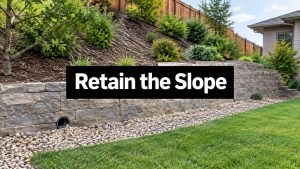
Slope changes how fire behaves. Where the ground rises, flames can move faster uphill, so spacing and setback choices matter more, and planting should be treated as a set of transitions instead of one continuous bed. If a retaining wall is needed to manage grade, it can do more than hold soil. It can also help break up fuel paths and shape a safer layout.
That is why slope stabilization belongs in fire-smart yard planning. A good reference point for homeowners weighing grade changes is the practical guidance on slope stabilization techniques, because erosion control and fire resilience often overlap in real yards.
Look at how fuels stack up
The next question is simple, are fuels layered from ground cover to shrubs to low branches? If they are, fire can climb. That ladder effect is what turns a manageable surface fire into a much bigger threat. Dense vegetation, overlapping shrubs, and tree limbs close to the roof all raise that risk.
A quick self-check helps:
- Stand at the house edge and look outward. If you see leaves, mulch, shrubs, and tree branches forming one connected mass, the yard needs separation.
- Walk the slopes if you have them. Steeper sections usually demand more careful spacing and less combustible material near the structure.
- Check rooflines and eaves. Branches, vines, and tall shrubs close to the home are trouble because they give embers a landing zone and a path upward.
If the yard reads as one uninterrupted layer, it is usually too fuel-rich for a home on the edge of wildfire exposure.
Austin properties also differ in irrigation coverage, sun exposure, and how quickly dead material builds up. That is why generic plant lists miss the point. A smart plan starts with the property itself, then shapes the outdoor space around its weak spots.
Designing Your Yard with Defensible Zones
The cleanest fire-resistant layouts use zones, not guesswork. Instead of treating the whole yard the same way, break it into bands that get progressively more planted and more flexible as you move away from the structure. That approach makes the design easier to build, easier to maintain, and much easier to judge when you are weighing beauty against protection.
A strong Austin yard plan starts with a clear job for each area. The strip next to the house should resist ember ignition, the middle band should slow fire spread, and the outer zone can carry more plant mass as long as it stays open and maintained. That system matters more than any single plant choice.
Zone one stays almost entirely mineral
The immediate zone around the house should be treated as the hardest-working part of the design. FEMA's defensible-space guidance calls for a 5-foot zone with no combustible material near the home and attached structures (FEMA defensible-space guidance). In practice, that means hard surfaces, gravel, pavers, masonry, and careful material selection instead of dense planting.
Ember exposure is highest here, so the details matter. A clean, mineral edge gives you fewer ignition points and keeps crews, hoses, and emergency access from being blocked by clutter. If you are planning the surfaces near the house, this is also the point to use hardscaping in Austin in ways that support both fire resistance and day-to-day access.
Zone two reduces fuel, not character
The next band can still be attractive, but it needs more discipline. Oregon State recommends low-growing perennials or groundcovers at 12 inches or less in the 5- to 30-foot zone, group plantings spaced 10 feet or more apart, tree branches kept at least 15 feet from the home, and turf mowed to 3–4 inches (Oregon State fire-resistant plants guide). Those are the kinds of thresholds that turn a nice-looking yard into a managed system.
In Austin, that middle zone often has to do more than one job. It should soften the hard edge near the house, but it still needs enough air between plant groups to stop heat from moving quickly across the property. I usually tell homeowners to favor pockets of planting over continuous ribbons, because broken groupings are easier to maintain and far less likely to carry fire.
Zone three is where the broader yard can breathe
Farther out, the goal is still fuel reduction, just with more flexibility. The broader defensible-space band is often 30 to 50 feet, and can extend to 100 feet or more on steep slopes or in dense vegetation (FEMA defensible-space guidance). In that zone, small islands of planting, spaced canopies, and regular cleanup work better than rows of dense shrubs or hedges.
That outer band is where owners usually make the biggest mistake. They let the area look “finished” by filling every gap, then lose the spacing that makes the whole property safer. The better move is to keep plant masses separated, keep the understory open, and let the space read as intentional instead of crowded.
The best defensible-space plan doesn't try to eliminate every plant. It breaks fuel continuity in layers.
That is the fundamental shift in fire-resistant design. It is not about stripping a property bare or planting only one kind of shrub. It is about building a sequence of buffers that lowers risk without making the home feel disconnected from its yard.
Strategic Selection of Plants, Mulch, and Materials
A fire-resistant yard does not start with a single plant purchase. It starts with a system. Plant traits, placement, mulch choice, and surface materials have to work together, because a good plant in the wrong spot still creates risk.
Choose plants for structure, not hype
The University of Florida points to the traits that matter most, high moisture content, broad leaves, low chemical content, open branching, deciduousness, and low dead material (University of Florida fire-resistant plant traits). Those traits slow drying, reduce ignition, and make it harder for fire to move through a planting bed. In plain terms, the better choices are the plants that do not behave like dry fuel when heat and wind rise.
Plant selection still has to match the job. A compact shrub can be a problem if it sits under eaves or crowds a walkway. A healthy tree can still be a hazard if low branches create a ladder into the canopy. I look at the plant, the space around it, and the maintenance the owner can keep up with.
Materials matter as much as species
Near the house, mineral surfaces usually make more sense than organic ones. FireSafe Marin firescaping guidance favors gravel, stone, masonry, and concrete in the closest zones to the home, and it also recommends keeping bark mulch out of the area right by the structure because it can ignite more readily. Another practical point from that guidance is to avoid organic mulch close to the house, while compost or composted wood chips can be a better choice when some organic material is needed.
That is why surface selection matters as much as plant selection. A fire-resistant yard can still fail if bark mulch runs to the foundation, if a hedge sits tight against the wall, or if wood features are placed where heat can reach them quickly. The goal is to break those fuel paths before they start.
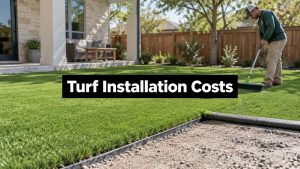
Low-maintenance turf can also fit into the plan near entries and side yards, where you want a clean and easy surface. If you are comparing replacement options, drought-resistant lawn alternatives is a useful reference for weighing appearance, upkeep, and safety. In some projects, a hard, durable surface is the better choice, and homeowners who want to explore custom concrete finishes can use that material to create a cleaner edge near the home.
What not to rely on
Dense hedges, bark mulch against the foundation, and untreated wood elements near the house all create fuel continuity. Fire-safe yard guidance is clear that the stronger approach is to interrupt fuel both horizontally and vertically, not just to pick plants with a fire-resistant label and stop there (FireSafe Marin firescaping guidance).
Good plant selection lowers risk. Good placement and material choice change how fire behaves around the house.
That difference matters. One yard looks safer. The other gives the home a better chance.

The Role of Hardscaping and Smart Irrigation
A fire-resistant yard is built on surfaces as much as plants. In Austin, the right stone, gravel, masonry, and concrete choices can slow flame movement, simplify access, and give the home a cleaner buffer where living material should not crowd the structure. That system matters more than any single plant choice.
Use hardscape as a firebreak, not just decoration
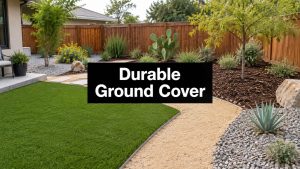
Stone, gravel, masonry, and concrete work because they do not burn like plant material does. Fire-safe garden guidance repeatedly favors these materials in the zones closest to the home, and it recommends at least 4-foot-wide hardscape firebreaks to help break continuity and preserve access (Pacific Horticulture landscape design for fire safety). That access matters on a real property, because the yard still has to be usable for maintenance and for emergency crews.
Retaining walls deserve special attention on Austin properties with grade changes. Fire-safe Marin guidance notes that retaining walls can help reduce slope steepness below a house, which can slow fire spread and also help with erosion control (UC Marin Master Gardeners fire-smart landscape guide). On hilly lots, slope control and fire control often solve the same problem from different angles.
Water helps, but only if the system is designed well
Irrigation does not make an outdoor space fireproof. It does keep selected plantings healthier, which helps them hold moisture and stay less flammable than stressed vegetation. The job is to water the plants that belong in the safer zones, not to soak every corner and hope for the best.
For homeowners comparing finishes and features, it also helps to think about the look of the hard surfaces themselves. You can make these areas feel refined rather than industrial, and one helpful resource for that is explore custom concrete finishes from Atlanta Concrete Solutions. The point is not to turn the yard into a parking lot. The point is to place durable surfaces where they do the most safety work.
A smart irrigation layout should match the planting plan, not fight it. Drip lines, spray heads, and zone controls need to serve the plant beds that stay in the design, while mineral areas near the house stay dry and clear.
Keep the layout simple and deliberate
Good hardscape plans avoid clutter. Curves can work, but the edges still need to read cleanly and stay easy to maintain. If gravel, patio, wall, and beds blur together, debris collects in the joints and the fire-safety benefit drops.
The best systems are easy to understand at a glance. Hard surfaces near the home, healthy and separated planting farther out, and irrigation tuned only to the areas that need living material.
Your Long-Term Maintenance and Fuel Reduction Plan
A fire-resistant design only works if someone keeps it managed. Debris falls, plants grow back, branches sag, and mulch shifts. The yard you install in spring can look very different by late summer if nobody stays on top of it.
Use a routine, not a rescue mission
The maintenance priorities are straightforward. Remove dead vegetation and leaf litter before it piles up, keep lawns cut, and stay ahead of pruning so tree canopies do not drift back toward the house. Texas A&M Forest Service recommends pruning trees up to 6 to 10 feet from the ground, or for shorter trees not exceeding one-third of the tree's total height, to remove ladder fuels, and says tree crowns should be at least 18 feet apart, with spacing increasing on slopes. It also says mature canopies should be no closer than 10 feet to a home or structure.
The work only stays effective if it becomes routine:
- Monthly: clear leaf litter, dead twigs, and dry debris from beds, corners, and under shrubs.
- Seasonally: keep firewood and other combustible storage far from the house, and never tucked against siding or fencing.
- As needed: mow turf and trim plants before they start touching one another or the structure. A practical lawn maintenance routine helps keep that part from slipping.
Keep inspection part of the plan
Monthly inspection matters because outdoor conditions change fast. A yard can be well designed and still drift into risk if nobody looks at it regularly. Dry weather, wind, and new growth can shift the fuel picture quickly.
The habit is what keeps zones clear, mulch from creeping, and tree structure healthy. It also gives you a better read on whether your original plan fits the property or needs adjustment.
Think of upkeep as protection, not chores
If the outdoor area starts demanding constant correction, that usually means the design was too dense, too thirsty, or too close to the house. A better layout reduces the amount of emergency cleanup you need when weather turns dry and windy. That is the difference between managing a system and reacting to a problem.
The safest properties are the ones that stay easy to read. Open mineral areas near the home, clean separations between planting zones, and simple access for pruning and cleanup make the whole yard easier to defend. As noted earlier, that kind of structure does more than choose the right plants, it keeps the whole system working.