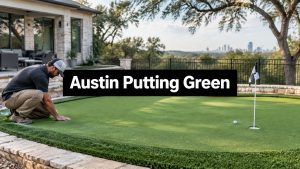

You step off the back porch at 7 p.m. in late July, limestone dust still clinging to your shoes. A cedar elm has finally thrown shade across the patio, the heat is easing, and the only sound is a putt dropping into a cup ten feet away. That's the appeal of an artificial putting green in Austin, a useful backyard feature that doesn't ask you to mow, fertilize, or maintain natural turf through every restriction and heat wave.
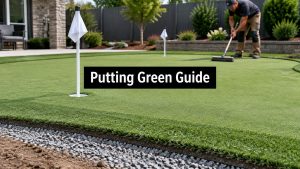
A custom green isn't a flat patch of fake grass. It's a contoured turf surface engineered for ball roll, with a compacted base, drainage plan, putting turf, infill, cups, fringe, and carefully chosen breaks. Austin's compact yards, hard clay soils, intense sun, and HOA pressure to keep yards tidy make the format practical, but they also make installation details matter.
You can avoid mowing and reduce outdoor watering demand, including during Stage 3 restrictions, while keeping fertilizer runoff away from the aquifer. With a floodlight, the green can become a play surface for the kids after dark, too. The decisions ahead are more specific than turf color: shape, cup locations, fringe, drainage, material selection, and whether you should reach for a utility knife or call an installer.
Picture Your Evenings on a Backyard Green
A homeowner in Circle C might use the green before dinner, while the kids roll balls toward a back-corner cup and a neighbor watches from the patio. Another homeowner in North Austin may want a narrow strip along a fence, with one subtle break and a fringe that separates the practice area from the rest of the yard. Neither project needs to look like a miniature golf course.

The right design starts with how you'll use the space. A serious golfer may want several cup locations and enough contour to practice uphill, downhill, and sidehill putts. A family may value a clean edge, a forgiving fringe, and room for children to move around without constantly stepping on the intended putting line.
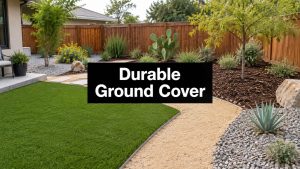
Austin yards create a specific installation challenge. Clay can shift as moisture changes, limestone can complicate excavation, and slopes can send water toward a patio or foundation. A green that looks perfect on installation day can develop inconsistent roll if the underlying base settles or drains poorly. That's why a guide to artificial grass landscape ideas is useful for thinking about the green as part of the whole yard, not as an isolated rectangle.
Local rule: Design the green around shade, drainage, access, and the shots you'll actually practice. A smaller green with a sound base beats a larger green with a dead spot.
You'll also need to decide whether the green should connect to a walkway, patio, seating area, or another turf zone. Fringe width, cup placement, lighting, and edge treatment affect both appearance and play. If the proposed shape requires serious grading, drainage work, or multiple contours, the project has moved beyond a simple weekend turf installation.
What an Artificial Putting Green Is Made Of
A putting green works from the ground up. The visible turf gets most of the attention, but the sub-base creates the shape, stability, and drainage platform that determines whether the surface remains playable.
The layers below the ball
First comes excavation and the prepared subgrade. In Austin, that often means removing existing grass and unsuitable clay, then building a compacted profile with decomposed granite or crushed limestone. Crews shape this layer to create the intended slopes and breaks. Turf can follow the contours, but it can't correct a poorly shaped or poorly compacted base.
Drainage deserves its own design rather than an afterthought. USGA construction guidance calls for a subsurface drainage system, 4-inch, or 100 mm, main lines, 4-inch laterals spaced no more than 15 feet, or 5 meters, apart, and surface fall in two or three directions to prevent pooling and localized saturation. USGA putting-green construction specifications explain the drainage principles that apply even though a residential synthetic green uses a different surface system.
A shock pad can sit above the compacted base. It's optional, but it can soften chip shots and make the area more comfortable underfoot. Padding won't fix movement below it, so it belongs on a properly graded base, not in place of one.
The visible playing system
The putting turf uses dense, low-pile texturized fibers, commonly nylon or polypropylene. Shorter fibers limit the amount of yarn that interacts with the ball, while infill supports the fibers and affects speed and stability. Rounded silica sand provides a firm, traditional feel, while rubber or zeolite blends can create a softer reception and change how the ball and club respond.
The fringe frames the putting surface with a rougher, taller appearance. It gives the green a realistic boundary and creates a transition for chips and approach shots. Cup sleeves, flags, and optional undulations complete the playing system.

Before discussing price, ask an installer to identify every layer and its purpose. The artificial turf layers guide can help you recognize whether a proposal includes real base preparation or just describes a turf product.
Choosing Materials That Actually Play Well
The material choices control the feel more than the marketing label does. Pile height, fiber construction, infill depth, UV stabilization, and the intended Stimp target all affect whether your green feels predictable or frustrating.
For truer roll, independent turf guidance commonly places putting-green pile height around 0.4 to 0.6 inches, with serious practice greens often targeting a Stimp speed of about 8 to 10+, compared with recreational targets of 6 to 8. Putting-green turf guidance connects shorter fibers and denser infill with faster, more repeatable roll, while also warning that excessive infill can slow the surface and reduce realism.
Match the specification to your stroke
Texturized monofilaments usually offer a more natural, upright appearance and controlled interaction with the ball. Flat fibrillated yarns can provide a different support pattern and may suit a homeowner focused on durability and cost. Nylon is often selected for demanding practice areas because it handles heavy use well, but the product still needs proper UV stabilization for Texas exposure.
Infill is the main speed lever. A lighter fill can create a quicker surface, while a deeper fill supports the yarn and produces a slower, more forgiving roll. Don't ask only for “fast turf.” Ask what infill material and depth the installer plans to use, and how the finished roll will be checked.
| Material Variable | Common Range | Effect on Play | Best For |
|---|---|---|---|
| Pile height | 0.4 to 0.6 inches | Shorter fibers generally produce cleaner ball contact and faster roll | Home practice and repeatable distance control |
| Stimp target | 6 to 8 recreational, 8 to 10+ serious practice | Higher speed demands a more controlled stroke | Families, casual play, or focused practice |
| Infill depth | Product-specific | More support can improve stability, but excessive fill may slow the surface | Tuning speed and fiber support |
| Fiber type | Nylon or polypropylene | Changes durability, appearance, and response | High-use yards or general backyard play |
| Infill material | Silica sand, rubber, or zeolite blends | Influences firmness, reception, sound, and heat behavior | Traditional feel, softer shots, or climate-sensitive designs |
Austin's sun also makes UV stabilization essential. Cheaper turf can fade or become less resilient faster under intense exposure, especially beside reflective limestone or concrete. If you're also planning a hardscape border, this guide to find decorative concrete contractors offers a useful reference for coordinating the green with surrounding surfaces.
Rubber infill can retain more heat than sand or zeolite, according to a 2025 artificial-turf maintenance guide. In a hot Austin yard, I'd discuss heat retention before choosing rubber, particularly if children, pets, or bare feet will share the space. Cup placement and fringe height should reflect the same use case. A practice green with several breaks needs a stable, consistent infill system, while a family green may benefit from a more forgiving setup.
DIY Installation or Hire a Pro
A confident DIYer can install a small, simple green. That doesn't mean every Austin homeowner should.
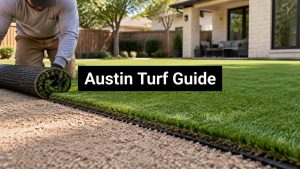
The DIY path includes measuring and marking the site, removing grass and roughly 4 to 6 inches of clay, hauling decomposed granite, hand-tamping the base, rolling out turf, seam-taping with adhesive, and fastening the perimeter with nails or suitable edging. You'll also need to cut around cups and edges without damaging the surface.
For a 300-square-foot green, plan for 40 to 60 hours of work, plus equipment rentals such as a plate compactor, turf cutter, and carpet stretcher. Those figures come from the project plan rather than a verified external source, so treat them as a practical planning estimate, not a guaranteed schedule.
Where DIY tends to fail
Austin clay is the first concern. Expansive soil can heave when the moisture profile changes, and a shallow or uneven base leaves the finished green vulnerable to movement. A single low spot can collect water, settle, and change ball roll for years.
Summer adds another problem. Adhesive can soften in installation heat, making seams harder to place cleanly. HOA requirements may affect permits, setbacks, drainage, visible edges, or changes to the yard. Check those rules before you remove soil, not after the turf arrives.
A professional crew brings laser grading, mechanical compaction, hot-melt seam welding, cup setting to a 4.25-inch depth, fringe integration, and a written workmanship warranty. Those capabilities matter most when the yard is sloped, access is narrow, or the design includes multiple contours and cup locations.
Practical boundary: If you're comfortable preparing a base but don't trust yourself to stretch, seam, and finish turf, hire out the visible playing surface. That hybrid approach often protects the part of the project you'll notice on every putt.
For adjacent golf projects, golf cart conversion help can be a useful resource, but don't confuse mechanical DIY work with putting-green installation. The artificial turf installation guide shows how many separate preparation and finishing tasks sit behind a clean result.
What Drives the Real Cost in Austin
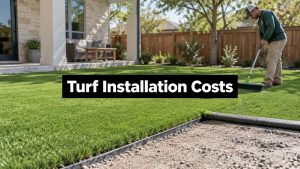
A residential artificial putting green commonly runs about $15 to $40 per square foot installed, according to putting-green cost guidance. Simpler backyard greens sit near the lower end, while performance greens with contour shaping, drainage, edging, and multi-surface integration can reach $40 to $60 or more per square foot.
Base preparation and compaction alone can account for $4 to $12 per square foot, with excavation depth, soil conditions, and drainage rock moving that figure substantially, as described in this installation cost breakdown. Don't compare bids until you know whether each contractor includes excavation, haul-off, base material, drainage, turf, infill, cups, flags, fringe, edging, and labor.
The cost stack
| Cost Component | Share of Total | Austin-Specific Notes |
|---|---|---|
| Excavation and clay removal | Varies by site | Hard clay, limestone, and restricted access can increase labor and hauling |
| Decomposed granite or crushed limestone base | Major cost driver | Depth, grading, and compaction determine surface stability |
| Drainage | Varies by design | Low spots and runoff paths may require added piping or rock |
| Weed barrier | Smaller project component | Helps separate prepared base from surrounding soil |
| Turf product | Varies by specification | Fiber type, density, UV stabilization, and backing affect selection |
| Infill | Varies by product | Sand, rubber, and zeolite blends change feel, speed, and heat behavior |
| Cups and flags | Design dependent | More practice locations require more layout work |
| Fringe and edging | Design dependent | Integration with patios, walkways, and planting beds adds finishing work |
| Labor and access | Often substantial | Narrow gates may prevent mini-excavator access and require hand work |
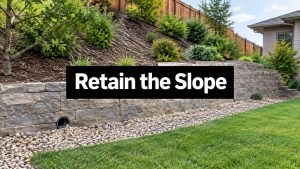
Austin-specific conditions can push the estimate upward quickly. Rocky Hill Country lots may need extra digging, while sloped yards can require retaining or stepped construction. Irrigation tie-ins and backflow preventers may be required by some utilities. HOA architectural review fees, drainage tie-ins, and restricted backyard access can all affect the final proposal.
The sensible place to save is decorative complexity, not the structural base. Reduce unnecessary fringe, simplify cup placement, or choose a straightforward outline if the budget is tight. Don't skip drainage, compaction, UV-stabilized turf, or proper edge restraint. The backyard putting-green cost guide can help you compare estimates by scope instead of chasing the lowest headline price.
Keeping Your Green Playable Year Round
Synthetic turf removes mowing, but it doesn't remove maintenance. A putting green needs light, regular care to keep fibers upright, infill even, cups clear, and drainage open.
A routine that fits Austin
During peak heat, make a quick weekly check. Blow leaves and loose debris away instead of raking, since aggressive raking can pull at fibers. Look at cup collars, edges, and obvious low spots. If pets use the area, rinse waste residue promptly before summer heat bakes odors into the surface.
Once a month, use a stiff but gentle brush to cross-brush against the grain. Work carefully around cups and seams. Oak pollen, pecan shells, and other organic debris can mat the fibers if they sit on the surface, so remove them before they compact into the infill.
Quarterly, check infill depth and top up settled areas as needed. Maintenance guidance recommends seasonal drain clearing and quarterly infill checks to preserve drainage, fiber support, and roll quality, as outlined in this putting-green upkeep reference.
Heat warning: Synthetic turf can become hot enough to cause skin burns and contribute to heat exhaustion or heat stroke. Infill choice matters, and crumb rubber retains more heat than sand or zeolite.
Reflected heat from limestone patios can make an already hot surface less comfortable and may exceed the tolerance of some turf systems. Ask about heat-management options before installing beside a south-facing hardscape. Rare January freezes can also make nylon fibers temporarily stiff, so avoid judging surface speed during a cold snap.
A spring refresh can take about 15 minutes as a practical homeowner routine: clear debris, brush the pile, inspect infill, clean cup collars, and check drainage outlets. That small reset helps the green remain consistent without turning maintenance into a second job.

Your Next Step Toward a Custom Green
Use the site, not the brochure, to choose your installation path. A small, flat, low-traffic project under about 250 square feet may suit an experienced DIY homeowner who has the equipment, time, and patience to compact and finish the work correctly. A sloped yard, complex cupping plan, difficult drainage, narrow access, or HOA approval requirement points strongly toward a professional installation.
A hybrid project can make sense when you want to excavate and prepare portions of the site yourself, then bring in an installer for turf stretching, seaming, cup setting, fringe integration, and final tuning. That approach only works if the installer agrees to inspect and accept the base before the turf arrives.
What a useful site visit includes
A proper Austin consultation should look at more than the proposed square footage.
- Perimeter measurement: The installer should map the actual usable area and note gates, patios, trees, and utility conflicts.
- Laser slope reading: This identifies existing fall and shows whether the planned contours can drain safely.
- Soil probing: Clay depth and compacted layers affect excavation and base design.
- Shade audit: Sun exposure influences turf selection, comfort, and heat management.
- Drainage path check: The crew should identify where roof, patio, and yard water travel during storms.
- Ball-roll test: A sample roll against nearby features can reveal whether the proposed direction and break pattern fit the space.
Ask every installer three direct questions before signing. Will the written warranty cover both turf and labor? Can the company provide proof of base compaction testing? Will the proposal include a Stimp target backed by an actual on-site roll?
Those answers tell you more than a glossy rendering. You'll also learn whether the contractor treats the green as a complete system or as turf placed over whatever soil happens to be there.
Schedule the site visit before your calendar fills. Austin installers can book solid by August, and summer heat is the best time to identify hot reflected surfaces, drainage trouble, and uncomfortable exposure before cooler construction conditions arrive.
Modern Yard Landscapes provides custom artificial putting green design and installation across Austin, including excavation, grading, drainage planning, base construction, contouring, turf installation, and maintenance support. Visit Modern Yard Landscapes to request a site evaluation, discuss your target roll and cup layout, and schedule the next step toward a green built for your actual yard.