
You bought the swing set. The kids are already calling dibs on the first turn. Then you look at the patch of lawn where it's going, and the question hits you.
Grass won't hold up.
In Austin, that spot under the swings gets punished fast. Kids drag their feet. The ground hardens in the heat. Then a hard rain rolls through and the same area turns into a muddy trench. What starts as a clean backyard upgrade can become the ugliest, slickest, hardest patch in the yard if you don't handle the surface the right way.
That's why what to put under a swing set matters more than most homeowners realize. The surface under the playset isn't decoration. It's safety equipment. It also decides whether you'll spend the next few seasons raking, refilling, hosing off mud, and apologizing for dirty shoes coming back into the house.
Your New Swing Set Needs a Safe Landing Zone
A lot of parents start in the same place. They pick out the swing set, choose the backyard corner, and assume the existing grass will be fine for a while.
It won't.
The first few weeks usually look great. Then the traffic pattern starts. Kids launch off the swings. They skid under the seats. They climb up with wet shoes after a storm. One narrow strip under the swing beam gets beat down first. Then the dirt shows. Then the mud shows. Then the whole area starts looking like a problem.

A bare patch under a swing set isn't just ugly. It gets compacted, slick, and unforgiving. If a child falls, that landing surface decides how much force their body takes.
What usually goes wrong first
Most backyard failures follow the same path:
- Grass disappears: Swing traffic kills turf quickly, especially in the landing zone.
- Soil compacts: Hard-packed dirt doesn't cushion much of anything.
- Water collects: Low spots hold rain and turn into a mess.
- Materials scatter: Loose surfaces migrate out of the play area and into the lawn.
That's why homeowners who want a clean result usually need more than a bag of mulch and good intentions. A proper playground ground cover solution should account for impact, drainage, heat, cleanup, and how the yard will look after real use.
Practical rule: If you're treating the surface under the swing set as an afterthought, you're setting yourself up for more maintenance and less safety.
The smart way to think about it
Don't ask which material looks good on install day. Ask which one still works after sun, rain, foot traffic, and a full season of kids using it hard.
That's the difference between a backyard feature you enjoy and one you keep trying to fix.
Decoding Fall Height and Safety Surfacing
A swing set surface has one job above all else. It needs to reduce impact when a child falls.
Consider dropping an egg. Drop it on concrete and the force has nowhere to go. Drop it on a padded sponge and the surface absorbs part of that impact. Playground surfacing works the same way. The technical term is impact attenuation, but the practical meaning is simple. A better surface softens the landing.

What fall height actually means
For a homeowner, fall height is the maximum distance a child could fall from the equipment to the surface below. The higher the structure, the more work the surface has to do.
That's where safety standards come in. You don't need to memorize code language, but you should know this: surface depth and material choice aren't random. They're tied to how much impact that surface can absorb.
According to Gorilla Playsets' guide to what to put under a swing set, for swing sets with decks up to 8 feet high, a minimum depth of 9 inches of loose-fill surfacing material such as rubber mulch, engineered wood fiber, or pea gravel is required to achieve ASTM-compliant shock absorption. That 9-inch depth typically comes from an initial fill of 12 inches that compresses over time, and it needs periodic refilling to maintain safety coverage.
What that means in plain English
If you choose a loose-fill material, you can't toss down a thin layer and call it safe. You need real depth, and you need to maintain that depth.
Here's the homeowner version:
- Measure the equipment height so you know what level of protection the surface needs.
- Choose a material that's meant for impact, not just appearance.
- Account for settling and displacement because loose material never stays perfectly where you put it.
- Plan for maintenance before the kids ever start using it.
The safest-looking playground surface on day one can become the wrong surface if it compacts, scatters, or thins out.
Why this matters before you compare materials
A lot of online advice skips straight to “rubber mulch versus sand” without explaining the safety side first. That's backward.
You should decide based on protection first, then drainage, maintenance, heat, and appearance. If a surface can't deliver a reliable landing zone, it doesn't belong under a swing set, no matter how cheap or easy it looks.
The Ultimate Comparison of Playground Surface Options
Homeowners usually compare playground surfaces by upfront price. That's the wrong filter.
You need to compare them by safety over time, cleanup, durability, and how they behave in a real Austin yard. Some materials look affordable at first and become a maintenance trap. Others cost more upfront and save you repeated work later.
Playground Surface Comparison
| Material | Avg. Cost/sqft | Safety Rating (Fall Height) | Maintenance Level | Lifespan | Austin Climate Suitability |
|---|---|---|---|---|---|
| Engineered wood fiber | Varies by project and supplier | Good when installed at proper depth and maintained | High | Shorter if heavily used and exposed to weather | Fair |
| Rubber mulch | Varies by project and supplier | Strong impact absorption when properly installed | Medium to high | Better than wood fiber, but still shifts | Good |
| Sand | Varies by project and supplier | Limited for playground impact compared with better systems | High | Ongoing refresh and leveling needed | Poor |
| Pea gravel | Varies by project and supplier | Can be used as loose-fill surfacing at proper depth | High | Durable material, but migrates | Fair |
| Playground artificial turf system | Varies by system design and site conditions | Strong when paired with proper cushioning and drainage layers | Low | Long-lasting when professionally installed | Excellent |
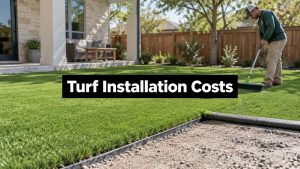
The “Avg. Cost/sqft” column stays qualitative here for a reason. Real pricing depends on site prep, access, drainage needs, edging, and material quality. Anyone giving you a one-size-fits-all number before seeing the yard is guessing.
Where loose-fill materials disappoint homeowners
Wood fiber and rubber mulch get recommended all the time because they can cushion falls when installed correctly. The problem is what happens after the install.
According to Creative Systems' swing set surfacing guide, current guides often ignore the long-term safety drop caused by compaction and displacement, and wood fiber can compact to 4–5 inches within 6–12 months under heavy use, which cuts shock absorption and raises injury risk.
That's the part most families don't hear soon enough. Loose-fill surfaces don't fail all at once. They thin out gradually. Kids kick them aside. Rain moves them. Feet grind them down. The surface still looks “there,” but it isn't performing like it did on day one.
Material-by-material reality check
Engineered wood fiber
Wood fiber is common because it's familiar and can look natural in a backyard.
Its downside is the upkeep. It compacts, shifts, and needs regular attention. In a high-traffic play zone, that means raking, topping off, and checking depth more often than most homeowners expect.
Rubber mulch
Rubber mulch cushions well and doesn't break down like wood. It's usually the better loose-fill option if you're committed to loose fill.
It still moves. It still needs containment. It still doesn't solve the “kids dragging material across the yard” problem.
Sand
Sand sounds simple until it gets wet, tracked indoors, or scorching hot. It also tends to spread everywhere.
For a sandbox, fine. For the main safety surface under a swing set, I don't recommend it.
Pea gravel
Pea gravel drains decently and doesn't rot. It also rolls, scatters, and isn't fun for barefoot kids.
Parents often regret it once they realize they're constantly kicking rock back into place.
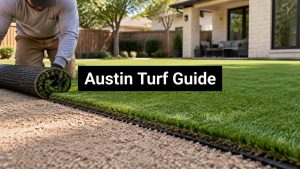
Playground artificial turf system
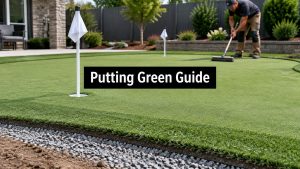
This is the only option on the list that can combine a finished look, controlled drainage, defined edges, and integrated impact protection when it's built correctly.
If you're weighing artificial turf vs natural grass for active backyards, turf sets itself apart. Grass wears out. Loose fill shifts. A proper playground turf system stays put, looks clean, and doesn't ask you to keep rebuilding the play area after every storm or busy weekend.
Cheap at install and easy to live with are not the same thing.
Why Standard Advice Fails in the Austin Climate
A lot of national articles give the same recycled answer. Throw down wood chips. Maybe rubber mulch. Add a border. Done.
That advice falls apart in Austin because Austin is hard on outdoor surfaces. We get punishing sun, long dry stretches, sudden downpours, and yards that don't all drain the same way. A surface that behaves well in a mild climate can turn into a headache here fast.

Heat exposes weak choices
Austin sun cooks exposed ground. Bare dirt gets brick-hard. Sand heats up fast. Natural grass under a swing set usually loses the battle because the traffic is concentrated in one spot.
Then homeowners start patching the area with whatever they can find. A little mulch here, a few pavers there, maybe a rubber mat under the swing path. That pieced-together fix rarely ages well.
If heat is already a concern in your yard, it helps to look at heat-resistant artificial turf options built for Texas conditions. The point isn't just surface temperature. It's choosing a system that holds up when the rest of the yard is getting punished.
Rain creates the mess most guides ignore
The bigger problem is water.
According to a discussion summarized in this post about mud pit formation under swing sets in rainy climates, existing content rarely addresses the engineering challenge of preventing mud pit formation under swing sets in high-drainage or rainy climates, leaving homeowners in wet regions without a system-level solution.
That rings true in Austin. The surface issue usually isn't one storm. It's the cycle. Dry soil hardens. Rain hits hard. Water runs to the low point under or around the playset. Kids keep using the area before it fully recovers. Then the ground turns slick, rutty, and ugly.
Why common fixes don't hold up
These are the usual “solutions” homeowners try:
- Fabric under mulch: Helps separate layers, but it doesn't magically solve drainage or compaction.
- Rubber stall mats: Better than mud in the short term, but they often look improvised and can create edge and drainage issues.
- Extra loose fill: More material doesn't fix poor grading or runoff patterns.
- Natural grass reseeding: That area gets destroyed again as soon as the swings get used hard.
Austin yards don't need a generic playground answer. They need a surface system that handles sun, runoff, and repeated impact at the same time.
That's why standard advice often disappoints local homeowners. It treats the symptom. It doesn't solve the site.
Why Artificial Turf Is the Premier Choice
If you want the most durable, clean-looking, and low-hassle answer for what to put under a swing set, professional-grade playground artificial turf is the best option.
Not basic turf. Not indoor-outdoor carpet. Not a thin green layer rolled over dirt. I'm talking about a playground system designed for impact, drainage, and heavy use.

It works because it's a system
The biggest misunderstanding about turf is that people think it's just the visible top layer. The surface only performs well when the layers below it are built correctly.
According to Adventure Turf's article on artificial grass for playground surfacing, synthetic turf designed for playground use must include a multi-layer system comprising a backing, cushioning layer, drainage layer, and infill to meet ASTM F1292 standards for impact attenuation and shock absorption. The same article notes that playground-specific turf systems incorporate 2–3 inch rubber impact mats rated for fall protection in residential settings.
That's the difference between professional installation and a shortcut. The padding handles impact. The drainage layer moves water. The infill supports performance. The turf surface gives you a clean, finished play area that doesn't scatter across the yard.
Why it wins in a family backyard
A well-built playground turf area solves multiple problems at once:
- Safety: Proper underlayment gives the surface real cushioning.
- Drainage: Water moves through the system instead of sitting in a churned-up dirt pit.
- Cleanliness: Kids don't track bark, gravel, or mud back into the house.
- Appearance: The play area looks intentional, not patched together.
- Maintenance: No constant raking, topping off, or chasing loose material into flower beds.
It's also strong for pet households
Many Austin families don't have a “kid zone” and a separate “dog zone.” The backyard has to do both. That's another reason turf makes sense.
A pet-friendly turf system can be built with drainage and infill choices that are easier to clean and easier to live with than mulch, dirt, or worn-out grass. If the same yard handles swings, soccer, and dogs cutting through the area all week, loose-fill materials get messy fast. Turf holds the space together.
A backyard play surface should reduce chores, not create a new weekly maintenance routine.
The honest tradeoff
Yes, turf usually costs more upfront than dumping in loose material.
But the right comparison isn't turf versus one trip to the supply yard. It's turf versus years of raking, refilling, muddy cleanup, edge repair, and a play area that never quite looks finished. When homeowners want the most durable, safe, and hassle-free solution, playground turf is the clear winner.
Planning Your Safe and Stylish Playscape
A safe swing set surface isn't a weekend shortcut project if you want it to last. The clean results people admire usually come from the work they don't see.
What a quality install actually involves
A professional playscape build typically includes:
- Site prep and excavation: Removing weak material and creating a stable footprint.
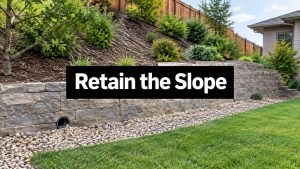
- Grading for drainage: Making sure water moves away instead of collecting under the swing path.
- Base construction: Building a compacted foundation that supports the system.
- Impact layer installation: Adding the padding that gives the surface its protective performance.
- Turf layout and seaming: Creating a finished surface that stays secure and looks natural.
- Edge control: Keeping the play zone crisp, safe, and contained.
That's why DIY inspiration is useful for ideas, not always for execution. If you're still deciding what kind of setup fits your family, the Playz DIY play structures guide is a helpful resource for brainstorming layouts and play features before you commit to a final design.
What homeowners should expect
Ask tough questions before anyone starts digging. How will the area drain? What padding is being used? How will edges be secured? What happens where the play area meets the rest of the yard?
Those answers matter more than a pretty sample board. A playscape has to perform under heat, water, traffic, and time.
Give Your Family the Best with a Professionally Installed Surface
The wrong surface under a swing set causes the same problems over and over. Mud. Compaction. Scattered material. Hard landings. Constant upkeep.
The right surface fixes the whole area, not just the look of it.
For Austin families, the best answer is usually a professionally built playground turf system. It handles the climate better, gives you a cleaner finish, cuts maintenance, and provides the kind of integrated safety that loose materials struggle to maintain over time. If you're already exploring artificial turf installation contractors for a backyard project, make sure you're looking at companies that understand grading, drainage, impact layers, and how a family uses the yard.
There's no prize for doing this twice. If you're going to invest in a swing set, give it a landing zone that protects your kids and keeps your backyard looking sharp.
Stop settling for muddy patches and temporary fixes. Build the play area once, build it right, and enjoy it.
If you want a backyard play area that stays safe, drains well, and looks finished year-round, talk to Modern Yard Landscapes. Schedule a consultation and get a surface plan built for your yard, your family, and the way Austin weather behaves.