
You're probably here because you've watched a child jump from a platform, hit the ground harder than you liked, and immediately wondered whether the surface underneath is safe. That concern is justified. Most playground injuries don't start with broken equipment. They start with a fall onto the wrong surface.
That's why playground ground cover deserves more attention than swings, slides, or climbers. If the surface fails, the whole playground fails. For Austin homeowners and property managers, the decision gets even tougher because drainage, clay soil, and heat can turn a decent-looking installation into a maintenance problem fast. The right answer isn't just about what looks good on day one. It's about what still protects children after storms, traffic, and a long summer.
The Right Ground Cover Is Your First Line of Defense
A lot of people treat playground surfacing like landscaping mulch. That's a mistake. Playground ground cover is safety equipment.
Approximately 70% to 80% of all playground-related injuries are caused directly by falls, and the CPSC explicitly mandates that ground surfaces around equipment must have at least 12 inches of wood chips, mulch, sand, or pea gravel, or certified rubber mats, to prevent severe head injuries according to this CPSC-based playground impact zone guidance. If you remember one thing, remember that.
What most people get wrong
They focus on the playset first and the landing zone second.
That's backwards. A tall play structure over compacted dirt, thin mulch, or patchy grass is a hazard. A simpler structure over a properly installed impact-absorbing surface is much safer. The surface isn't an accessory. It's the system that reduces the consequence of a fall.
Practical rule: If you can't verify the depth, drainage, and condition of the surface, you can't assume the playground is safe.
This matters just as much in a backyard as it does at an HOA, school, church, or daycare. Kids don't fall more gently because the equipment is on private property.
What you should demand from any solution
Before you compare materials, set a hard standard. Your playground ground cover should do four things well:
- Absorb impact: It needs to cushion falls, not just cover bare soil.
- Stay in place: Wind, traffic, and runoff shouldn't strip protection away from high-use areas.
- Handle Austin weather: Heavy rain and clay soil expose weak installations fast.
- Stay usable: The surface shouldn't become muddy, rutted, compacted, or difficult to cross.
A safe playground feels simple when it's done right. Kids play. Adults relax a little. Nobody's constantly worrying about thin spots, puddles, or hard-packed areas under the slide exit.
That peace of mind usually comes from one thing. Someone made the ground cover decision carefully instead of cheaply.
Decoding Playground Safety and ADA Compliance
Safety standards sound technical because they are technical. That doesn't mean they should be confusing. Think of them like a vehicle safety rating. You don't need to run crash tests yourself, but you do need to know what the numbers mean before you trust the product.

What HIC and GMAX actually tell you
For public playgrounds, ASTM F1292 requires surfacing to achieve a Head Injury Criterion below 1,000 and a GMAX value under 200, which measures surface hardness and the risk of life-threatening head injuries at certified fall heights, as explained in this guide to surfacing ASTM standards for public playgrounds.
In plain English:
- HIC is about head injury risk during impact.
- GMAX tells you how hard the surface hits back.
Lower is better. A surface can look soft and still fail where it matters. That's why appearance means very little without proper installation and testing.
Depth and fall zones are not optional
Loose-fill materials only work when they're installed at the proper depth and kept there. Once they scatter, compact, or wash out, the protection changes. The slide exit and under-swing areas usually fail first because that's where traffic is heaviest.
If a contractor can't clearly explain critical depth, fall height, edge containment, and where material tends to migrate, keep looking. You need someone who understands how the surface behaves after months of use, not just after installation day.
A playground surface should be judged by its worst day, not its best day.
ADA compliance matters more than many owners realize
Accessibility isn't just a public-facility issue. It's part of good design. A surface should be firm and stable enough for strollers, mobility devices, and caregivers moving through the space without fighting ruts or loose material.
If you want a broader primer on how accessibility standards affect public spaces, this article on understanding concert venue ADA requirements is useful because it shows the bigger principle. Access has to be built into the environment, not added as an afterthought.
The practical takeaway
When you review playground ground cover options, ask these questions:
- Has this system been designed to meet impact standards at the equipment's fall height?
- Will the surface remain firm and navigable over time?
- Can the installer explain maintenance requirements clearly?
If the answers are vague, the proposal is weak.
Comparing Your Playground Ground Cover Options
Most buyers don't need more choices. They need clearer judgment. Every surface has tradeoffs, but the tradeoffs are not equal.

A comparative study found that playgrounds with rubber surfaces had the lowest rate of injury, with a risk half that of bark surfaces, while Engineered Wood Fiber is also a top choice because it meets ASTM F2075, is ADA compliant, and offers high fall protection, according to this playground injury study on PubMed. That gives us a useful baseline. Rubber performs very well for injury reduction, and EWF remains a serious contender when installed and maintained correctly.
Engineered Wood Fiber
EWF is the best version of wood-based loose fill. It's not random mulch. It's processed to perform better, and it remains a strong option when budget matters.
Where it works well:
Natural-looking play areas, budget-conscious installations, and projects where regular maintenance is realistic.
Where it frustrates owners:
Kick-out zones, edges, under swings, and slide exits. That's where it gets displaced and needs attention.
My take:
EWF is respectable, but it asks you to stay involved. If you want a surface you can install and mostly ignore, this isn't it.
Loose-fill rubber mulch
Loose-fill rubber gives strong impact absorption and usually stays springier than wood fiber. It doesn't break down the same way natural material does, which appeals to buyers who want less frequent top-offs.
The downside is movement. Loose rubber still shifts. It can become uneven, and containment matters a lot. If the play area gets heavy use, you still need monitoring and grooming.
Poured-in-place rubber
Poured-in-place rubber is one of the cleanest and most accessible systems available. It creates a continuous, wheelchair-friendly surface and offers consistent coverage across the whole area.
Its weakness is usually cost and, in some cases, long-term surface wear. It also demands proper base prep. A bad substrate can ruin an expensive finish.
Sand and pea gravel
These materials still show up because they seem simple. In reality, they create more problems than most owners expect.
- Sand: It migrates, gets dirty, and doesn't create a polished or easy-to-manage play area.
- Pea gravel: It moves underfoot and can be difficult for accessibility and routine use.
- Both: They often create cleanup issues outside the play zone.
I don't recommend either one for clients who want a clean, dependable, low-hassle result.
Natural grass and bare soil
Grass looks soft until it wears out. Dirt feels fine until it compacts. After that, you're left with a hard, slick, or muddy landing area that doesn't perform like impact surfacing should.
If you're weighing aesthetics and maintenance across lawn surfaces more broadly, this comparison of artificial turf vs natural grass is helpful because the same long-term wear issues show up in play zones even faster than they do in ordinary yard spaces.
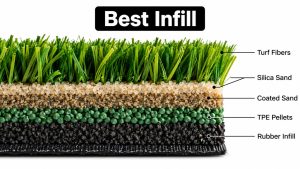
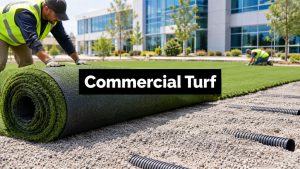
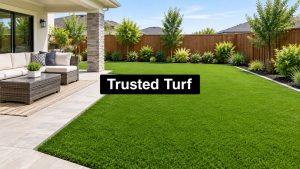
Artificial turf with a playground system
Here's my opinion on the matter: For many Austin properties, artificial turf is the most practical all-around answer when it's installed as a real playground system, not as decorative turf laid over a weak base.
A proper system can deliver:
- Consistent coverage: No thin spots from kids kicking material out.
- Cleaner use: Less mud, fewer loose materials tracked into buildings or homes.
- Better accessibility: A firmer, more navigable surface.
- Strong appearance: It stays visually finished instead of looking scattered or worn.
If you want the look of a finished landscape and the function of a safety surface, turf is hard to beat.
Quick comparison table
| Surface | Safety potential | Maintenance burden | Accessibility | Austin practicality |
|---|---|---|---|---|
| EWF | Good when depth is maintained | Moderate to high | Good, but can displace | Fair |
| Loose-fill rubber | Strong | Moderate | Fair to good | Fair |
| Poured-in-place rubber | Strong and consistent | Low | Excellent | Good |
| Sand or pea gravel | Limited practical appeal | Moderate | Weak | Poor |
| Artificial turf system | Strong when built correctly | Low | Good to excellent | Excellent |
The key phrase there is when built correctly. Material alone doesn't save a bad installation.
Installation and Drainage in the Austin Climate
Austin changes this decision. National advice can help, but it often ignores what local ground conditions do to playground surfaces.
Heavy clay soil holds water, expands, contracts, and creates movement under the surface. Then a strong rain hits, runoff cuts through the play area, and loose-fill materials migrate toward the lowest edge. A week later, the playground still looks covered, but the protection isn't uniform anymore.
Why local site prep matters so much
A safe-looking playground can fail from underneath.
Good installation starts below the visible surface. That means grading, managing runoff, stabilizing the base, and planning where water leaves the area. If those steps are skipped, the surface above becomes harder to trust no matter what material you picked.
For turf systems especially, drainage design is a major part of long-term performance. A properly built base helps the surface stay usable after storms instead of turning into a soggy mess. This breakdown of artificial turf drainage systems is worth reviewing if your site already has puddling, runoff, or drainage complaints.
What fails first on Austin properties
You'll usually see problems in the same places:
- Low corners: Water collects and weakens the edge.
- Slide exits: Repeated impact creates wear and displacement.
- Perimeter lines: Loose fill escapes if containment is weak.
- Shaded damp zones: Moisture lingers longer and creates maintenance headaches.
Those aren't abstract design concerns. They're the places parents and managers notice after the first season.
Austin installations need drainage planning up front. Waiting to fix water movement after the surface is installed costs more and solves less.
The crew and equipment matter too
Good site work depends on how efficiently and cleanly materials are moved, dumped, and placed around tight residential yards or active commercial properties. If you're curious about the kind of hauling setups that make grounds installation more controlled and productive, these efficiency-boosting trailer features offer a useful behind-the-scenes look.
That kind of operational detail may sound secondary, but it affects results. A crew that handles grading, material placement, and cleanup well usually handles the rest of the project well too.
Understanding the True Cost of a Playground Surface
The cheapest quote is often the most expensive decision. Playground ground cover has two price tags. The one you pay to install it, and the one you keep paying to maintain it.
That's why low upfront cost can be misleading. A surface that needs constant correction, refill, cleanup, or replacement stops being cheap pretty quickly.
Upfront cost versus ownership cost
Engineered Wood Fiber is economical, but it requires maintenance to address compression in high-traffic kick-out zones and maintain a minimum 12-inch depth for safety, which creates an ongoing labor and material cost, according to this playground ground cover material guide.
That single fact should change how you compare bids.
If one option costs less today but needs regular topping off, raking, redistribution, and periodic refreshes, you're not comparing equal systems. You're comparing a lower entry price against a higher ownership burden.
What owners often forget to budget for
Some costs don't appear in the installation proposal, but they still hit your budget later.
- Labor time: Staff or household time spent re-leveling and cleaning.
- Material replacement: Loose-fill products don't stay perfectly distributed.
- Appearance drift: A worn play area makes the whole property look neglected.
- Use disruption: Maintenance often happens because the surface is no longer performing as intended.
If you're evaluating whether a premium surface pays off over time, this page on artificial turf for playground cost is a practical next read because it frames the investment beyond just installation day.
The better question to ask
Don't ask, “What's the cheapest playground surface?”
Ask, “What surface will still be safe, clean, and manageable after years of use on this specific property?”
That's a smarter buying question. It protects your budget and your sanity.
Why Artificial Turf Is Often the Smartest Investment
Artificial turf isn't the answer for every outdoor challenge. For playground ground cover in Austin, though, it solves a remarkable number of them at once.
It gives owners a surface that looks finished, stays in place, handles traffic, and avoids the constant reshaping that loose-fill systems require. That's a big deal when the play area gets daily use.

Why it performs so well in real life
Artificial turf works best when it's installed as a system. That means the turf layer, the base prep, and the drainage plan all support each other.
For homeowners, that usually means a cleaner yard with less mud and fewer loose materials tracked inside. For property managers, it means a more polished, easier-to-maintain play area that doesn't look tired after every storm or busy weekend.
Where it beats the alternatives
Turf doesn't scatter like EWF. It doesn't shift around like loose rubber. It doesn't create the same “always needs attention” feeling that frustrates busy owners.
Its strengths are practical:
- Cleaner finish: The area looks intentional, not temporary.
- Lower routine upkeep: No frequent raking or top-offs.
- Strong drainage potential: When the base is built right, water moves through the system better.
- Consistent user experience: Kids, parents, and maintenance teams all deal with a more stable surface.
If you want to see what a dedicated turf solution looks like, this page on playground artificial turf shows the kind of application where turf makes the most sense.
The best surface is the one that protects children without creating a constant maintenance problem for adults.
My recommendation
If you're choosing for an Austin backyard, school, church, multifamily property, or commercial play area, I'd put artificial turf near the top of the list immediately. Not because it's trendy. Because it lines up with important priorities: safety performance, drainage, cleanliness, appearance, and long-term manageability.
That combination is hard to beat.
Your Decision Checklist and Expert Consultation
A good decision gets easier when you stop chasing the perfect product and start matching the surface to the site. The checklist below keeps the process grounded.

Questions that should drive your choice
- Know the equipment height: The surface has to match the play equipment, not just the look you want.
- Decide how much maintenance you realistically can do: Be honest here. Aspirational maintenance plans usually fail.
- Check accessibility needs: A surface should work for all users, not just the most agile ones.
- Study drainage conditions: If the area already puddles, treat that as a design priority.
- Think beyond year one: The best-looking install on day one can become the biggest headache by year two.
What trustworthy guidance looks like
Top-tier landscaping teams in Austin build trust by personalizing solutions to fit the client's timeline and budget, and by maintaining transparent communication from the initial consultation to the final walkthrough, as described in this discussion of what distinguishes the best landscaping teams in Austin.
That standard matters. You don't need a contractor who pushes one product without listening. You need someone who looks at the grade, soil, drainage, access, use level, and maintenance expectations before making a recommendation.
A strong consultation should answer questions clearly, not dodge them. It should leave you feeling calmer, not more confused.
If you're a homeowner or property manager trying to make the safest and smartest call, the next step isn't guessing. It's having a professional walk the site, inspect the conditions, and tell you what will work.
If you want a clear recommendation for your specific property, contact Modern Yard Landscapes. They can evaluate your play area, explain the safest options in plain language, and help you choose a surface that fits your goals, drainage conditions, and maintenance expectations. That kind of local, straightforward guidance is the fastest way to turn uncertainty into a safe plan you can trust.