
Most advice on synthetic turf San Antonio gets one big thing wrong, it acts like turf is the answer for every yard. It isn't. Some properties are a great fit for a fully installed system, others are better off with native plantings, shade-tolerant groundcovers, or a mixed design that keeps the soil doing part of the work.
The right call depends on shade, drainage, soil depth, and how the yard gets used. A cramped side yard, a thin patch of dirt under heavy shade, or a pet area that gets torn up every week can be a smart turf candidate. A larger front lawn with good soil and full sun may be better served by drought-tolerant landscaping that doesn't ask the ground to do more than it can handle.

If you're comparing turf with sod, it helps to read a neutral breakdown like the turf or sod guide before you commit to either direction. The smartest homeowners also compare options against the actual yard, not a sales pitch. For a useful local comparison point, see this artificial turf vs natural grass breakdown.
Practical rule: If the site floods, bakes all day, or has little usable soil, get the drainage and subgrade evaluated before you talk about color or blade shape.
Is Synthetic Turf Actually Right for Your San Antonio Yard
San Antonio yards that flood, bake, or barely have usable soil benefit from synthetic turf. Yards with deep soil, full sun, and room for native plantings often do better with living ground cover. That is the honest split, and it keeps homeowners from paying for turf where a simpler planted design would do the job.
Where turf makes sense
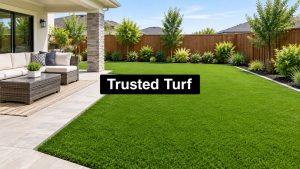
Synthetic turf earns its keep in spots where natural grass struggles to stay intact. Narrow side yards, shaded back corners, dog runs, play zones, and heavy-traffic entry strips are the usual winners. Those areas get worn down by foot traffic, compacted soil, pet use, or too little light, and turf gives you a cleaner surface without constant reseeding or patching.
It also works well where consistency matters more than chasing perfect growth. A family that uses the yard every week needs a surface that stays usable, not one that thins out after a stretch of heat or shade. That is why many homeowners start with turf in a small problem area before they ever consider a full-yard conversion.
Where native planting is the smarter play
If your yard has decent soil depth, good drainage, and plenty of sun, a drought-tolerant native design is often the better long-term choice. You keep more cooling from the soil and plants, and you are not forcing one installed surface to carry the whole property.
That trade-off gets ignored in a lot of sales talk. A synthetic yard can look clean and stay uniform, but a healthy native yard fits the site better when the ground already supports plant growth. In those situations, a partial-turf layout, a native border, or a groundcover plan usually makes more sense than covering everything.
If you are weighing materials, a turf or sod guide can help you compare the basics before you commit. For a more direct local comparison, read this side-by-side comparison of synthetic and natural grass for San Antonio yards.
What a trustworthy assessment should look at
The property itself should drive the recommendation. A serious installer checks sun exposure, drainage, soil conditions, slope, and how you use the space. Anyone who says turf fits before walking the yard is selling a product, not solving a problem.
Ask for a site-specific answer, not a recycled pitch. The right call comes from seeing where turf helps and where it does not. A good installer will say both plainly, and that kind of honesty is what turns a quote into a consultation call.
Understanding Real Synthetic Turf Costs in San Antonio
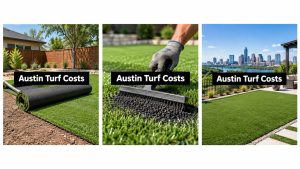
Price stops a lot of homeowners before they ever compare designs. That reaction makes sense. Synthetic turf is not priced like a simple outdoor finish. In San Antonio, the actual cost sits in labor, prep, and system quality, not just the roll of turf. Local pricing guides consistently place installed costs between $8 and $15 per square foot, while material-only turf runs much lower, which is why the final number depends on far more than the surface you see.
For a typical 1,000-square-foot residential project, that installed range puts the total in the neighborhood of $8,350 to $15,000 before drainage upgrades, edging, or custom shaping are added. That spread is wide because scope changes fast. A local market reference also shows how quickly pricing moves with project size and site conditions, which is the main reason I tell homeowners to stop comparing turf to bagged mulch or a patch of sod. You are paying for a system, not a single material.
San Antonio Synthetic Turf Cost Breakdown
| Component | Cost Range | What Affects Price |
|---|---|---|
| Material-only turf | $1.40 to $6.49 per square foot | Fiber quality, density, backing, and intended use |
| Installed turf | $8.35 to $15 per square foot | Site prep, labor, grading, drainage, and edging |
| Per-square-foot market spread | $5.18 to $13.72 | Project size, layout complexity, and product choice |
| Example 1,000-square-foot install | $8,350 to $15,000 | Scope, access, and whether specialized features are included |
The biggest cost driver is what sits under the turf. If the yard needs excavation, haul-off, new base material, or drainage correction, the quote rises for a good reason. Cheap bids usually skip one of those steps. That is where early failures start, and that is where homeowners end up paying twice.
Straight answer: If a quote sounds too simple, it probably is. Ask what happens under the turf, not just what the turf looks like.
A solid quote should break out materials, labor, base work, and finish details. If it does not, you do not have a real comparison, you have a guess. Before you sign anything, use this local cost guide to sanity-check the numbers and see whether the proposal matches the scope.
Technical Specifications That Matter in South Texas Heat
A lot of turf looks good on paper and fails in the yard. In South Texas, the specs that matter are the ones tied to drainage, durability, and heat management. If you do not know what to ask for, you are stuck trusting a brochure.

The numbers that matter most
For San Antonio installations, a technically strong specification is a fully permeable turf system with a pile height around 2.0 inches, fiber denier above 9,000, and permeability of at least 40 inches/hour, as used in public-sector synthetic turf specs for stormwater handling and reduced ponding in this synthetic turf system specification. Those numbers are not marketing fluff. They tell you whether the surface can handle rain, use, and the abuse of a hot climate.
A 2.0-inch pile height gives the system enough body to look natural without turning floppy under traffic. Fiber denier above 9,000 signals a stronger product that stands up better to daily use. And permeability of at least 40 inches/hour matters because San Antonio storms can overwhelm a weak surface fast.
Materials and construction
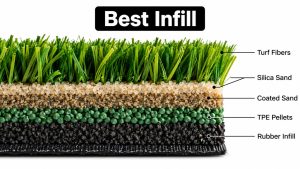
Ask what the fibers are made of. UV-stabilized polyethylene fibers are a practical standard for long exposure because they are built to resist breakdown from sun and weather, and they are part of the product language used in Central Texas turf product specifications. You also want to know whether the system is fully permeable from the face material down to the base.
A turf system lives or dies on the install details. The base has to be graded correctly, compacted correctly, and built to move water away from the surface. If that work is sloppy, the turf may still look fine the day it is finished, but it will not stay that way.
A turf system is only as good as the base below it. If the subgrade cannot move water, the surface eventually shows it.
That is why I do not like vague product talk. “Premium” means nothing unless the installer can name the pile height, denier, drainage rate, and backing. If a contractor dodges those questions, keep shopping.
For a plain-English product comparison and more detail on a comparison of heat-resistant turf options for South Texas, look at a comparison of heat-resistant turf options for South Texas.
Managing Heat and Surface Temperature in Peak Summer
Heat is the part of the turf conversation that needs a straight answer. In San Antonio, the sun hits hard, and surface comfort affects how much you use the yard. The wrong product, the wrong color, or the wrong amount of shade can turn a good-looking install into a space nobody wants to cross in July and August.
Compare the cooling options
Some turf systems manage heat better than others. SYNLawn's HeatBlock product specifications say the surface can run up to 20% cooler than competing turf. That figure comes from SYNLawn's own product testing. Independent comparative data is limited, so treat the 20% claim as manufacturer-reported rather than independently verified. It still tells you something useful, a better-built system can handle heat better than a standard product.
The product matters, but the site matters just as much. Shading from trees, structures, or patio covers makes a bigger difference than many homeowners expect. In full sun, the turf, the infill, and the base all need to be chosen with heat in mind, because a cheap system will hold heat longer and feel harsher underfoot.
What helps families and pets
For barefoot use, pet use, and play zones, I focus on three things, shade, airflow, and product selection. A yard with some natural shade can stay comfortable if the system is built the right way. A yard with full sun and no cover needs more careful planning, because the same turf that feels fine in spring can feel uncomfortably hot in peak summer.
Maintenance also affects surface temperature. Debris left on top of the turf traps heat and makes the surface feel worse. A clean, brushed turf bed performs better than a neglected one, and that shows up in comfort as much as in appearance.
Good rule of thumb: Don't choose turf just because it is low-maintenance. Choose it because the site can support it and because the use pattern makes sense in the heat.
The bigger point is simple. Turf should be part of a heat strategy, not a substitute for one. If your property gets a lot of full-sun exposure and you want heavy barefoot use, ask hard questions about surface temperature, infill choice, and shade before you sign a contract.
What the Installation Process Looks Like
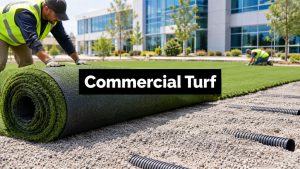
A turf installation should move like a construction job, not a lawn makeover. The difference matters, because the hidden work underneath the grass is what determines whether the system drains, stays flat, and keeps its seams tight over time. Homeowners who understand the sequence make better decisions and spot shortcuts faster.

The job starts with planning the layout
A real install starts with layout, not with a pile of turf rolls. The crew marks the field, decides where the seams will run, and maps the direction of the blades so the finished surface reads consistently from every angle. If that part is rushed, the yard can look patchy even when the rest of the work is solid.
That planning also covers edge details. Clean borders around patios, walkways, trees, and tight corners separate a professional job from a backyard compromise. A good installer decides where cuts will land before the first piece goes down, because bad seam placement is hard to hide later.
Seams, edges, and transitions are where the work shows
Seams need to disappear visually and hold up under traffic. That means the crew has to align the backing, trim cleanly, and join the sections without leaving ridges or gaps that catch the eye or shift under use. Glue alone does not save a sloppy layout.
Edge restraint matters just as much. If the perimeter is loose or poorly anchored, the turf can creep, lift, or curl at the borders over time. Around hardscape transitions, the installer should also make the change in surface height clean and deliberate so the edge does not look patched in after the fact.
The final finish is more than a quick brush-out
Once the turf is set, the crew brushes the fibers and checks how the surface reads in daylight. They should walk the yard, catch visible joins, and correct any spots that look flat, loose, or misaligned. In a good installation, the last hour is spent on details, not on packing up early.
That finish work includes a maintenance handoff. Homeowners should get clear instructions on brushing, rinsing, debris removal, and how often the surface needs to be checked after the first few weeks of use. A contractor who explains the follow-up care is treating the system like a long-term installation, not a one-day sale.
What to ask before work starts
Ask who is handling seam placement, edge anchoring, and the final grooming pass. Ask how the crew will handle tight transitions around steps, drains, and hardscape. Ask whether the installer gives you a written care schedule after the job is done, so you know what to do once the crew leaves.
The cleanest turf jobs are won or lost in the prep work and the finish work. Once the turf is down, bad seams and sloppy edges are hard to fix without tearing up part of the yard.
For a step-by-step look at installation details, this artificial turf installation guide is worth reviewing before you approve a proposal. A strong installer should be able to explain every stage without hiding behind jargon.
Choosing the Right Contractor and Protecting Your Investment
Price matters, but trust matters more. A turf system lasts for years, and the contractor you choose decides whether the yard drains properly, the seams stay tight, and the finished surface still looks right after real use. Vet the company the same way you would vet any trade that touches grading, drainage, and finish work. Be blunt, and expect straight answers.

What a serious installer should show you
Start with licensing and insurance. If a contractor cannot verify coverage, walk away. Then ask for a local project portfolio, not polished stock photos. You want to see actual San Antonio yards, because the soil, slope, and drainage problems here are specific.
Next, read the written warranty terms closely. A warranty only helps if it clearly covers the product and the workmanship. Then check references and reviews from people who had similar work done. Finally, demand a detailed bid breakdown that separates materials, labor, base preparation, and cleanup instead of stuffing everything into one line.
Red flags and green flags
A low bid with no detail is a red flag. So is a contractor who promises a perfect result without talking about drainage, access, or grading. If they will not explain the base work, they are asking you to trust the finish while ignoring the foundation.
Green flags are easy to spot. The contractor asks about tree roots, irrigation, usage, pets, and shade. They explain why a specific product fits your site. They also talk plainly about what turf can do and what it cannot, which is exactly the kind of honesty that saves you money.
My advice: Hire the company that tells you what the yard needs, not the one that tells you what you want to hear.
If you want a site-specific recommendation for your San Antonio property, Modern Yard Landscapes offers residential and commercial synthetic turf installation, custom putting greens, and pet-friendly dog runs, along with site preparation and drainage-focused work. Use the consultation to compare your options against the yard you currently have.
If you are ready to make a confident decision on synthetic turf San Antonio, talk with a team that will inspect the site, explain the trade-offs, and give you a quote built around your property instead of a template. Visit Modern Yard Landscapes to get a real assessment before you commit to a turf system.