
You're probably reading this because your yard keeps asking for more than it gives back.
Maybe the grass burns out every summer. Maybe water hangs around the patio after a storm. Maybe the side yard is wasted space, the back yard feels exposed, and the whole property looks unfinished no matter how much maintenance you pay for. That's common in Austin. Harsh sun, compacted soil, slope changes, and heavy-use outdoor living don't forgive guesswork.
That's exactly why professional outdoor design matters. It's not about adding a few plants and hoping the yard feels better. It's about building a space that works in Austin, fits how you live, and doesn't become a maintenance burden six months later.
Transform Your Austin Yard From Frustration to Oasis
I've seen the same pattern over and over. A homeowner buys a great house in a great neighborhood, then spends years fighting the yard. The lawn stays patchy. The irrigation feels endless. The dog tears up the only green area that gets used. The patio is technically there, but nobody wants to sit on it in the afternoon because the layout never made sense.
That situation doesn't need another temporary fix. It needs a plan.

A well-designed Austin yard solves multiple problems at once. It can reduce the amount of thirsty natural grass you have to baby, create clean entertaining space, handle runoff correctly, and give you a yard you'll use. In many cases, artificial turf works best when it's treated as a design decision from the start, not a patch job added later. The same goes for drainage, edging, lighting, retaining walls, and putting greens. These features need to work together.
Why this isn't a niche service
Some owners still think hiring a designer is only for estate homes or luxury remodels. That's outdated. The U.S. outdoor design industry reached $9.7 billion in revenue in 2026 and included 48,721 businesses that year, according to IBISWorld's U.S. landscape design industry data. That tells you something important. Professional design is a mainstream property decision, not an indulgence.
What Austin owners usually want
Most consultation calls come down to a few practical goals:
- Less upkeep: Owners are tired of mowing, reseeding, mud, and seasonal decline.
- Better use of space: They want room for pets, kids, guests, golf practice, or quiet evenings outside.
- Cleaner performance: They want drainage, grading, and durable surfaces handled correctly.
- A modern look: They want the yard to match the architecture and lifestyle of the home.
You shouldn't have to choose between a yard that looks good and a yard that behaves well. Good design does both.
What Professional Landscape Design Truly Delivers
A lot of people think exterior design is mostly about appearance. It isn't. Appearance matters, but professional exterior design is a problem-solving service first.
The primary job is to study the site, understand how you'll use it, and create a layout that keeps working after installation day. If your designer doesn't care about access, drainage paths, sun exposure, maintenance patterns, and material transitions, you're not getting design. You're getting decoration.

A real design starts with analysis
Before anyone talks about pavers, turf styles, plants, or lighting, the site needs to be read properly. That means identifying where sun hits hardest, where water collects, where privacy matters, how people move through the yard, and which areas deserve premium investment.
In Austin, this matters even more because outdoor spaces get used hard. A back yard might need to function as a dog run, a gathering space, a visual extension of the kitchen, and a low-maintenance lawn substitute all at once. If those priorities aren't sorted up front, the finished project feels disjointed.
Good design reduces future work
One of the most overlooked parts of professional design is maintenance planning. Sharp corners and awkward bed lines might look interesting on paper, but they create mowing headaches, wasted planting pockets, and cleanup problems. Guidance on awkward yard layouts notes that avoiding acute angles in lawns and beds helps prevent difficult-to-mow corners and unusable spaces, which reduces labor and improves safety, as discussed in this landscape layout guide on awkward yard shapes.
That principle carries into every decision:
- Simple geometry is easier to maintain than fussy shapes.
- Defined circulation keeps traffic where it belongs.
- Durable materials hold up better under heat, pets, and guests.
- Integrated lighting improves evening usability and safety. If that's part of your goals, thoughtful landscape lighting design should be planned with the layout, not bolted on later.
What clients should expect
A proper design should answer questions before construction starts.
| Design question | What a professional plan should resolve |
|---|---|
| Where will people gather | Patio size, access, furniture layout, and shade strategy |
| What happens in wet weather | Drainage path, grading logic, and outlet planning |
| Which surfaces get heavy use | Turf, hardscape, decomposed granite, or planted area selection |
| How much upkeep is realistic | Bed size, lawn area, edging detail, and plant density |
| What should the yard feel like | Modern, clean, warm, family-friendly, pet-friendly, or entertainment-focused |
If those answers are vague, stop the process and get clarity before anyone breaks ground.
Your Design Journey From Vision to Reality
The biggest fear most clients have is simple. They don't want to start a project they can't control.
That's fair. A good design process should feel organized, collaborative, and easy to follow. You shouldn't have to wonder what happens next or who's making decisions. When the process is clear, the project gets better and the client feels calmer.

Step 1 and Step 2
First comes the consultation. At this stage, you explain what's not working, what you want the yard to do, and what kind of maintenance you're willing to live with. Be blunt. If you hate mowing, say it. If the dog is destroying one side of the yard, say that too.
Then comes the site review. That includes measurements, slope observations, access constraints, drainage concerns, sun exposure, and the relationship between the house and the outdoor space. The thoroughness of this review often determines project success. If nobody studies the site seriously, the design will miss the critical issues.
Step 3 and Step 4
Next comes concept development, a stage where the layout starts making sense. Maybe the underused lawn becomes turf and a seating area. Maybe the narrow side yard becomes a dog run. Maybe the low spot near the fence becomes part of a drainage solution instead of a recurring mud problem.
After the concept is right, materials and details get refined. That includes hardscape finishes, edging, turf applications, bed layout, wall placement, drainage components, and lighting positions. This stage matters because details determine whether a yard feels polished or patched together.
Practical rule: If a contractor wants to skip from a quick visit straight to installation without a real plan, that's not efficiency. That's risk.
Step 5 and Step 6
Installation follows the plan. The best projects don't feel chaotic because the decisions were already made before the crew arrived. You know where the surfaces go, how transitions work, and what the final result should look like.
The last step is review. Walk the site. Ask questions. Make sure drainage lines, turf seams, elevations, and finish details match the design intent. You're not being difficult. You're protecting your investment.
How long it usually takes
Timelines vary, but there is a normal range. A typical residential outdoor area design phase takes 2 to 6 weeks, and installation often takes 1 to 4 weeks, depending on complexity, weather, and material availability, according to Forbes guidance on how long landscaping projects take.
That range is useful because it keeps expectations realistic. Quality work is organized work. Fast isn't the goal. Clear and correct is the goal.
Integrating Modern Features for the Austin Lifestyle
Austin owners don't just want a prettier yard. They want a yard that fits how they live. That usually means lower water demand, fewer muddy areas, clean lines, room for entertaining, and surfaces that stay usable even under heat and heavy traffic.
That's why modern features should be designed as one system.

Artificial turf belongs in the plan from day one
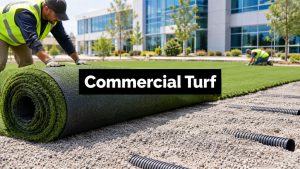
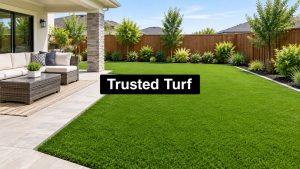
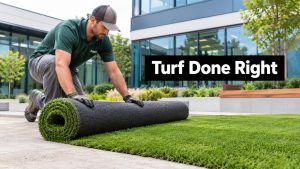
Artificial turf works best when it's part of the original layout. It can define entertainment zones, clean up narrow side yards, create pet-friendly areas, and replace grass that never thrives. But turf only performs well when the base, edging, and drainage are handled correctly.
That's why turf shouldn't be treated like a cosmetic add-on. It affects elevations, runoff, transitions to pavers, and how the whole yard feels underfoot. For projects centered on patios, seating, and clean outdoor circulation, a coordinated outdoor living space design approach usually produces a much better result than piecemeal upgrades.
Drainage is the hidden backbone
Most owners notice drainage only after something goes wrong. Water stands near the house. Mulch washes out. Turf edges get messy. Patios stay wet. The fix is rarely a surface tweak. It's engineering.
Drainage systems need a continuous downhill grade, and even a fall of about 0.2 inches per 10 feet can be important for performance, according to this drainage installation guide. That's why accurate grading and outlet planning matter so much. A yard can look sleek and still fail if the water has nowhere to go.
The best Austin projects combine function and recreation
Some of the smartest layouts include more than one performance feature:
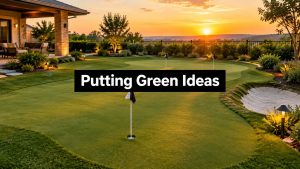
- Putting greens: Great for homeowners who want usable recreation space without the maintenance of natural turf.
- Pet zones: Cleaner, easier-to-manage spaces with durable surfaces and proper drainage.
- Retaining walls: Useful on sloped lots where grade changes need structure and visual order.
- Hardscape framing: Patios, walkways, and borders that make the entire yard easier to move through and maintain.
Modern Yard provides artificial turf installation, custom putting greens, drainage tile, retaining walls, and related outdoor services in Austin. On the right property, combining those elements into one cohesive plan creates a yard that looks better and works harder.
The strongest outdoor spaces don't rely on one feature. They rely on several well-coordinated decisions.
Understanding the Investment in Your Property
Clients usually ask the cost question in one of two ways. They either ask for a rough number right away, or they avoid the topic because they're worried the answer will be vague and slippery.
Here's the honest version. The cost of professional outdoor space design and installation depends on scope, site conditions, materials, and labor intensity. Anyone who gives you a firm number before understanding those variables is guessing.
What drives the budget
Some yards are straightforward. Others have steep side access, drainage issues, multiple elevation changes, or a long list of integrated features. Those differences matter.
The biggest budget drivers usually include:
- Project scope: A front-yard refresh is different from a full-property redesign with turf, walls, drainage, and hardscape.
- Site complexity: Slope, access, demolition, drainage correction, and haul-off affect labor and equipment planning.
- Material choices: Turf quality, edging systems, paver selections, wall materials, and finish details all influence the final investment.
- Usage requirements: Pet durability, sports use, entertainment load, and heat exposure can change what materials make sense.
What a transparent estimate should look like
A professional estimate should explain the logic behind the number. It should show what you're paying for, what assumptions have been made, and where options exist. That doesn't mean every line item has to be microscopic. It does mean you should understand the factors.
If water savings and lower maintenance are part of your goal, it helps to look at drought-resistant lawn alternatives early in the planning process. That conversation often changes the scope in a smart way.
How to think about value
The wrong way to evaluate an outdoor design project is by asking which bid is cheapest. The right way is to ask which plan solves the problems you truly have and holds up over time.
A cheap layout that ignores grading, wear patterns, or maintenance burden becomes expensive later. A well-planned project may cost more upfront, but it usually saves frustration, rework, and ongoing upkeep.
Here's my advice. Decide what your yard must do first. Then set the budget around that reality. If needed, phase the work. Just don't fund a beautiful mistake.
How to Choose Your Austin Landscape Design Partner
Hiring the right company matters more than most homeowners realize. A weak installer can ruin a strong concept, and a weak designer can hand a good crew a bad plan. You need both design judgment and technical competence.
This isn't an area where you should hire on personality alone.
Start with qualifications and process
Designing outdoor environments is a serious professional discipline. The U.S. Bureau of Labor Statistics reports 21,800 employed outdoor design professionals, and notes that this field often involves formal education and state licensure, as described in the BLS occupational outlook for landscape architects. That doesn't mean every residential yard requires a licensed professional in this area. It does mean you should respect technical expertise and ask who is planning your site.
Then look at process. Do they measure and assess the property carefully? Do they talk intelligently about drainage, maintenance, and material transitions? Can they explain why one layout is better than another?
If they can't explain their reasoning clearly, don't hire them.
Questions worth asking
Use this checklist when you interview any provider.
| Question | Why It Matters |
|---|---|
| Who handles the design and who handles the installation | You want accountability from planning through execution |
| How do you address drainage and grade changes | This reveals whether they understand the site, not just the surface |
| Can you show local work similar to my project | Austin conditions matter, and local experience shows up in the details |
| What materials do you recommend for high-use areas | This tests whether they design for real life, not just appearance |
| What warranty or satisfaction policy do you offer | You need clarity on what happens if something isn't right |
| Are you fully insured | This protects you and your property |
| What will be included in the written proposal | A detailed contract prevents confusion and scope drift |
What strong partners do differently
A reliable design partner usually has these habits:
- They ask better questions: Not just what style you like, but how you use the yard and what annoys you now.
- They show discipline: Clean scopes, realistic timelines, and clear next steps.
- They understand specialized features: Turf, drainage, pet areas, hardscape, and walls need integrated thinking.
- They offer complete residential guidance: If you're comparing providers, review their broader residential landscaping services and see whether the company can support the full project, not just one piece of it.
A trustworthy contractor doesn't rush you past the hard questions. They answer them well.
Austin Landscape Design FAQs
Do I need to worry about HOA approval
Yes, sometimes. If your neighborhood has an HOA, check the guidelines before final materials are ordered. Turf, walls, lighting, and major layout changes may need review. A smart designer plans with that reality in mind and gives you documents or visuals that make approval easier.
What works best in Austin heat
Design for heat tolerance first, then style. That means reducing problem lawn areas, using durable hardscape where foot traffic is heavy, and placing turf or seating areas where they make functional sense. Shade strategy matters too, but layout matters just as much. A beautiful patio nobody can use in the afternoon is still a failed design decision.
Is artificial turf the right choice for every yard
No. It's the right choice for some zones, not every zone. The best projects use turf intentionally. Pet runs, side yards, play areas, clean lawn panels, and custom putting greens are often great uses. Large ornamental spaces with no real function may call for a different approach.
Can professional landscape design be low maintenance without looking sterile
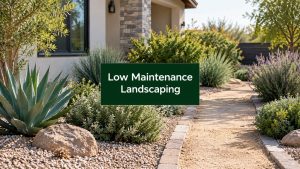
Absolutely. Low maintenance doesn't mean lifeless. It means choosing the right number of elements, placing them correctly, and avoiding features that demand constant upkeep. Strong geometry, restrained plant palettes, durable surfaces, and smart drainage often create cleaner, more modern results.
Is commercial landscape design different from residential work
Yes. Commercial properties usually have different traffic demands, visibility concerns, maintenance expectations, and liability considerations. The design still needs to look good, but performance and durability often drive more of the decision-making.
When should I make the call
Make the call when the yard is frustrating you, not when you've reached the point of exhaustion. Good projects start with planning, and planning gives you options. Waiting until you're sick of the space usually leads to rushed decisions.
If your Austin yard feels harder than it should, that's a design problem, not a personal failure. Modern Yard Landscapes helps homeowners and property managers plan outdoor spaces around real use, low-maintenance performance, drainage, turf, and modern outdoor living. If you want straight answers and a clear plan, schedule a consultation and start with the site itself.