
You're standing in an Austin yard that should feel calm and useful, but right now it probably feels like a list of problems. The space is too small, the sun is intense, the maintenance never ends, and every design choice seems to compete with the next one. That's exactly why modern urban garden design ideas need a clear process, not just pretty inspiration.
The best yards in Austin aren't built by guessing. They're built by a team that knows how to turn tight lots, heat, privacy concerns, and drainage issues into a space that works every day. If you want a modern look without the usual headaches, use these eight ideas to judge both the design and the company behind it, so you can move forward with confidence and schedule the right consultation.
1. See Real-World Results Before You Commit
A trustworthy design partner shows you completed work, not just polished concepts. In a city like Austin, that matters because a yard that looks good in a rendering can still fail in real heat, on real slopes, or under real daily use. Ask to see finished residential yards, pet-friendly spaces, putting greens, and drainage fixes, then look for signs that the design still looks clean after the first season and beyond.

A strong portfolio should show more than finished turf. It should show installation precision, clean transitions at borders, and how the yard fits the house, fencing, and walkways. If the company can organize work by property type, that's even better, because it tells you they understand different site demands instead of forcing one look onto every yard.
Practical rule: ask to see before-and-after photos, then ask for projects that match your own conditions, like pet traffic, narrow side yards, or heavy-use entertaining areas.
When you review a gallery, look for variety in the proof, not just one dramatic transformation. You want to see how the team handles mature turf, drainage solutions, and integration in real Austin properties, and you want that evidence easy to find on a page like the residential turf installation gallery. A company that documents its work well usually documents its process well too, and that's the kind of partner you want in your yard.
2. Plan Your Design with a Transparent Budget
The first red flag is hidden pricing. A good design partner explains how cost is built, from material grade to labor complexity to site prep, so you can make decisions without feeling boxed in. That matters even more in urban yards, where access issues, drainage work, and custom features can change the scope fast.

A transparent budget also makes comparisons straightforward. If a team offers a basic, standard, and premium path, that shows they understand that one Austin homeowner may want a simple low-maintenance yard, while another wants antimicrobial infill, better drainage, or a custom putting surface. The point is not to chase the lowest quote. The point is to understand what each option delivers and why it costs what it does.
What a good estimate should explain
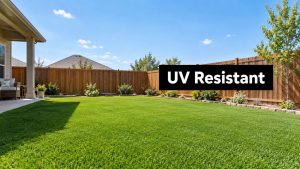
- Material quality: whether you are getting a standard product or a premium UV-resistant surface.
- Site prep: how grading, cleanup, and base work affect the final result.
- Special features: what changes when you add drainage tile, retaining walls, or pet-friendly treatments.
- Labor complexity: why a tight side yard, slope, or access issue changes the job.
A strong estimate should also tie the design to real value. Investors and homeowners keep spending on outdoor upgrades because durable, year-round improvements hold attention. If you want a clearer cost breakdown, review the company's cost of artificial turf guide before you book the appointment. For a related planning reference, look at patio ideas for restaurants if your design includes an entertaining area that needs durable seating and traffic flow. A team willing to show its math is usually a team you can trust with the build.
3. Learn from Your Neighbors' Experiences
Good design feels local because real yards are local. In Austin, that means you should listen closely to homeowners, pet owners, and property managers who have already dealt with the same heat, use patterns, and maintenance pressure you're facing now. Their experience tells you more than a polished sales pitch ever will.
A strong contractor doesn't hide behind general praise. They can talk about specific problems, like muddy dog runs, standing water, or a front yard that never looked finished, and they can explain how the solution changed daily use. That's the kind of detail that shows the company has worked through real site issues, not just sold a product.
Real trust comes from repeatable outcomes, not one-off compliments.
Look for testimonials that mention the actual challenge, the solution, and what changed afterward. A homeowner who says the yard still looks good after months of heavy traffic tells you something useful. So does a commercial manager who says the property is easier to maintain, because those are signs the design wasn't just attractive on day one, it was built to last.
The best local proof usually comes in a format you can verify, like a review profile, a photo-backed case study, or a conversation during an on-site visit. If a company invites you to compare your goals with what similar neighbors have already done, that's a good sign. You can also ask how they handle follow-up feedback after the job, then compare that answer with the stories you see on their best turf contractors guide. That combination of story and evidence is what makes a partner feel dependable.
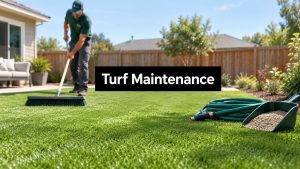
4. Master Low-Maintenance Materials and Methods
Low-maintenance design is not about stripping the yard down to nothing. It means choosing surfaces, plant structure, and hardscape that do real work through every season. The Royal Horticultural Society notes that domestic gardens often make up 22–27% of total urban area in many cities and can represent nearly half of urban green space, with even higher shares in some dense settings, which is why material choices in private yards matter beyond the property line. Those choices affect shade, runoff, and habitat, not just curb appeal, according to the RHS urban greening research on domestic gardens (RHS urban greening PDF).
For Austin homes, that means a modern yard should earn its keep. Turf, beds, pavers, and drainage all need to reduce effort, not add to it. A contractor who understands this will talk about materials the way a builder talks about structure, not the way a retailer talks about décor.
The online garden design service market is estimated at USD 3.71 billion in 2024 and USD 4.22 billion in 2025, with a projection of USD 11.81 billion by 2033 at a 13.8% CAGR from 2025 to 2033, according to the brief's market data. That growth makes sense because homeowners want faster concepting, site-specific layouts, and clear visual planning before anyone breaks ground. If a design company publishes useful education around maintenance, climate, and material choice, it usually shows they understand what buyers need.
A strong partner also explains how shade and material choices work together. In hot yards, the right planting plan still needs support from structures that lower heat exposure, and a reference like porch shade for hot climates should sit beside the rest of the plan, not off to the side. If the team can't connect those details, they are not thinking about the yard as a whole system.
Look for a partner that teaches before it sells
- Explains material behavior: how products handle heat, traffic, and water.
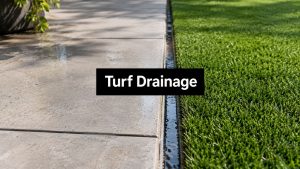
- Shows process details: how drainage and base preparation are handled.
- Writes for local conditions: Austin heat, occasional flooding, and compact lots.
- Offers clear next steps: so you know what happens after the consultation.
Review the company's low-maintenance turf grass resource if you want to see how it explains durable, practical choices. A team that educates you before the sale is more likely to build something that keeps working after the first season.
5. Insist on a Design That's Guaranteed to Last
A nice-looking yard doesn't mean much if the company disappears when the work settles or a seam fails. That's why warranty language matters. You should know what's covered, for how long, and how the company handles fixes if something isn't right.
The strongest partners make the guarantee easy to understand. They explain material coverage, labor coverage, and what happens if a drainage issue appears after installation. That's important because a modern urban garden isn't just a snapshot, it's a system of surfaces and planting choices that should keep performing under daily use.
A good guarantee should feel specific, not vague. If a company can tell you how it stands behind materials, installation, and special features, you're dealing with a business that expects to be accountable. That's a very different posture from a contractor who only wants to talk about the first day after installation.
The other trust signal is documentation. If a crew records the build, keeps material records, and gives you warranty paperwork at completion, they're making your future simpler. That kind of follow-through is especially valuable in tight urban yards where access, drainage, and edges all need to stay consistent over time.
Bottom line: if the warranty is hard to explain, it's probably not strong enough.
Ask for a written summary before you sign anything. You want to know how the company handles service calls, what happens if a feature underperforms, and how quickly they respond to a concern. The right partner won't treat that as a hassle. They'll treat it as part of the job.
6. Partner with a Recognized Austin Expert
Local recognition matters because Austin homeowners usually want a company that already understands the city's conditions and community expectations. Awards, chamber involvement, media mentions, and neighborhood presence all help, but only when they sit on top of real work. A polished badge without local proof doesn't mean much.
A recognized expert should be visible in the community, not hidden behind ads. If a company shows up at events, works with local architects, or contributes to Austin home improvement conversations, that tells you it's invested here. That matters when your project needs more than a generic install, because modern urban garden design ideas often depend on site-specific judgment.
The urban landscaping market estimate of USD 91.76 billion in 2026 and USD 117.74 billion by 2030 at 6.4% CAGR suggests continued demand across residential, commercial, and municipal upgrades, so local reputation becomes even more important in a crowded field. Buyers have choices, which means they can afford to be selective. A recognized local company should make that selection easier by showing where it has earned trust.
When you're comparing Austin firms, look for clear signs of presence. That includes reviews tied to real neighborhoods, local partnerships, and visible project photos from around the metro area. A company with roots in the city is more likely to understand the balance between modern style, low maintenance, and the realities of Central Texas weather.
7. Develop a Custom Plan with an On-Site Assessment
A real design starts with the yard, not with a sales script. The best company walks the site, measures the space, notes drainage patterns, studies sun and shade, and listens to how you want to use the yard. That's how you avoid getting a generic layout that looks fine on paper and fails in real life.
In a compact Austin lot, the details matter. A few feet of slope, a narrow side yard, or a wall that blocks light can change the whole plan. A good consultant sees that immediately and adjusts the design to fit the property instead of fighting it.
Trust becomes practical. If the company asks about pets, entertaining, privacy, children, or golf practice, they're building a plan around your life. If they only talk about products, they're selling inventory, not a yard.
The online garden design service segment is growing because people want quick iterations and site-specific planning, and that's exactly what an on-site assessment supports. Once the consultant has your measurements and photos, the proposal should come back with clear options, realistic timelines, and a layout that makes sense for your lot. If the team also shows mockups or visual renderings, that's a plus, because it reduces guesswork before installation starts.
A strong assessment should leave you feeling informed, not pressured. You should know what the problem is, what the solution is, and why the company recommends that path. That kind of clarity is what turns interest into confidence.
8. Work with a Responsive and Accessible Team
If a company is hard to reach before the job, it won't get easier after you sign. Fast replies, clear scheduling, and multiple ways to make contact all tell you the same thing, this team respects your time. That matters when you're trying to move from idea to installation without months of back-and-forth.
Responsive teams don't just answer the phone. They make it easy to ask basic questions, request a callback, and book a visit without waiting around. That tells you they're organized, which is a good sign for the work itself.
A modern urban garden project also benefits from quick decision-making. Small yards have fewer places to hide mistakes, so the more clearly a company communicates about timing, materials, and next steps, the smoother the job tends to go. You want a partner who keeps the process simple from the first message onward.
The same principle shows up in digital design adoption. The online garden design service market's 13.8% CAGR projection from 2025 to 2033 points to buyers who value speed, visuals, and convenience, and that expectation carries over into local service. If a company offers mobile-friendly contact forms, live chat, and easy scheduling, it's adapting to how homeowners buy.
A responsive company makes it easy to say yes.
Before you book, test the contact path yourself. Send a message, look at how fast the reply comes back, and notice whether the response answers your question or just pushes for a sale. The best teams make it simple to schedule an appointment because they know clear communication builds trust before the first shovel hits the ground.
Modern Urban Garden: 8-Point Design Comparison
| Idea | 🔄 Implementation Complexity | ⚡ Resource Requirements | ⭐📊 Expected Outcomes | 💡 Ideal Use Cases | ⭐ Key Advantages |
|---|---|---|---|---|---|
| Idea 1: See Real-World Results Before You Commit | Medium 🔄, coordinate shoots & permissions | Moderate ⚡, pro photography, gallery maintenance | High ⭐📊, strong trust & visual conversion lift | Visual-driven prospects; pet/commercial/residential demos | Immediate proof of quality; lowers perceived risk |
| Idea 2: Plan Your Design with a Transparent Budget | Medium-High 🔄, build pricing models & calculators | Moderate ⚡, pricing docs, online calculator dev | High ⭐📊, reduces sticker shock, speeds decisions | Price-sensitive buyers; pre-qualification | Clear value communication; fewer negotiations |
| Idea 3: Learn from Your Neighbors' Experiences | Medium 🔄, collect/edit testimonials, permission mgmt | Moderate ⚡, interviews, video production, outreach | High ⭐📊, powerful local social proof; objection handling | Skeptical prospects; neighborhood referral campaigns | Authentic credibility; relatable problem–solution stories |
| Idea 4: Master Low-Maintenance Materials & Methods | Medium-High 🔄, continuous content creation & SEO | Moderate ⚡, writers, video, SEO tools, distribution | Medium-High ⭐📊, builds authority and long-term leads | Inbound education seekers; SEO-driven discovery | Thought leadership; improved local search visibility |
| Idea 5: Insist on a Design That's Guaranteed to Last | Medium 🔄, warranty docs, claims processes | Low-Moderate ⚡, legal review, admin, record-keeping | High ⭐📊, strong risk reversal; higher close rate | High-investment projects; risk-averse clients | Differentiates on trust; clear recourse for clients |
| Idea 6: Partner with a Recognized Austin Expert | Medium-High 🔄, pursue awards, media, partnerships | Moderate ⚡, memberships, PR effort, sponsorships | Medium-High ⭐📊, local credibility, referral lift | Community-minded homeowners; local market focus | Third-party validation; local reputation boost |
| Idea 7: Develop a Custom Plan with an On-Site Assessment | High 🔄, time-intensive consultations | High ⚡, skilled consultants, travel, renderings | Very High ⭐📊, higher close rates; tailored solutions | Complex sites, commercial jobs, custom builds | Personalized trust; reduces expectation gaps |
| Idea 8: Work with a Responsive and Accessible Team | Medium 🔄, implement multi-channel response systems | High ⚡, staffing, CRM, live chat, SMS systems | High ⭐📊, captures leads fast; lowers friction | Time-sensitive prospects; high-volume inquiries | Faster contact, better lead capture, higher professionalism |
Ready to Design Your Modern Austin Yard?
Creating a beautiful, functional, and low-maintenance urban garden is about more than aesthetics. It's about choosing a design process, and a design partner, that respects your time, your property, and the way you live. The best Austin yards are built with transparent pricing, clear warranties, real local proof, and a site visit that leads to a custom plan instead of a generic pitch.
The data behind modern urban garden design makes the case plainly. Domestic gardens occupy a major share of urban land and green space, lawns still dominate many gardens, and water and maintenance pressure are real reasons homeowners are rethinking what belongs in a city yard. A smart design partner uses that reality to guide better choices, whether that means reducing turf, improving drainage, adding shade, or building a layout that works in a tight space.
If you're comparing companies, focus on the ones that show finished results, explain costs upfront, and answer questions quickly. That's the kind of team that earns your trust before the project starts and keeps it through completion. Modern Yard fits that kind of service model in Austin with artificial turf installation, custom putting greens, pet-friendly dog runs, drainage tile, retaining walls, and factors-based estimates designed for real properties.
Ready to move forward with your own Austin yard? Visit Modern Yard Landscapes to explore modern urban garden design ideas built around transparency, durability, and low-maintenance results. Then book a consultation and get a plan that fits your space, your goals, and your schedule.