
You're probably in one of two spots right now. You play enough golf to know your short game needs more reps, but you don't have time to drive to the practice green every week. Or you're staring at an underused patch of Austin backyard and thinking it could do a lot more than hold a few chairs and a grill.
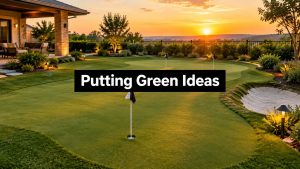
That's where a home putting green makes sense. Not as a gimmick. As a practical upgrade that gives you daily use, cleans up the yard, and turns dead space into something you will enjoy. In Austin, that only works if the design fits our heat, our soil, and HOA rules. Otherwise, you end up with a pretty surface that doesn't roll true and doesn't last.
Trust matters on a project like this. You're not buying a product off a shelf. You're hiring someone to shape drainage, grade contours, choose materials, and build a surface you'll look at every day. If the process feels vague, the result usually is too.
From Dream to Reality a Home Putting Green
A lot of homeowners think a putting green is pure luxury. I don't. I see it as a targeted property investment for the right property and the right homeowner.
Demand keeps climbing because more people are playing golf, more families want low-maintenance outdoor spaces, and more homeowners want backyard features they can use year-round. The category itself is growing fast. Well-integrated backyard improvements, including custom putting greens, can return up to 217% of the initial investment, while demand for these installations is growing at a 7.1% compound annual rate according to this putting green market analysis.
That doesn't mean every green automatically adds value. It means a well-designed one can. The bad ones don't. A cheap install with poor drainage, awkward shape, and turf that screams fake won't help your property and won't help your game.
What makes the idea work
A smart home putting green does three jobs at once:
- It improves how you use the yard. Empty corners become active space.
- It gives you real practice access. A few putts in the morning beats no practice at all.
- It upgrades curb appeal in the backyard. The project feels intentional when it's integrated with stone, planting, edging, and patio space.
Practical rule: If the green looks like it was dropped into the yard, it will feel temporary. If it's built into the landscape, it feels like part of the property.
Austin homeowners usually call after they've already done some research and gotten mixed answers. One installer promises a bargain. Another talks only about turf. A third ignores drainage and HOA constraints completely. That's the wrong way to approach it.
You want a clear recommendation, a realistic budget, and a plan that fits your lot. That's how a backyard golf idea turns into a finished space you'll still like years from now.
Synthetic Turf vs Natural Grass in Central Texas
If you live in Austin, I'll give you the blunt answer first. For most homes, synthetic turf is the right choice. Natural grass sounds romantic. In Central Texas, it usually becomes a maintenance project you regret.
Natural greens demand constant work. They need the right grass type, specialized rootzone construction, irrigation, drainage, and frequent mowing at extremely short heights. Synthetic greens cut all of that out. According to AGL Grass's putting green FAQ, synthetic putting greens eliminate the need for mowing 4 to 6 times weekly, irrigation, and chemical treatments, and high-quality artificial turf with UV protection can last 10 to 15 years with minimal upkeep.

What natural grass gets right
Natural grass does have one real advantage. It offers the traditional golf course feel people picture in their heads. It also tends to stay cooler than synthetic material under direct sun.
If you own a large property, enjoy turf management, and accept ongoing maintenance as part of the hobby, natural can work. But that's a niche homeowner, not the average family in Austin.
Why synthetic wins here
Central Texas is hard on living turf. Long heat stretches, water concerns, hard soil, and heavy downpours aren't ideal conditions for a residential practice green. Synthetic gives you a stable surface that doesn't need babying.
Here's the side-by-side I give clients:
| Surface | Best For | Main Drawback |
|---|---|---|
| Synthetic turf | Homeowners who want regular practice with low upkeep | Higher upfront investment |
| Natural grass | Homeowners committed to intensive maintenance | Constant labor, water use, and performance inconsistency |
A quality synthetic install also keeps your yard usable after weather swings. Rain drains through the system instead of turning the area into mud, and you're not waiting on the grass to recover from stress.
For a broader lawn comparison, read our take on artificial turf vs natural grass.
Most Austin homeowners don't want a second full-time lawn. They want a backyard feature that works when they walk outside. That's why synthetic usually makes more sense.
The real decision
Don't ask which surface sounds more premium. Ask which one fits your life. If you want dependable roll, year-round use, and minimal upkeep, synthetic is the practical answer.
Designing Your Green for an Austin Yard
Austin homeowners usually start with the fun part. They picture cup locations, a few breaks, maybe a fringe that ties into the patio. Then the first heavy storm hits, water runs off the roof into the wrong corner, and the project that looked great on paper turns into a drainage fix.
That is why I start with the yard itself. In Central Texas, soil movement, fast downpours, limestone shelves, and HOA rules shape the design long before we talk about putt length.

Start with drainage and grade
The first question is always the same. Where does the water go?
If your answer is unclear, that has to be solved first. Austin yards often shed water hard and fast, especially where clay soil, roof runoff, and compacted ground all meet. A putting green placed in the wrong low area will hold moisture, shift over time, and lose the consistent roll you paid for.
Good planning also covers the practical details that homeowners miss early:
- Equipment access. Narrow side yards can change labor, staging, and material delivery.
- Sun and heat exposure. West-facing areas feel very different in August than they do in March.
- Connection to the rest of the yard. The green should fit the patio, pool, and walking paths instead of feeling dropped in.
- Clean transitions. Fringe, edging, gravel, stone, and planting beds make the installation look intentional.
If you want examples of how we plan artificial turf for putting greens in Austin yards, look at projects where the base, borders, and surrounding features were considered together from day one.
Size is not the first decision
A lot of homeowners ask how big their green should be before they ask where it should go. That is backward.
The right size depends on setbacks, slope, drainage patterns, and HOA expectations. Some neighborhoods care about visibility from the street. Others care about edging, color, or whether the install changes drainage onto a neighbor's lot. I have seen plenty of projects slow down because approval came after the design instead of before it.
The best home putting green is not the biggest one. It is the one that fits the yard cleanly, drains correctly, and gets approved without a fight.
What I recommend for Austin properties
Use this order and the project gets easier:
- Confirm placement rules first. Check HOA requirements, easements, and setback limits before finalizing a layout.
- Map water movement. Watch the yard after a storm or have it evaluated before choosing the green location.
- Fit the green to existing features. Patios, retaining walls, trees, and planting zones should support the design.
- Build for actual use. A daily practice green needs a different layout than a visual feature beside a pool.
Local experience matters here. A home putting green in Austin is a grading, drainage, and yard design project with neighborhood constraints layered on top. If those pieces are handled early, the finished green looks right, plays right, and stays low-maintenance through our heat, storms, and hard soil.
Understanding the Materials That Create the Perfect Roll
People obsess over the visible turf. Critical performance comes from the system underneath it. If the base is wrong, the roll is wrong. If the material choice is sloppy, the speed changes and the surface gets frustrating fast.
That's why I care more about construction layers than sales language.

The base decides whether the green plays well
For a home green to feel good under a putter, the ball has to roll true. Installers aiming for professional-style playability generally target a Stimpmeter reading between 8 and 10, and that requires a proper base system, not guesswork, as detailed in this professional-quality putting green guide.
That same guide recommends a foundation made from a 2 to 4 inch layer of 3/4-inch crushed stone compacted to 90% density, followed by a 1-inch layer of #8-16 mesh washed angular sand for fine grading and contour shaping. That's the kind of detail that separates a putting surface from decorative turf.
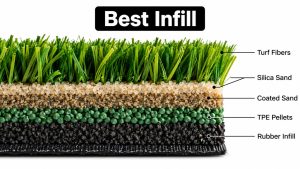
What each layer actually does
Think of the system like this:
| Layer | Job |
|---|---|
| Compacted stone base | Holds structure and supports drainage |
| Fine grading sand | Shapes contours and smooths the roll |
| Putting turf | Controls speed, feel, and visual finish |
| Edging and perimeter restraint | Keeps everything locked in place |
If one of those layers is weak, the rest of the project pays for it.
For material options built specifically for this application, see our page on artificial turf for putting greens.
The infill issue most homeowners never hear about
A lot of older advice treats infill like it's mandatory. I disagree. The more important question is whether the turf system you choose needs ongoing infill management to maintain performance.
Some guides still frame heavy infill as the standard approach, but modern infill-free systems have changed the conversation. The appeal is simple. You avoid the annual annoyance of topping sand, fighting matting, and chasing consistency. For Austin homeowners who want low maintenance, that matters.
Don't buy a green that creates a maintenance ritual you already know you won't keep up with.
My material recommendation
For most residential installs, I recommend a modern high-denier putting turf system over a properly compacted base, with commercial-grade edging and a design that manages drainage before the turf goes down. That approach gives you the best shot at a clean roll, stable contours, and a green that still looks sharp after real use.
The Real Cost of a Home Putting Green in Austin
Price matters. It should. But the wrong way to shop for a home putting green is to chase the lowest quote and assume every installer is building the same thing.
They aren't.
According to this backyard putting green pricing overview, professional installations typically run between $15 and $40 per square foot, while total project costs can range from $800 for DIY setups to $80,000+ for custom builds. That spread is huge for a reason. Size is only one part of the bill.
What drives the price up or down
A straightforward green on a flat, accessible site costs less than a shaped green tucked behind a narrow gate with drainage corrections and custom edging. The material package matters too. So does labor complexity.
The main cost drivers are:
Square footage
Bigger greens require more excavation, more base material, more turf, and more labor.Site access
Tight access means slower work, more hand labor, and tougher material movement.Drainage and grading
If the yard holds water or slopes awkwardly, the prep work gets more involved.Contour complexity
Gentle breaks are one thing. A heavily shaped practice surface takes more precision.Material quality
UV-resistant turf, stronger backing, and cleaner edge restraint cost more up front and usually save headaches later.
Cheap bids usually leave something out
If one quote comes in far below the others, ask what's missing. It's often one of these:
| Low bid shortcut | What it causes |
|---|---|
| Thin base prep | Settlement and uneven roll |
| Lower-grade turf | Faster wear and weaker appearance |
| Minimal drainage planning | Water issues after storms |
| Basic edge treatment | Movement at the perimeter |
That's why transparent estimating matters. A real proposal should explain the factors, not just throw out one lump number and hope you stop asking questions.
My advice on budgeting
Set your budget around the outcome you want, not just the installed square footage. If your goal is “something green back there,” that's one project. If your goal is a putting surface that feels intentional, drains properly, and lasts, budget for the foundation and the finish details.
A home putting green is one of those upgrades where you usually get exactly what you paid for.
DIY Installation vs Professional Expertise
I understand the DIY temptation. Turf is visible, and visible things look easier than they are. A lot of homeowners think the project is mostly about cutting material, pinning it down, and dropping in a few cups.
It isn't. The hard part is the part you don't see.
Where DIY usually goes sideways
The most common mistakes are boring, technical, and expensive to fix later. Base compaction gets rushed. Drainage gets guessed. Seams show. The surface settles. Then the green stops being fun because putts break for the wrong reason.
Here's the trade-off:
- DIY can save upfront money if the site is simple and your standards are low.
- Professional installation reduces risk when you care about performance, drainage, and longevity.
A putting green doesn't fail all at once. It starts with one soft spot, one visible seam, or one area that drains poorly. Then every use reminds you it wasn't built right.
Why professional work protects the investment
Professional installers bring process. They know how to shape the base, handle difficult access, and build contours without creating random speed changes. They also know when the yard needs related work like drainage tile or retaining support before turf goes in.
Good estimating systems help with that planning. If you're curious how pros structure material, labor, and scope before installation starts, Exayard estimating software for landscapers is a useful example of the kind of workflow contractors use to build cleaner proposals and avoid vague numbers.
If you want to see how installation steps are supposed to line up, our guide on how to install artificial turf gives a practical overview of the process.
What you're really buying with a pro
You're not just paying for labor. You're paying for fewer unknowns.
One option in Austin is Modern Yard Designs, which handles artificial turf installation, drainage-related prep, and custom putting green work as part of broader yard projects. That matters because the green doesn't exist in isolation. It has to connect to grading, edging, and the rest of the yard.
If you're deciding between DIY and hiring it out, ask yourself one direct question. If the ball doesn't roll the way it should, are you willing to tear it up and do it again? Most homeowners aren't. That's why pro installation makes sense.
Your Next Step to a Backyard Golf Oasis
By this point, the pattern is clear. A high-performing home putting green isn't just about picking a turf sample you like. It's about getting the layout, drainage, base, material system, and finish details right for an Austin property.
That's why the next step shouldn't feel overwhelming. It should feel simple.
The easiest way to move forward is a short conversation about your yard, your goals, and any HOA or drainage issues that could affect the design. That's the right ask because small commitments get better response. Requesting only 15 to 20 minutes of someone's time lowers hesitation and increases the likelihood they'll agree to meet, according to this appointment-setting guidance.

What to expect from that first call
A useful consultation should answer real questions quickly:
- Can your yard support the green you want?
- Will drainage or access affect the design?
- Are HOA limits likely to shape the layout?
- Does synthetic turf make more sense than natural for your property?
- What budget range fits the scope you have in mind?
You shouldn't have to chase answers or decode a vague sales pitch. If an installer can't explain the trade-offs clearly in one short call, that's a problem.
Why acting now helps
Most homeowners wait too long because they think they need every detail figured out first. You don't. You just need clarity on whether your yard is a good fit and what the smart version of the project looks like.
Start with the conversation, not the commitment. A short design call can save you from the wrong layout, the wrong budget, and the wrong installer.
If you want a backyard feature you'll use, this is a good project. If you want it to look right and play right in Austin, get local guidance before you spend a dollar on materials.
If you're ready to talk through your yard, schedule a short consultation with Modern Yard Landscapes. We'll keep it simple, answer your questions directly, and help you figure out whether a home putting green fits your space, your budget, and your goals.