
If you're staring at a lawn that used to look decent in spring and now looks burned, thin, and expensive to keep alive, you're in the same spot as a lot of Austin homeowners. The cycle is familiar. Water more, mow again, patch bare spots, fight weeds, then watch the sun win anyway.
That frustration is usually what starts the search for the best artificial turf. But many begin in the wrong place. They compare turf samples in their hand, pick the greenest one, and assume the project is mostly about the product on top.
It isn't. A turf lawn only performs as well as the full system underneath it. That means the base, the grading, the drainage plan, the seam work, and the infill all matter more than a nice-looking swatch under showroom lights.
Your Dream Lawn Without the Austin Struggle
Austin yards take a beating. Heat, dry spells, hard-packed soil, pets, and sudden downpours create a rough combination for natural grass. A lawn can look fine from the patio and still be failing at the root zone. By the time most homeowners call, they're tired of paying for upkeep without getting a lawn they enjoy using.

Artificial turf has moved well beyond the old idea of fake grass. Fiber technology, color blending, UV resistance, cooling infill options, and pet-focused systems have all improved. That shift isn't just local. The global artificial turf market was valued at USD 7.93 billion in 2026 and is projected to grow significantly, and in 2025 North America held 38% of the market share, driven by residential demand tied to water conservation and low-maintenance landscaping, according to this artificial turf market report summary on Yahoo Finance.
What Austin homeowners usually want
Most consultations come back to the same few goals:
- Lower upkeep: You want to stop mowing, edging, fertilizing, and reseeding.
- A lawn that stays usable: Kids, dogs, and guests shouldn't have to avoid muddy or dead spots.
- A yard that looks finished: Good turf makes a property feel intentional, not temporary.
- Better water discipline: A green yard without constant irrigation matters in this climate.
A smart turf project solves all four, but only when the installation matches the site. Shade patterns, slope, drainage, access, and how the yard gets used all change the right answer. That's why a real consultation should feel less like a sales pitch and more like a diagnosis.
A good turf installer shouldn't start with, "Which sample do you like?" They should start with, "How do you use this yard, where does water go, and what has failed here before?"
If you're collecting ideas before you schedule a visit, these artificial grass landscape ideas for Austin homes can help you think beyond a basic rectangle of green.
Beyond Face Weight The Real Measures of Quality Turf
A lot of bad turf decisions start with one oversimplified question: what's the face weight? That's not useless information, but it isn't the deciding factor people think it is. Shoppers get told that heavier automatically means better, then end up paying for turf that still mats down, feels wrong, or doesn't hold up where it matters.

Why face weight gets overused
Face weight tells you how much yarn is in the turf, usually expressed in ounces. It sounds authoritative, so it becomes the shortcut metric. But the shortcut breaks down fast. A heavy product with weak blade design can flatten sooner than a lighter product built for resilience.
Blade type and density matter more. The verified guidance on this point is clear. Experts confirm that prioritizing total weight is a common mistake, and that blade type such as W or Mini-W plus density are the critical factors for foot traffic endurance and softness. Mid-range products in the 70 to 80 OZ range with W blades often outperform heavier options in residential settings, as discussed in this homeowner turf quality discussion.
What actually tells you if turf is good
Think of turf specs like buying tires, not paint. What matters is how the product performs under load, heat, moisture, and repeat use.
Here are the specs worth caring about first:
- Blade shape: W-shaped blades generally recover better from foot traffic than flatter blade profiles.
- Density: A dense stitch pattern supports the yarn and helps the lawn keep body.
- Pile height: Too short can look stiff. Too tall can look floppy if the fiber isn't strong enough.
- Thatch layer: Brown and green lower fibers help realism and support upright appearance.
- Backing quality: The backing affects dimensional stability, seam strength, and drainage.
- Material type: Polyethylene is usually the right fit for residential softness and appearance.
The hand sample test can fool you
A small sample in your hand doesn't tell you how a yard will perform after months of sun, parties, dog traffic, and furniture weight. Some products feel great fresh off the rack and then collapse once installed over a broad area. Others don't look dramatic in a sample but wear much better because the yarn geometry does more work.
Practical rule: If someone is selling turf on weight alone, you're not getting the full story.
During a consultation, ask to compare products by use case, not just by ounce count. A family lawn, pet run, shaded side yard, and ornamental front entry all need different balances of softness, rebound, and drainage.
If you want a breakdown of fiber styles and applications before you choose, this guide to different artificial grass types is a useful starting point.
Matching the Right Turf to Your Lifestyle
A homeowner in Austin picks the softest sample on the table, installs it across the whole yard, and calls six months later asking why the dog run smells, the kids have worn a path near the patio, and the putting area never rolled right. The problem usually is not the color of the turf. It is choosing one product for three different jobs, then expecting the rest of the system to make up the difference.
The right turf starts with how the space gets used on a normal Tuesday, not how it looks under showroom lighting. Barefoot family use, large dogs, short-term rentals, side yards that stay damp, and practice greens all need different priorities. Good consultations sort that out before anyone talks about samples.
Family lawns
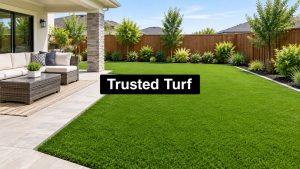
For a front or back yard that needs to feel good underfoot and still look like a real lawn, balance matters more than extremes. Too much pile height can make the surface look loose once the yard sees daily use. Too little can make it look flat and synthetic.
A good family lawn usually lands in the mid-range for pile height, with a realistic color blend and a visible thatch layer. That combination helps the yard read like a lawn from the street and from the patio. It also holds up better once furniture, foot traffic, and weekend use start pressing the fibers down.
What usually works best:
- Moderate pile height instead of the tallest option in the sample book
- Dense construction that keeps the face from looking thin
- Softer polyethylene yarns for comfort
- A believable mix of greens with brown thatch for depth
If the yard also needs to handle parties, kids, and play equipment, ask how the product recovers after compression, not just how soft it feels in your hand.
Pet areas
Pet owners should judge turf as a system first and a surface second. Drainage rate, infill choice, and what sits under the turf have more impact on odor control than a nice-looking blade.
The best pet setups usually use a shorter to moderate pile height, strong drainage, and a layout that lets you rinse waste areas without trapping moisture. Dogs also punish edges, gates, and the track right outside the back door. Those zones need a product with good recovery and an install plan that accounts for repeated pacing.
Prioritize these items:
- Fast drain-through backing
- A pile height that is easy to rinse and clean
- Durable yarn in high-use paths
- Infill and base prep designed for wash-through performance
- Secure edges that stay tight under scratching and traffic
If you want to understand what proper sub-base and grade work should look like before choosing a pet system, review this guide on how to prepare ground for artificial turf. That hidden work decides whether a pet yard stays usable or turns into an odor problem.
Putting greens
A putting green is its own category. It needs a different surface, a different base approach, and tighter tolerances than the rest of the yard.
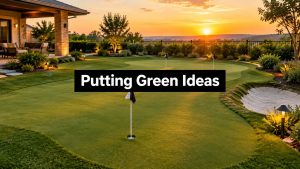
Clients sometimes ask whether one plush turf can cover the lawn and also serve as a green. It cannot do both well. Putting greens are built for ball roll, firmness, and consistency. The fringe, collar, and surrounding lawn can be softer, but the green itself needs purpose-built turf and careful shaping.
The right questions are simple. How fast do you want it to play? Do you want short putts only, or chip shots too? How much contour is fun, and how much becomes frustrating?
Commercial spaces
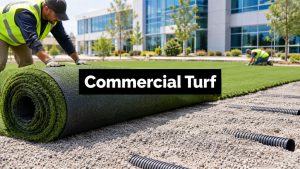
Commercial property puts stress on turf in a different way. Traffic is more repetitive. Entry points wear faster. Seams, edges, and infill stability matter more because the surface has to stay clean and presentable with less day-to-day attention.
In these projects, durability usually ranks ahead of softness. A turf that looks great on day one but mats down in a busy courtyard is the wrong product, even if the sample impressed everyone in the meeting.
Turf Recommendations by Use Case
| Use Case | Ideal Pile Height | Recommended Face Weight | Key Feature |
|---|---|---|---|
| Family residential lawn | Moderate, natural-looking height | Match expected traffic, not weight alone | Realistic color blend with thatch for a natural look |
| High-traffic backyard | Moderate pile height with strong recovery | Heavier wear calls for denser construction | Better resilience under repeated foot traffic |
| Pet-friendly dog run | Short to moderate pile height with fast-drain design | Choose for drainage and durability together | Quick rinse-through performance and stable edges |
| Backyard putting green | Application-specific green turf | Varies by green design | Tight surface for consistent ball roll |
| Commercial property | Selected for appearance and traffic load | Varies by usage intensity | Stable seams, resilient fibers, lower upkeep |
The expensive mistake is buying turf like carpet. The smarter approach is matching the product, the infill, and the foundation to the way the yard will be used.
Why Your Turf Is Only as Good as Its Foundation
A premium turf product installed over a weak base will still fail. That's the part homeowners rarely get told. They see the grass sample, not the excavation depth, the compaction quality, the grading corrections, or the seam method. Yet those hidden details decide whether the yard stays level and drains correctly.

What a professional install should include
A proper install starts before any turf is rolled out. The crew has to remove what doesn't belong there, build what does, and shape the site so water exits instead of pooling.
Core steps include:
- Excavation: Remove existing grass, roots, soft soil, and unstable material.
- Base build-up: Install and compact the correct crushed aggregate base for stability.
- Grading: Shape the yard so water moves where it should.
- Edging and restraints: Hold the perimeter cleanly and prevent movement.
- Turf layout and seam work: Align grain direction and secure joins so they disappear.
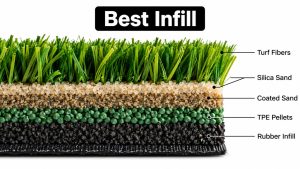
- Infill application: Add the right infill for ballast, support, and performance.
- Final grooming: Open the fibers and check for consistency across the surface.
Where budget jobs cut corners
The cheapest quote often looks cheaper because something important is missing. Sometimes it's less excavation. Sometimes it's a thinner base. Sometimes it's rushed compaction, weak seam work, or no real drainage correction.
Those shortcuts create predictable problems:
- Low spots: The lawn starts to dip where the base wasn't stable.
- Standing water: Turf isn't magic. If the site isn't graded correctly, water still has nowhere to go.
- Visible seams: Poor joining work gets worse as the surface shifts.
- Edge failure: Corners lift, borders move, and the lawn starts looking temporary.
- Odor issues in pet zones: Usually a drainage-system problem, not just a turf problem.
Cheap turf can be replaced. A bad foundation has to be torn out.
That is why the best artificial turf isn't just the top layer. It's the complete build under it. On difficult Austin properties with slope changes, side-yard access, drainage concerns, or heavy dog traffic, installation quality matters more than whatever brochure language is printed on the sample board.
If you want to understand what the ground should look like before any turf goes down, review this explanation of how to prepare ground for artificial turf.
Understanding the True Cost of a Perfect Lawn
Homeowners deserve a clear explanation of price. A vague number without context doesn't build trust. It usually means the quote is hiding assumptions, exclusions, or shortcuts that show up later as change orders or failed performance.
The price of a turf project comes from the full build, not just the square footage of green material. Two yards with the same size can require completely different labor plans and base work.
What changes the quote
A detailed estimate should account for the job conditions that affect the installation:
- Material selection: Decorative front-yard turf, pet turf, and putting green turf aren't priced the same because they aren't built the same.
- Site access: A front yard with easy equipment access installs differently than a backyard with narrow gate access only.
- Ground conditions: Existing lawn, compacted clay, tree roots, drainage trouble, and old hardscape all affect prep work.
- Shape complexity: Curves, planters, utility boxes, steps, and seam-heavy layouts add labor.
- System components: Infill choice, edging, weed barrier approach, and drainage improvements all matter.
- Special features: Pet zones, putting cups, fringe cuts, or integrated hardscape increase scope.
Why lowball pricing usually backfires
A suspiciously low quote often means somebody is treating turf like carpet. Roll it out, pin it down, and move on. That approach ignores the part that keeps the lawn looking good after the installer leaves.
A solid estimate should show what you're paying for and why. That transparency matters because it lets you compare bids on the same basis. One crew may price in excavation, compaction, and drainage correction. Another may leave those out and still call the quote complete.
If two bids are far apart, ask what each one includes below the turf. That's usually where the difference lives.
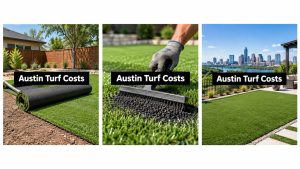
For homeowners trying to understand those line items before scheduling a site visit, this page on the cost of artificial turf in Austin breaks down the factors that move a project up or down.
Austin-Specific Advice for a Long-Lasting Investment
A turf lawn can look sharp on install day and still fail by the first heavy storm or the second Austin summer. That usually happens when the decision is made from a sample board instead of the full system under it.
Austin puts pressure on every part of the install. Long heat stretches test fiber stability and surface temperature. Sudden downpours test grading, base compaction, and drain paths. Clay-heavy soil raises the stakes because small prep mistakes show up fast as puddling, odor, edge movement, or low spots.

Choose for sun and heat
Full-sun yards in Central Texas need more than a good color blend. Ask how the yarn is built, how it holds color under UV exposure, and what infill is being paired with it. A turf product can look great in a showroom and still run too hot or wear poorly in an exposed backyard.
Cooling infill can help in the right setting, especially on lots with hard afternoon sun and reflective surfaces nearby. It is not a cure-all. Shade patterns, surrounding concrete, airflow, and the base below the turf all affect how hot the surface feels.
Build for fast water movement
Drainage should be designed before the turf roll is ever cut. In Austin, that means looking at roof runoff, low corners, fence lines, and any area where water already slows down. Turf drains only as well as the system below it. If the base holds water, the finished lawn will hold problems.
Pay close attention to these areas:
- Pet runs near the house
- Low backyard corners
- Side yards with limited sunlight
- Areas below roof drip lines
These spots are where budget installs tend to show their weaknesses first. The turf itself is rarely the issue. The usual problem is shallow excavation, poor compaction, or no clear path for water to leave the area.
Ask better safety questions
Material safety deserves direct questions. Terms like eco, green, and family-friendly are marketing language unless the installer can back them up with product documentation.
Unregulated "eco" labeling can hide chemical risks from leaching colorants and sealants. It's important to ask whether turf materials have been third-party tested for off-gassing and chemical safety under realistic conditions, as outlined by Safe Healthy Playing Fields in these questions to ask installers.
Ask direct questions such as:
- What additives are in the blades and infill?
- Has the product been independently tested?
- What documentation can the installer provide beyond manufacturer marketing?
- Is this the same turf recommended for families and pets, or just presented that way?
A good consultation stays focused on the site conditions, drainage plan, intended use, and maintenance needs. Modern Yard installs turf, pet areas, drainage-related site work, and putting greens, so those conversations can stay grounded in how the yard needs to perform, not just which sample looks best in your hand.
Get It Done Right The First Time
A homeowner calls after the first big Austin storm. Water is sitting on the turf, the seams are lifting near the patio, and the yard already smells wrong in the dog run. In almost every case, the problem started long before the turf went down.
The best artificial turf result comes from a system that matches the property. That means proper excavation, the right base depth, solid compaction, a drainage plan that fits the lot, and infill that matches how the yard will be used. The green surface matters, but it is only one part of the job.
Shortcuts show up fast. A cheaper quote often leaves out base work, uses the wrong infill, or rushes seam and edge installation. The lawn may still look good for a few weeks. Then you start seeing low spots, standing water, odor, loose edges, or a surface that never feels right underfoot.
What a trustworthy consultation should give you
A good consultation should answer the expensive questions before work starts. You should leave knowing how the yard will be built, where water will go, what material fits the traffic level, and what is included in the price.
Useful consultation details include:
- A site-specific plan: This should cover excavation depth, base material, compaction approach, drainage path, and edge treatment.
- Layout previews or mock-ups: These help you see borders, transitions, and how the turf area fits the house and hard surfaces.
- Examples of similar completed jobs: Past work helps you judge finish quality, especially around seams, curves, and high-use areas.
- A written scope and schedule: Clear pricing and timing make it easier to compare bids fairly.
Consultation quality matters. Mulch Mule's client consultation guidance explains that clear project visuals, references, and defined expectations help clients make better decisions before work begins.
Ask one more direct question during the meeting. "What corners do low bids usually cut on a job like mine?" A good installer will answer without hesitation, because that answer usually tells you more than the turf sample.
Modern Yard Solutions handles turf installation, pet areas, drainage-related site work, and putting greens. During a site visit, the discussion should stay focused on how the yard needs to perform, what preparation the property requires, and which materials make sense for that use. If you want a yard that stays clean, drains correctly, and holds up, schedule the consultation before you commit to a product.