
After a heavy Austin downpour, the problem usually reveals itself before breakfast. One part of the lawn holds water beside the house, another dips under the mower, and a fresh patch of turf seems to have settled lower than the surrounding yard. The temptation is to buy fill, spread it, and rake until everything looks flat.
That approach works for a shallow cosmetic dip. It fails when the uneven ground is a symptom of runoff, soil movement, washout, or a weak base. The practical answer to how to level uneven ground starts with diagnosis, then matches the repair to the final surface, whether that's grass, seed, pavers, or installation-ready artificial turf.
Why Your Ground Went Uneven in the First Place
A yard rarely becomes uneven for one mysterious reason. After years of regrades and turf preparation, the pattern is usually visible if you slow down and look at what the water, soil, roots, and traffic are doing.
Start with the cause, not the fill
Initial settlement often leaves a broad, smooth depression. It commonly appears where soil was placed during construction, around a former trench, or beside a new patio. The surface may look stable until rain exposes a low area.
Washout and erosion leave a sharper signature. Look for exposed roots, narrow channels, displaced mulch, bare soil, or a low spot directly below a roof edge or downspout. If the dip returns after rain, adding soil without correcting the water path is only a temporary patch.
Burrowing animals create isolated holes, soft tunnels, and irregular mounds. Test suspicious areas with a probe before filling them. Loose material can collapse again if the source remains active.
Tree roots push soil upward in ridges or localized humps. Scraping aggressively around mature trees can injure roots and destabilize the tree, so this isn't a normal cut-and-fill area.
Failed original grading usually affects a larger plane. Water may move toward the house, collect along a fence, or drain toward a neighboring property instead of following a deliberate route. The yard grading and drainage guide is useful background when the issue involves the whole drainage pattern rather than one dip.

Run a simple water test
Before buying material, mark the affected area and run a garden hose over it for ten minutes. Watch where water ponds, where it travels, and how quickly the surface sheds it. This won't replace elevation measurements, but it can distinguish a one-time low spot from a drainage problem.
Field rule: If the same depression fills from the same direction after every rain, treat the water source before treating the surface.
The finished ground should look level while carrying a controlled fall away from structures. A common landscaping benchmark is about 2% slope, or roughly 1/4 inch of drop per foot, because a perfectly flat surface can hold water instead of moving it away. If you're moving substantial soil, understanding the difference between a walking floor vs dump trailer can also help you think through material delivery and access before equipment arrives.
Tools and Materials You Actually Need
The right shopping list depends on the size and depth of the repair. A grade rake and a few bags of mix are sensible for a shallow lawn dip, but they're not substitutes for a compactor and measured fill when the subgrade has failed.

Match the equipment to the work
For a cosmetic dip under a few inches, keep the kit simple:
- Topdressing mix: Use a suitable blend of topsoil and sand for small lawn corrections.
- Leveling rake: Spread material without creating ridges.
- Lawn roller: Settle the surface gently after spreading.
- Push broom: Work mix down through turf without burying the grass completely.
For a localized, room-sized correction, add a screed board, screened topsoil, fabric where appropriate, and a rented plate compactor. A long straight board and level help reveal whether the area has a consistent fall or a series of isolated bumps.
For a full regrade or structural repair, the list changes completely. You may need a sod cutter, a laser level or string line, a mini-excavator or bobcat, and suitable structural fill. Place that fill in 6–8 inch loose lifts, compacting each stage before adding the next, as described in this fill dirt and grading reference.
Don't skip safety or utility locating
Wear gloves and eye protection for all soil work. Add hearing protection when operating a plate compactor, and keep people away from moving equipment. Before digging deeper than a few inches, call 811 for utility locates. A clean-looking yard isn't worth striking an underground line.
Buy material based on the actual repair, not the largest machine you can rent. Soil quality varies by region and supplier, so readers comparing material descriptions may find this overview of the best topsoil for Atlanta yards useful even though Austin soil and local amendments require their own evaluation.
Four Ways to Level Ground and When Each One Fits
Leveling methods solve different problems. Topdressing corrects a surface imperfection. Spot grading reshapes a defined area. Full regrading changes the drainage plane, while structural work addresses movement that ordinary fill won't stop.
Matching the fix to the problem
| Method | Best For | Depth / Area | DIY or Pro |
|---|---|---|---|
| Topdressing | Shallow lawn dips and minor surface variation | Under two inches, limited areas | DIY when drainage is already sound |
| Spot grading | A localized low area or small transition | Deeper or broader than topdressing | Capable DIY or professional crew |
| Full regrading | Failed slope, widespread settlement, or drainage trouble | Large yard or new drainage plane | Usually professional |
| Structural solution | Recurring washout, moving soil, or severe runoff | Areas needing tile, drains, swales, or walls | Professional |
Topdressing is the least disruptive option. Spread a thin layer, work it into the grass, and repeat only as needed. It won't repair a trench that keeps settling, and it won't redirect water moving toward a foundation.
Spot grading involves removing high material, adding compatible fill to a low area, and blending the edges into the existing surface. It fits a defined problem, such as a settled former trench. It won't hold if the soil below remains soft or water continues to erode the repair.
Full regrading is the correct tool when the yard needs a new fall. The target isn't visual perfection. It's a stable plane that moves water away from structures. A typical benchmark is 2% slope, approximately 1/4 inch per foot, or about 6 inches over the first 10 feet. The slope stabilization techniques guide provides useful context when the repair involves erosion or changing grades.
A lawn can look flat from the patio and still need a deliberate fall beneath it.
Structural solutions include drainage tile, French drains, swales, and retaining walls. They're appropriate when soil moves after storms or a slope keeps losing material. A retaining wall can hold grade, but it also needs proper drainage and a stable foundation. If the project connects to a raised outdoor living area, reviewing 10 elevated deck designs can help you think about how finished grades meet structures without pretending the ground itself should be perfectly flat.
Getting Compaction and Finish Right
A repair can look finished after spreading fill, then settle under rain, irrigation, or foot traffic. Air pockets remain inside thick layers even when the surface feels firm. Build and check the base in stages before applying the finish layer.
Compact the base in controlled lifts
Place structural fill in 6–8 inch loose lifts. Compact every lift before adding the next. A practical target is about 95% of standard Proctor density, as outlined in this ground fill and grading guide. Thick lifts leave loose material buried in the center, where later settlement creates a new dip.
A plate compactor gives more consistent coverage across broad areas. Hand tamping suits corners, edges, and small repairs, but it cannot match machine compaction across a large fill section. Keep the material workable rather than saturated, and make repeated passes until the surface stops shifting.
The ground compaction techniques resource explains how moisture, lift depth, and equipment affect the result.
Test the surface before finishing
Walk across the repaired area after compaction. Watch for bounce, rutting, or a heel print deeper than 1/4 inch. This is a field check, not a laboratory measurement, but visible movement means the base needs more compaction or better material.
Once the fill holds, add 2–4 inches of screened topsoil for seed or sod. Rake it to the planned grade, leaving the surface slightly above the final target where settlement is reasonably expected. A lawn can tolerate modest variation, while pavers, putting surfaces, and artificial turf need a more even, stable base.
Finish quality also depends on the end use. For plain lawn, prioritize drainage and a smooth mowing surface. For an installation-ready surface, correct soft spots before covering them, because the finished material will follow every weak area below it.
Preparing the Base for Artificial Turf
Artificial turf makes uneven ground less forgiving. A natural lawn can hide a small depression with growth and mowing. Turf follows the base beneath it, so a bump or soft spot can remain visible for the life of the installation.
Remove the material that will move
Start by removing organic topsoil, roots, grass, and decomposing material from the installation footprint. Organic soil changes volume as it breaks down, which makes it unreliable as a finished turf base. Expose firm mineral subgrade, then correct soft areas instead of covering them.
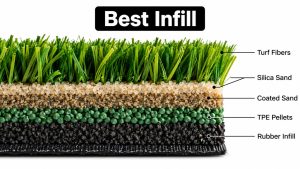
For a typical turf preparation, installers use a compacted crushed miscellaneous base, often 3–4 inches compacted, to provide stability and drainage. The exact material depends on the site, access, drainage design, and turf system. Edge restraint, such as bender board or steel edging, keeps the base and turf from spreading at the perimeter.
Verify the plane before installation
Use a long straight edge, string line, or laser level to check the finished base in multiple directions. The base should have the planned fall, not a visually flat surface that sends water toward the structure. Austin's clay-heavy soils deserve extra attention because clay can hold water and shift under load, making subgrade preparation more important than adding surface material.
The artificial turf ground preparation guide explains why the base matters more for turf than for seed or sod. Natural grass can root through minor surface variation. Artificial turf can't correct a subgrade that flexes, ponds, or settles.
Know when the project changes category
A small lawn correction may be manageable with hand tools and careful grading. An artificial turf installation requires excavation, base placement, compaction, edging, drainage planning, and a consistent final plane. Once the work includes broad excavation, clay correction, multiple compacted stages, or a warranty-sensitive surface, professional preparation usually makes more sense than trying to save time with a shortcut.
Warning Signs You Are Past the DIY Line
A small dip and a moving yard aren't the same project. Stop treating the problem as cosmetic when the ground gives you evidence that water or soil movement is still active.
Six practical stop signs
- Recurring ponding after rain: If the same area fills repeatedly, the drainage path needs attention before more fill.
- A slope toward the foundation: Regrade the surface so water moves away from the structure. A flat-looking yard can still need controlled fall.
- Washouts or returning ruts: Repeated erosion means runoff is carrying soil away. Replace the soil path, not just the missing soil.
- A broad affected area: When the repair extends beyond a small patch, elevation control and equipment access become harder to manage by eye.
- Deep fill: A depression deeper than 4 inches needs staged fill and compaction, not one load spread over the top.
- Artificial turf or a retaining wall: Both require a stable base and deliberate drainage. A surface that looks acceptable for grass may not meet installation needs.

Pushing through these signs can bring the original problem back. Settlement may reopen the low spot, runoff may undermine the repair, and a poorly prepared turf base can create visible defects that are difficult to correct after installation. Retaining walls and foundation-adjacent grading also carry consequences beyond appearance, so the risk is not limited to a disappointing lawn.
A useful self-check: If you can't confidently explain where the water comes from, where it should go, and why the soil moved, schedule an on-site assessment before digging.
What to Expect When You Call a Pro
A useful site visit should produce a diagnosis, not a generic quote. The crew should walk the property, trace where water collects and exits, check elevations, assess access for equipment, and note utilities, trees, foundations, or hardscape that affect the work. Ask whether the low area is cosmetic, caused by settlement, or tied to drainage before approving added soil.
Your written estimate should connect each task to a cost. Request separate line items for removing failed material, importing and placing fill, staged compaction, regrading, drainage work, equipment access, and any artificial-turf base or retaining-wall preparation. If the estimate includes diagnostic time, travel, labor, overhead, insurance, or licensing, those categories should be clear. Approval should be required before the scope exceeds the agreed estimate by more than 10%, as outlined in home-service customer service research.
A practical example is a low spot beside a patio. The quote should show whether the crew will cut and remove the soft soil, bring in suitable fill, compact it in lifts, reshape the surrounding grade, and restore lawn or build a turf base. That breakdown helps you compare bids by scope instead of choosing the lowest surface-level price.
The appointment details should also be specific. Confirm the date, arrival window, property access, planned diagnostic work, and who is coming. Clear confirmation information and reminders are recommended in appointment confirmation guidance, while field-service guidance discusses narrower arrival windows in this customer experience guide for field service.
Modern Yard can assess uneven Austin yards, correct grading and drainage, prepare stable bases, and install artificial turf, drainage tile, or retaining walls. Visit Modern Yard Landscapes to schedule an on-site assessment and request a written quote.