
A steep backyard in Austin usually starts as a nuisance. The mower feels unsafe. Rain carves channels into the soil. Plants bake on the upper slope and drown at the bottom. If you have dogs, the whole area can turn into a muddy run that never really looks finished.
That kind of yard frustrates people because it seems like it should be usable, but it keeps asking for more work, more patching, and more money. The good news is that a slope isn't wasted space. With the right design, it can become one of the most durable and visually striking parts of the property.
Transform Your Problem Slope Into a Valuable Asset
A hillside stops being a problem when you stop treating it like a flat yard. An effective shift comes from designing for gravity instead of fighting it. On sloped properties, the best low maintenance hillside landscaping plans control water first, stabilize soil second, and only then focus on appearance.

There's also a strong financial reason to do it well. According to the American Society of Architects, a well-executed outdoor design package can increase a home's value by 15% to 20% at resale, and even a basic transition to a well-maintained yard can add over 11% in perceived home value according to this landscaping ROI review. For Austin homeowners, that changes the conversation. This isn't just about making a difficult yard easier to manage. It's about improving an asset.
What buyers and owners both notice
People respond to hillside scenery that looks intentional. They notice:
- Controlled grading: The yard looks designed, not washed out.
- Defined use areas: A level terrace, path, or turf zone makes the property feel larger.
- Clean edges and stable materials: Stone, steel edging, and well-placed planting beds signal long-term quality.
- Less visual chaos: A slope with too many random plants still reads as maintenance-heavy.
A rough slope makes buyers think about drainage problems, erosion, and upkeep. A finished slope suggests the opposite.
A hillside project pays off when it removes uncertainty. People trust a property more when the slope looks stable, accessible, and easy to care for.
What actually adds value on a slope
The biggest mistake is spending money on cosmetic planting without fixing the underlying structure. Fresh mulch and a few shrubs may look good for a season, but they won't hold up if runoff is still cutting through the grade.
The projects that hold their value usually combine several moves at once:
- Water management
- Soil stabilization
- Durable planting
- Hardscape where foot traffic or access demands it
- A realistic maintenance plan
That last point matters. If the design only works when someone weeds, replants, and re-mulches constantly, it isn't low maintenance. It's just delayed frustration.
How to Properly Assess Your Hillside Property
Before selecting plants, rock, or turf, assess the site the way a contractor would. A slope may look simple from the patio, but a few hidden conditions usually determine whether the project succeeds or fails.
Start with grade and water movement
Walk the property after rain if you can. Watch where water starts, where it speeds up, and where it settles. On many Austin lots, the top of the hill sheds water faster than expected, while the toe of the slope stays wet longer than the surface suggests.
Look for these field signs:
- Exposed roots or rills: Soil is already moving downhill.
- Bare patches: Water or heat is stressing the area beyond what the current planting can handle.
- Mulch migration: Material is washing instead of staying in place.
- Soft spots at the bottom: Drainage is incomplete, even if the upper slope looks dry.
If runoff is obvious, a planting plan alone won't solve it. A slope often needs grading, capture, or subsurface drainage before the finish materials go in. That's why it helps to review proven yard drainage solutions for slopes and runoff before deciding what belongs on the surface.
Check sunlight honestly
Property owners frequently overestimate how much full sun they have. On a hillside, that matters because upper sections may get blasted by afternoon heat while lower pockets receive reflected light, shade, or concentrated moisture.
Use a simple observation routine for a few days:
- Morning pass: Note cool, bright zones and any shaded pockets.
- Midday pass: Identify the most exposed areas.
- Late afternoon pass: Austin heat stress usually tells the truth here.
- After-rain pass: See which zones stay damp and which dry out immediately.
A plant that survives on a flat bed near the house may fail badly on the upper third of a slope.
Practical rule: If a hillside has inconsistent sun, don't design it as one planting area. Treat it as multiple micro-sites.
Test soil by behavior, not just appearance
You don't need a lab report to learn a lot. Pick up a handful of moist soil from different parts of the hill. If it smears and stays sticky, drainage may be slow. If it falls apart instantly and feels gritty, water may move through too quickly for young plants to establish without help.
Also note what the soil does when disturbed:
- Crumbles easily: Better infiltration, but can dry fast.
- Clumps densely: May hold moisture longer and create runoff on the surface.
- Contains fill or construction debris: Common on built lots, and a major reason plantings fail unevenly.
Know when assessment becomes professional work
If the slope has active erosion, recurring washouts, uneven settling, or a height change that affects foundations, fences, or patios, guessing gets expensive fast. That's the point where design-build expertise matters. The wrong wall, the wrong drain location, or the wrong soil prep can lock in problems that are much harder to fix later.
Choosing the Right Plants for Erosion Control and Beauty
A bare Austin slope can look manageable in spring, then lose soil, mulch, and young plants in the first hard rain. Planting helps, but only if the plants are chosen for root strength, heat tolerance, and the way that specific hill sheds water.

A good starting point is native groundcover and grass systems. Native groundcover plants can reduce soil loss by up to 90% compared to bare slopes and develop root systems 1 to 2 meters deep, according to this hillside planting guide. On Central Texas hillsides, that rooting habit matters far more than bloom color. Shallow ornamental plantings may look clean right after install, but they often fail once summer heat and runoff expose the soil around them.
What tends to work well in Austin
On low maintenance hillside projects, I build planting plans in layers. A slope usually needs a structural layer to hold soil, a spreading layer to cover open ground, and a smaller accent layer so the hill does not read as a flat mass of one plant.
The most dependable categories are:
- Native ornamental grasses: Good for fibrous root coverage, movement, and softening stone or gravel areas.
- Succulents and agaves: Best on hot, fast-draining sections where irrigation is limited and reflected heat is intense.
- Low-spreading groundcovers: Useful for stitching together pockets between stone, boulders, or terrace edges.
- Tough perennial accents: Best used selectively for seasonal color and form without creating a maintenance-heavy planting.
If you're comparing plant palettes, this roundup of low maintenance landscaping plants is a useful visual reference for drought-tolerant textures and growth habits before narrowing the list for slope use.
Where plant-only plans usually fail
The biggest mistake is asking plants to solve a grading problem by themselves.
I see the same issues repeatedly on hillside properties. Shallow-rooted ornamentals get overused because they look finished fast. High-water plants get installed on upper slopes where irrigation coverage is weakest. Bark mulch washes downhill, exposes roots, and collects at the toe of the slope. Plants get spaced too tightly, then fight each other for water and airflow after one or two growing seasons.
Young plants also need time. Until roots establish, the hill is still exposed.
That gap is where many DIY installs come apart. A planted slope often needs rock, mineral mulch, edge restraint, erosion matting, or other physical support during establishment. On pet-friendly properties, the traffic pattern matters too. Dogs usually create the first wear path before the owner notices runoff starting, which is one reason a mixed solution often performs better than plants alone.
Better results come from assigning each zone a job
Every part of the slope should earn its keep. One area may need dense rooting for erosion control. Another may need to stay low for sightlines. Another may be better handled with gravel, stone, or one of these drought-resistant lawn alternatives if the goal is cleaner access and less mud for kids or pets.
That is the trade-off. Plants bring cooling, habitat, and a softer look, but they do not perform the same way on every grade or in every traffic zone. The strongest hillside work in Austin usually combines planting with hard materials, and sometimes turf, so each part of the hill is doing the job it is best suited to do.
A beautiful slope should not need weekly rescue work. If a plant choice needs constant watering, re-edging, or replacement to survive on the hill, it is the wrong plant, or the hill needs more than planting. On steeper or unstable sites, professional design and installation prevent expensive callbacks by matching the planting plan to drainage, access, and long-term slope stability.
Hardscape Options That Lock Your Landscape in Place
A lot of Austin hillsides look stable until the first heavy storm cuts a channel through them. Then the mulch moves, the footing feels sketchy, and the slope starts costing money twice. Once for the failed install, and again for the rebuild. Hardscape is what turns that slope into something controlled, usable, and much easier to maintain.

Retaining walls, terraces, and rock gardens do different jobs
These features are often bundled together, but they solve different site problems, and that distinction matters on a hillside.
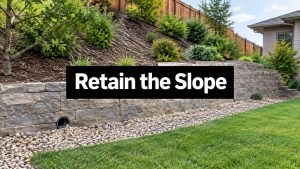
Retaining walls handle grade change and soil pressure. They create flat, usable space and protect lower areas from slumping soil. On steeper properties, the wall itself is only part of the job. Base prep, drainage stone, backfill, compaction, and water release points determine whether that wall still looks good in five years or starts leaning after one wet season.
Terraced beds divide a long incline into shorter, more stable sections. That makes irrigation easier to control, gives crews safer access for maintenance, and lets you assign each tier a purpose. One tier can hold tougher plantings, another can carry decorative gravel, and another can transition into turf or a path for pets and daily use.
Rock gardens work best on dry, exposed sections where loose organic mulch tends to wash or scatter. They reduce bare soil, pair well with xeric planting, and usually need less refreshing over time. Integrating rock mulches with drought-tolerant perennials can suppress weeds by 80 to 95% over 3 years when installed over fabric, according to this rock landscape reference.
Hillside Solution Comparison
| Solution | Upfront Cost | Maintenance Level | Erosion Control Effectiveness | Best For |
|---|---|---|---|---|
| Retaining walls | Higher | Low once built correctly | High | Steep grade changes, usable flat areas, structural support |
| Terraced garden beds | Moderate to higher | Moderate to low | High | Planting on stepped slopes, better access, organized design |
| Rock gardens | Moderate | Low | Moderate to high when combined with proper planting and edging | Dry slopes, visual texture, weed suppression |
Where people overspend and where they underbuild
The most common mistake is spending on the visible face while ignoring what keeps it standing. Nice stone veneer does not fix poor drainage. Cheap timbers do not safely hold a serious slope. Shallow edging does not control runoff on a grade that really needs stepped retaining.
I also see owners put too much square footage into planting and not enough into movement. A stable stair run, decomposed granite path, landing, or small sitting area often adds more value than one more bed that will be hard to water and harder to maintain. If the plan includes an overlook or raised platform, specialist advice on composite decking vs wood is worth reviewing before you choose materials that will sit next to stone, irrigation, and slope drainage.
The best wall is the one that disappears into the yard because it works. Water exits where it should, the soil stays in place, and the face still looks clean years later.
When hardscape is the smarter choice
Hardscape-first design makes sense when the slope keeps washing out, mowing feels unsafe, or the goal is usable space rather than more planting area. It also makes sense for pet households, where repeated traffic can wear grooves into a hill faster than roots can stabilize it.
Choose hardscape first if the property needs level seating, safer access, stronger edge control, or a durable base for combining plants with other surfaces. That combined approach usually performs better in Austin than trying to force every part of the hill to function as a planted bed. For visual examples that balance appearance with real slope control, review retaining wall design ideas for sloped yards and pay attention to how drainage, access, and material transitions are handled.
The Ultimate Low Maintenance Solution Artificial Turf
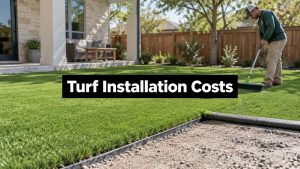
Artificial turf belongs in the hillside conversation because many slopes aren't failing as gardens. They're failing as use spaces. The owners want a clean play area, a dog run, a place to walk safely, or a surface that doesn't disappear after every heavy rain.

That matters even more for pet households. According to this hillside and pet-use reference, 70% of US households own pets, and typical hillside fixes often break down under that pressure. Plants get trampled, mulch gets kicked around, and some common garden plants create safety concerns. The same source notes that artificial turf with integrated drainage handles 30+ inches of rain per hour, and systems with antimicrobial infill and cooling technology offer a cleaner, more durable surface for pet-friendly slopes.
Why turf solves a different problem than planting
Artificial turf isn't a replacement for every plant on every hill. It solves a specific set of issues better than natural materials do.
It works especially well when the goal is:
- Year-round clean access
- Mud-free pet use
- A stable play surface
- Minimal weekly maintenance
- A controlled look near modern architecture
On a tough slope, the strength of turf comes from the system below it. Base prep, edge restraint, grading, and drainage determine whether it performs like a premium installation or looks tired in a short time.
Where natural grass and loose finishes struggle
Natural grass on a hill often thins out because irrigation runs off before soaking in evenly. Mowing is awkward and sometimes unsafe. Bare spots develop, then runoff gets worse, then the owner starts patching.
Loose mulch has a similar pattern. It moves. Dogs move it faster. Heavy rain moves it farther.
Artificial turf challenges the assumption that "natural" is always the best fit. Sometimes the practical answer is a manufactured surface because the site needs durability, drainage, and hygiene more than it needs another planting experiment.
A pet-friendly hillside has to survive paws, runoff, and heat at the same time. That's a performance question, not just a design preference.
Turf is strongest when installed for the slope
The important distinction is decorative turf versus engineered turf. A hillside installation needs contour control, secure seaming, stable edges, and water management built into the plan.
If you're comparing performance and upkeep before making a decision, this guide on artificial turf vs natural grass helps clarify which surface makes sense when drainage, wear, and maintenance are the primary priorities.
Why an Integrated Design Is Key to Hillside Success
The most successful hillside projects don't rely on one material. They combine systems so each part of the slope does the job it's best suited for.
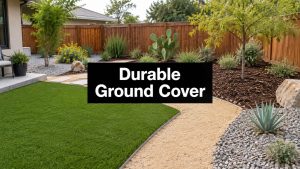
A common winning layout looks something like this. A retaining wall creates a flat upper pad. Artificial turf handles daily traffic and pets in that usable zone. Native grasses and groundcovers stabilize the steeper side sections that people won't walk on much. Rock bands and steel edging separate everything cleanly and stop creep between materials.
Piecemeal work usually creates new problems
The trouble starts when different parts are installed without a unified plan. One contractor adds plants. Another adds a wall later. Then someone patches drainage after the first hard rain. Each move may be reasonable on its own, but the systems don't always cooperate.
Typical conflicts include:
- Drain outlets aimed into planting beds
- Walls built without considering future access
- Turf edges meeting loose soil instead of stable borders
- Irrigation zones that overwater one material and under-serve another
- Maintenance paths that were never planned
That kind of fragmentation is expensive because every fix disturbs something already finished.
One site, several performance zones
A hillside should be divided by function, not by product category. The slope may have a structural zone, a drainage corridor, a pet-use area, a visual buffer, and a low-access planting section. Once those roles are clear, the right mix of plantings, rock, wall systems, and turf tends to emerge naturally.
Good hillside design looks cohesive because the water plan, grading plan, material plan, and use plan were resolved together.
Professional design earns its keep. Hillsides punish assumptions. The layout has to account for how crews access the space, how materials are staged, where runoff exits, how edges terminate, and how the finished yard will be used six months later. A managed project avoids the common pattern of solving one slope problem by creating three others.
FAQ Your Hillside Landscaping Questions Answered
Is low maintenance hillside landscaping expensive?
It can be, depending on the slope and the level of correction needed. A gentle hill with good drainage may only need selective planting, rock, and edging. A failing slope with runoff, settling, and no usable flat space may need walls, drainage work, grading, and surface replacement.
The better way to think about cost is this: hillsides become expensive when people keep repairing symptoms. A complete solution often costs more upfront, but it usually prevents repeat washouts, dead plant replacements, and patchwork fixes.
How long does a hillside project take?
That depends on access, weather, material lead times, and whether structural work is included. Planting a moderate slope moves much faster than cutting terraces, building walls, and installing subsurface drainage.
The fastest projects are usually the simplest. The most durable projects usually involve more planning before the first shovel goes in. On steep Austin lots, careful sequencing matters because equipment access and spoil removal can affect both budget and schedule.
Can I do a hillside project myself?
Some portions are DIY-friendly. Light planting on a mild slope, basic cleanup, or small decorative rock areas can be manageable if drainage is already sound.
DIY becomes risky when the slope has active erosion, height changes, runoff toward structures, unstable footing, or any wall that needs to hold soil reliably. Those aren't cosmetic issues. A mistake there can lead to water intrusion, slope movement, or a wall that has to be rebuilt.
Do I need a permit for a retaining wall in Austin?
Possibly. Permit requirements can depend on wall height, location, drainage impact, and how the wall relates to nearby structures or property conditions. Local rules can change, and some projects also involve engineering review.
The safest move is to verify requirements before design is finalized. Waiting until materials are ordered is the wrong time to learn that the scope needs revisions.
What's the best option for pet owners on a slope?
That depends on how the pets use the yard. If the area is mostly visual and lightly used, durable plantings in protected beds may work. If dogs run the slope every day, most natural solutions wear down fast.
For heavy pet use, a professionally built turf system with drainage is usually the cleanest and most reliable option. It avoids mud, handles traffic better, and doesn't create the same maintenance cycle as mulch and patchy grass.
What fails most often on hillside projects?
Three things. Poor drainage planning, weak edge control, and material choices that don't match the grade.
A good-looking install can still fail if water has nowhere to go. That's why experienced hillside work starts below the surface. Plants, turf, and stone are the finish. The hidden structure is what makes them last.
If you're dealing with a slope that washes out, stays muddy, or never feels usable, Modern Yard Landscapes can help you turn it into a durable, low-maintenance part of your property. Their team handles the full system, including turf, drainage, retaining walls, and slope-ready design for Austin homes and commercial sites. Schedule a consultation to get a plan that fits your grade, your use, and your long-term maintenance goals.