
Professionally installed home putting greens typically cost $15 to $40 per square foot, so a 500-square-foot Austin project usually lands between $7,500 and $20,000, depending on site conditions and design complexity. The advertised number only tells you the surface area, not what your yard will require underneath it.
That distinction matters in Austin. A flat backyard with clear equipment access can stay near the lower end, while a sloped lot with drainage problems, dense clay, rock, roots, or a narrow side gate can move quickly toward $40 or more per square foot. I've seen homeowners focus on turf samples, then get surprised by excavation, aggregate, haul-off, edging, and hand labor.
This guide gives you a practical way to read the home putting green cost before you request a quote. For broader context on how major residential projects are priced, how much to build a house 2026 offers a useful comparison from New American Funding, LLC. A putting green is smaller than a house, but the pricing logic is similar: access, preparation, materials, and skilled labor shape the final number.
What a Home Putting Green Actually Costs in 2026
Professionally installed Austin putting greens generally fall between $15 and $40 per square foot, according to Tour Greens' backyard putting green cost guide. That puts a 500-square-foot installation at roughly $7,500 to $20,000, before an unusually difficult site or premium custom work pushes the budget higher.
The range is wide because “putting green” describes several different projects. A basic flat pad isn't priced like a shaped short-game area with drainage infrastructure and multiple play zones.
Three practical pricing tiers
| Tier | Price per Sq Ft | Typical Features | 500 Sq Ft Estimate |
|---|---|---|---|
| Basic | $15–$22 | Flat pad, standard turf, simple edging, one or limited cup locations | $7,500–$11,000 |
| Mid-tier | $23–$32 | Moderate slopes, fringe, improved shaping, more detailed installation | $11,500–$16,000 |
| Premium | $33–$40+ | Bunkers, stronger undulations, custom drainage, multiple play zones, complex edging | $16,500–$20,000+ |
These tier descriptions are useful budgeting categories, not guaranteed bids. The lower advertised prices typically assume a relatively flat yard, straightforward access for equipment, stable soil, and no unusual drainage work. If the crew must move aggregate through a narrow side yard, excavate difficult soil, rebuild the grade, or install drainage before shaping the green, the quote reflects those hours and materials.
One and Done Prep's residential cost guide also shows why size and material choices create such a broad spread, with smaller simple greens priced very differently from larger practice installations. Larger projects often distribute fixed mobilization and setup costs across more square feet, but complex contours and features can erase that advantage.
Material availability and Austin labor demand also affect current estimates. I wouldn't treat an old online price as a promise. Use it as a starting point, then have a contractor evaluate the actual yard. The real cost of artificial turf depends on what must happen before the turf ever reaches the site.
Line-Item Breakdown of Putting Green Installation
A credible quote should show more than “turf installed.” The finished surface depends on excavation, grading, aggregate, compaction, drainage, seams, borders, infill, and installation technique. FusionTurf's artificial putting green cost breakdown identifies excavation, compacted aggregate, and drainage grading as a major share of project cost.
Use the following categories to question a quote intelligently. The assigned percentages and component ranges below come from the project cost breakdown provided for this guide, while actual invoices vary by site.

1. Site preparation and grading
Site preparation commonly represents 15% to 25% of total cost. Crews remove unsuitable soil, establish the shape, manage haul-off, and create the elevations that determine how the green drains and plays.
Clay-heavy Austin soil, existing lawn, steep grades, and restricted access all increase effort. A quote that lists turf but says little about excavation and grading deserves closer inspection.
2. Aggregate base
Decomposed granite and crushed rock provide the stable platform beneath the synthetic surface. Base construction and compaction can account for approximately $4 to $12 per square foot, according to FusionTurf's average installed cost breakdown.
The material may represent 10% to 15% of total cost, but the key issue is installation quality. Crews need to place and compact the base properly, especially where the green includes slopes or undulations.
3. Drainage
Drainage often accounts for 5% to 12% of the project. French drains, channel drains, perforated lines, and regrading are selected according to how water moves through the property.
A yard that stays wet after storms needs a drainage plan, not a cosmetic surface treatment. Review this site preparation cost guide when comparing quotes that appear unusually cheap.
4. Turf material
Turf can represent 20% to 30% of the total. Face weight, stitch rate, fiber type, pile height, and UV resistance affect price and playability. A 60-ounce face-weight product costs more than a 40-ounce option, but the exact difference depends on the full product specification and installation package.
Material and installation together can add approximately $6 to $12 per square foot, according to the FusionTurf breakdown cited above. Ask for the product name and specifications, not just “premium turf.”
5. Edging and borders
Bender board, steel edging, pavers, stone, or custom borders contain the turf and define the transition into the surrounding area. This category commonly represents 5% to 10% of the project.
Straight, accessible edges cost less. Curved borders, boulder edging, and areas requiring hand work take more time.
6. Infill and top dressing
Infill and top-dressing sand generally account for 3% to 5% of total cost. These materials help support fibers and maintain a consistent putting surface.
Cheap infill isn't automatically a bargain. The correct material and distribution affect how the surface feels, brushes, and performs over time.
7. Skilled labor
Installation labor commonly represents 25% to 35% of the project. This includes cutting and seaming turf, setting cups, shaping transitions, securing edges, distributing infill, and finishing the surface.
For a broader look at how outdoor projects divide labor and materials, this landscaping pricing breakdown can help you compare the structure of contractor estimates.
Sample Project Budgets by Size and Complexity
Size changes the economics, but design features decide whether a project stays simple. The following examples use the requested Austin project profiles and illustrate how the effective rate changes with scope.
| Project Size | Design Complexity | Estimated Total Cost | Effective $/Sq Ft | Key Cost Drivers |
|---|---|---|---|---|
| 200 sq ft | South Austin flat pad, basic fringe, one hole | $3,600–$5,000 | $18–$25 | Small-project mobilization, basic excavation, limited edging, one cup |
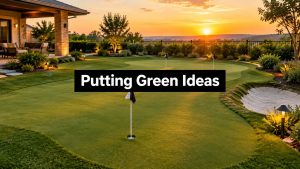
| 500 sq ft | Circle C, moderate slopes, two bunkers, chipping fringe, upgraded drainage | $12,000–$17,500 | $24–$35 | Shaping, bunker construction, drainage, larger turf package |
| 900 sq ft | Westlake premium build, significant undulation, three bunkers, custom boulder edging, LED cup lighting, complex drainage | $27,000–$38,000 | $30–$42.22 | Extensive grading, multiple features, specialty edging, lighting, difficult drainage |
The small South Austin green
The 200-square-foot option keeps the design controlled. A flat pad, basic fringe, and one hole limit shaping, turf cuts, cup setting, and border work. The effective rate still runs higher than a large simple green because excavation, equipment setup, delivery, and layout are spread across a smaller footprint.
This is a sensible choice for homeowners who want casual practice without turning the yard into a full short-game facility. The trade-off is limited shot variety and less room for meaningful contours.
The Circle C mid-size build
The 500-square-foot example adds moderate slopes, two bunkers, a chipping fringe, and upgraded drainage. Those features make the green more useful, but they also increase base shaping, material handling, seam planning, and finishing time.
The effective rate remains within the normal installed market, but the design sits above a flat-pad project because the surface underneath the turf must be shaped accurately. Bunkers and drainage aren't decorative line items. They change the construction process.
The Westlake premium installation
The 900-square-foot project benefits from scale, but premium features push the total higher. Significant undulation requires more precise base work, while three bunkers, boulder edging, LED cup lighting, and complex drainage add separate trades or installation stages.
That example shows why “larger means cheaper per square foot” is only a starting rule. A large plain green may gain efficiency. A large custom design feature can still reach the upper pricing tier.
Hidden Site Conditions That Inflate Your Quote
Most homeowners compare turf quality first. In Austin, the yard underneath the turf often matters more. A simple online estimate can suggest $15 per square foot, while a physical inspection reveals the conditions that move the build toward $40 or more per square foot, as described in this 2026 putting green cost guide.

Slopes
A steep slope may require retaining work, additional aggregate, and careful elevation control. A 30-degree slope can add $3,000 to $6,000 in retaining and base work alone, based on the Austin installation scenario specified for this guide.
Don't assume a slope is automatically a problem. The contractor should explain whether the design can use existing grade, needs terracing, or requires structural support.
Drainage zones
Low spots and poorly draining soil can force regrading, French drains, channel drains, or additional rock. If water already collects where you want the green, placing turf over it won't solve the problem.
Ask where stormwater will go after installation. A contractor who can't answer that question hasn't finished evaluating the project.
Tight access
A narrow side gate can prevent a mini excavator, skid steer, or delivery equipment from reaching the work area. Crews may need to move soil and aggregate manually, which adds labor and extends the installation process.
Measure the access route, not just the proposed green. Gates, steps, fences, retaining walls, and overhead obstructions all matter.
Roots and rock
Mature tree roots can complicate excavation and change the layout. Limestone and rock ledges can slow digging, require different equipment, and increase haul-off or disposal work.
Don't let anyone promise a final price from a satellite image. Ground conditions need an on-site review.
Utilities
Irrigation, electrical lines, gas service, and other utilities may require protection or rerouting. Utility conflicts are especially important when the design includes drainage, lighting, cup wiring, or deeper excavation.
Practical rule: Any bid that skips a physical site visit is a rough planning number, not a final commitment.
Before requesting quotes, walk the yard after rain, identify standing water, locate the narrowest access point, note mature trees, and gather any available utility or irrigation information. A proper yard drainage system cost guide can help you frame the drainage questions before the contractor arrives.
Long-Term Ownership Costs and Maintenance
Installation day is only the first cost decision. Synthetic putting greens generally need less maintenance than natural grass, but they aren't maintenance-free. The current upkeep estimates provided for this guide range from roughly $40 to $150 for brushing and spot infill on small areas, $150 to $300 for a professional tune-up, or approximately $200 to $600 per year when cleaning supplies, infill, and minor repairs are included, according to Bulger Brothers Landscape's value analysis.
| Expense Category | Artificial Turf Green | Natural Grass Green |
|---|---|---|
| Brushing and grooming | Periodic brushing and professional service as needed | Frequent mowing and grooming |
| Water | No regular irrigation required for playability | Ongoing irrigation required |
| Fertilizer and treatments | No routine fertilizer program | Fertilizing, aeration, and pest management |
| Repairs | Occasional seam, edge, infill, or pet-damage repairs | Ongoing turf renovation and surface recovery |
| Annual planning range | Roughly $40–$600, depending on service level | Roughly $1,500–$3,000, based on the Central Texas comparison provided for this guide |
Natural grass requires more intensive care in Central Texas heat. Mowing, fertilizing, irrigation, aeration, and pest control all affect the annual budget, while artificial turf shifts the work toward brushing, cleaning, infill management, and inspection.
Lifespan changes the calculation
Premium nylon systems are commonly assigned a 15-to-20-year lifespan, while mid-grade polypropylene is commonly assigned 10 to 15 years, based on the verified data for this guide. UV exposure, foot traffic, pets, furniture, and poor infill distribution affect how well the surface retains its fibers and roll.
That makes the cheapest installation a risky target. A lower-grade surface may reduce the initial invoice but demand more grooming, infill, or earlier replacement. A better base and more durable turf can cost less per year of useful play, even when the installation price is higher.
Review artificial grass durability before choosing a product solely by its initial price. Ask how the turf is expected to perform in direct Austin sun and along the walking paths that will receive the most traffic.
Financing, Warranties, and Next Steps for Austin Homeowners
A backyard project in the $10,000 to $20,000 range deserves the same financial discipline as any other major home improvement. Start with the total installed price, then separate the features you need for practice from the upgrades you can postpone.
Compare the financing route to the project
Homeowners commonly consider a home equity line of credit, a personal improvement loan, or a contractor-offered payment plan. Interest rates and approval timelines vary by lender and applicant, so compare the written terms rather than choosing based on a monthly payment alone.
A home equity line may suit a homeowner who wants a flexible draw structure and accepts the obligations attached to secured borrowing. A personal improvement loan may offer a simpler application, while a contractor payment plan can be convenient when its fees, rate, and repayment schedule are clear.
Don't finance hidden uncertainty. Get the site evaluated first, then finance a defined scope with a line-item quote.
Read both warranties
Manufacturer material warranties and installer workmanship warranties cover different risks. Material coverage commonly addresses UV degradation and fiber integrity for 8 to 15 years, while workmanship coverage is commonly 1 to 3 years for concerns such as base settling, seam separation, and drainage performance, according to the verified data provided for this guide.
Request the documents before signing. Confirm who administers each warranty, what maintenance the homeowner must perform, and whether drainage or settling claims have exclusions.
Ask this before approving the work: “Which problems does the manufacturer cover, which problems does the installer cover, and where is that written?”
Warning signs include a contractor who won't identify the turf manufacturer, won't provide warranty documentation, combines material and workmanship coverage into vague language, or refuses to explain exclusions. A transparent contractor should also explain what happens if an unexpected rock shelf, utility conflict, or drainage condition appears during excavation.

The right next step is an on-site consultation. A specialist should inspect slope, drainage, soil, access, trees, utilities, and the intended practice layout, then show you which choices place the project in the basic, mid-tier, or premium range. You should leave with a transparent quote that separates preparation, base, drainage, turf, edging, features, labor, and warranty coverage.
Modern Yard Landscapes designs and installs custom backyard putting greens in Austin, including site preparation, drainage solutions, precision shaping, turf installation, and maintenance planning. Visit Modern Yard Landscapes to schedule a free on-site consultation and get the exact line-item cost for your yard, with no obligation and no pressure.