
If you're in Austin and tired of watching a lawn struggle through heat, watering schedules, patchy shade, and constant upkeep, you're asking the right question. Not whether artificial turf is perfect. It isn't. The better question is whether a well-designed turf system can be the smarter environmental choice for the way people live here.
For many homeowners, the answer is yes. But only if you look past the sales language and judge the whole system. The turf itself matters. The backing matters. The infill matters. Most of all, the installation matters. That's where sustainability becomes real or falls apart fast.
Rethinking Green Lawns Is Artificial Turf Eco Friendly
A lot of homeowners assume "artificial" automatically means "bad for the environment." That sounds reasonable until you compare what a traditional lawn demands year after year in a hot, water-sensitive place like Austin.
The strongest environmental case for turf isn't that it's made from magical green materials. It's that the use phase changes everything. Synthetic turf eliminates routine irrigation, mowing, fertilizing, and pesticide applications, which lowers water demand and avoids chemical runoff, and long-life products in the 15 to 20 year range reduce replacement frequency according to Smart Turf's environmental benefits overview.
That matters because a lawn isn't just a surface. It's an ongoing maintenance system.

Green doesn't mean impact free
Eco friendly artificial turf isn't impact free. It's still a manufactured product. It uses plastic-based materials, and serious buyers should ask hard questions about heat, recycling, and lifespan.
But a thirsty lawn has impacts too. It asks for water, equipment, fertilizer, herbicide, and regular labor just to stay alive. In Austin, plenty of natural lawns also need resodding, patch repair, fungus treatment, and seasonal recovery after stress. None of that is environmentally neutral.
Practical rule: Judge landscaping by total lifetime inputs, not by whether the surface is natural or synthetic.
The better standard for Austin homeowners
A smarter way to think about eco friendliness is this. Does the yard reduce resource use over time? Does it stay usable with less intervention? Does it avoid recurring chemical treatments? Does it fit your property instead of fighting your climate?
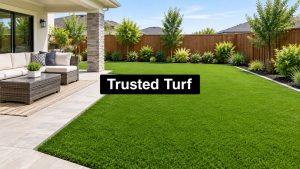
For many households, that answer points toward turf in specific areas such as side yards, dog runs, shaded strips, play zones, and hard-to-maintain front lawns. It's especially compelling when the alternative is a lawn that never thrives without heavy support.
If you're planning a broader backyard upgrade, it also helps to think beyond the grass itself. Good turf works best when it's part of a coherent outdoor layout with shade, seating, and circulation. For idea gathering, Lafayette outdoor living inspiration is a useful example of how people combine low-maintenance surfaces with real everyday living.
Decoding Eco-Friendly Turf Materials and Infill Options
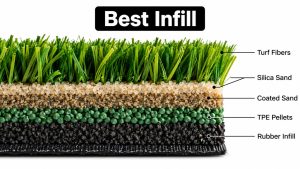
When homeowners shop for eco friendly artificial turf, they usually focus on how the blades look. That's understandable, but it's only one layer of the decision. Performance and sustainability come from three parts working together: fiber, backing, and infill.
What to look for in the turf itself
Most residential turf systems use plastic fibers such as polyethylene or polypropylene. In practice, homeowners don't need a chemistry lecture. They need to know what each choice means on the ground.
Polyethylene usually feels softer and looks more natural, which makes it a strong fit for front yards, family spaces, and pet areas. Polypropylene can be useful in certain applications, but fiber choice should always be matched to traffic level, sun exposure, and the look you want after years of use, not just on installation day.
The backing is where a lot of "green" claims either hold up or fall apart. High-quality eco-friendly artificial turf is engineered with permeable backing and drainage perforations, and stronger products may also use lead-free, non-toxic materials plus recyclable or recycled-content components, as outlined in Festival Turf's eco-friendly artificial grass guidance.
Why infill changes comfort and durability
Infill doesn't get much attention from homeowners, but it affects drainage, blade support, cleanup, and surface feel. It also influences how the turf handles daily life in Austin.
A few practical considerations matter most:
- For blade support: Infill helps fibers stand up instead of flattening early in walk paths and play areas.
- For drainage: The right infill works with the backing and base so water moves through the system instead of hanging at the surface.
- For heat and comfort: Some infill options perform better than others in hot conditions.
- For pets: Odor control, rinsability, and surface cleanliness all depend partly on infill choice.
If you want a closer look at one of the most common options, this guide to sand infill for artificial grass is worth reading before you compare products.
A turf sample can look great in your hand and still be the wrong system for your yard. Ask to evaluate the full assembly, not just the face fiber.
The questions that separate good products from greenwashing
Ask any supplier or installer these before you commit:
| Question | Why it matters |
|---|---|
| What is the fiber made from? | It affects softness, resilience, and wear. |
| Is the backing permeable? | Drainage quality depends on it. |
| Are the materials lead-free and non-toxic? | Important for kids, pets, and peace of mind. |
| Is there recycled or recyclable content? | It speaks to waste reduction, even if recycling access varies. |
| Which infill is specified for my yard? | The answer should change based on pets, sun, and traffic. |
Homeowners don't need to memorize product specs. They do need an installer who can explain them clearly and match them to the site.
Why Your Turf's Installation Is Key to Its Green Credentials
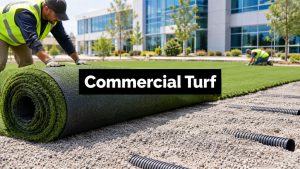
A lot of articles treat installation like the boring part. It isn't. Installation is where eco friendly artificial turf either delivers on its promise or becomes an expensive shortcut with drainage problems, seam failures, early wear, and wasted material.
A sustainable outcome doesn't come from buying a product labeled eco friendly. It comes from building a system that lasts.

Bad installation cancels out good intentions
If the yard isn't graded properly, water can pool or move the wrong direction. If the base isn't compacted correctly, the surface can settle and create low spots. If seams are weak, they open. If edges aren't secured well, they lift. Once that starts, homeowners often end up repairing or replacing sections far earlier than expected.
That isn't just frustrating. It undercuts the whole environmental argument. A turf system that fails early doesn't save resources. It wastes them.
Professional crews pay close attention to the full build sequence. This breakdown of artificial turf layers gives a good overview of why each layer affects drainage, stability, and lifespan.
What proper site prep actually does
The green value of installation comes from practical field work, not marketing language.
- Grading controls water movement. The finished surface needs the right slope so stormwater doesn't sit on top or drift toward the house.
- A stable base protects longevity. The sub-base supports the turf, keeps it even, and reduces premature deformation.
- Drainage planning keeps the surface usable. Good drainage means fewer muddy transitions, less standing water, and faster recovery after rain.
- Clean cuts and efficient layout reduce waste. Experienced installers plan seams and material direction before they start cutting.
- Secure edges protect the full system. Edging isn't cosmetic. It keeps the installation intact under foot traffic, pets, and seasonal movement.
Installation is local, not generic
Austin yards are rarely simple rectangles with ideal soil. Many have limestone, tight side access, mixed sun and shade, drainage concerns, tree roots, elevation change, or heavy pet traffic in specific zones. That's why the same turf can perform very differently from one home to the next.
The most sustainable turf system is the one built for your site, your sun exposure, and the way your household uses the yard.
A low-bid installer may treat every project the same. That usually shows up later as puddling, ripples, odor retention, hard edges, or premature wear in the exact places where the yard sees the most use. Good installation avoids those problems before the turf goes down.
The Environmental Impact of Turf vs Natural Grass in Texas
A homeowner in Austin can spend a summer watering a lawn back to life, pay for mowing through the growing season, and still end up with thin, stressed grass by August. That is the actual comparison in Texas. It is not perfect natural turf versus synthetic turf in a mild climate. It is a high-input lawn in heat, drought cycles, and water restrictions versus a surface designed to stay usable with far less ongoing maintenance.
The biggest environmental difference is day-to-day resource use. According to GreenMatch's review of artificial grass environmental impact, artificial turf can cut water use sharply compared with a conventional lawn, and the same review notes that many turf systems are built to last for years. In practice, that means the long-term result depends less on marketing claims and more on whether the product is suited to the yard and installed to hold up in local conditions.

Where turf makes sense in Texas
For many Austin homes, the strongest case for turf is simple. It removes recurring inputs that natural grass often needs just to stay presentable.
| Factor | Artificial turf | Natural grass in Texas |
|---|---|---|
| Water demand | Very low during normal appearance upkeep | Ongoing irrigation demand |
| Mowing | None | Regular mowing and trimming |
| Lawn chemicals | None for routine turf growth | Often part of conventional lawn care |
| Appearance under drought stress | Stable | Can decline fast without support |
That matters in small front lawns, narrow side yards, dog runs, pool surrounds, rental properties, and homes where the yard gets heavy use but little patience for constant upkeep. In those spaces, a well-built turf system can reduce water use, eliminate mower emissions, and avoid the routine fertilizer and herbicide cycle that often comes with conventional lawn care.
Where natural grass still performs better
Natural grass cools itself better than synthetic turf in full sun. It also supports living soil activity and does not create the same disposal questions at the end of its service life.
Those are real advantages, especially in larger open areas where families want cooler surface temperatures and have the irrigation budget, soil conditions, and maintenance discipline to keep grass healthy. I do not recommend replacing every square foot of lawn with turf. In Austin, the better environmental answer is often selective use. Put turf where grass consistently struggles or where maintenance costs are out of proportion to the value of keeping live lawn there.
That distinction gets missed in broad online guides. A patchy lawn that survives on frequent watering, repeated reseeding, mowing, and chemical treatments is not a low-impact option just because it is natural.
The sustainability decision is not just product versus product
This is the part homeowners should pay attention to. Turf can be a smarter environmental choice in Texas, but only if the system lasts.
A short-lived installation is wasteful even if the product brochure sounds green. Poor drainage, weak seam planning, the wrong infill, or a cheap surface chosen for price instead of site conditions can shorten the life of the whole system. Then the environmental math gets worse fast because replacement comes sooner. Good local design changes that. The installer decides how much material gets wasted during cuts, whether the base drains correctly, how the turf handles pet use, and whether the surface is likely to perform for years instead of failing early.
That is why eco-friendly turf is not only about recycled content or a plant-based backing. It is also about choosing an Austin installer who understands sun exposure, runoff, limestone soils, and how the yard will be used. For a side-by-side look at maintenance and performance, this comparison of artificial turf vs natural grass in Austin yards is a useful reference.
For the right Texas property, that full-package approach can make turf the more responsible option. Not everywhere. Not in every application. But in the yards where natural grass is already demanding too much water, labor, and intervention, a well-chosen and professionally installed turf system is often the cleaner long-term answer.
Smarter Turf Solutions for Austin Heat and Water Savings
Austin homeowners usually have two concerns at the top of the list. First, water. Second, heat. Both are valid. Both need honest answers.
Heat is the issue too many turf sellers gloss over. In hot climates like Texas, artificial grass can become much hotter than the surrounding air. That's the downside buyers should take seriously. At the same time, modern turf systems address that problem with heat-resistant yarns, lighter color options, and specialized infills that retain moisture for cooling, as noted by the Plastic Pollution Coalition's discussion of plastic grass.
What works better in real Austin yards
The right answer usually isn't "put turf everywhere." It is to use turf strategically and design around the hottest exposures.
Good results often come from combining several moves:
- Choose the right yarn blend: Some products are built to handle high sun better and maintain a more usable surface.
- Use lighter turf tones when appropriate: Darker-looking greens can absorb more heat and look less natural in intense sunlight anyway.
- Pick an infill that supports cooling: Infill isn't just about weight and blade support.
- Add shade intentionally: Trees, pergolas, and sail shades improve comfort more than any brochure claim.
- Put turf where grass already fails: Narrow side yards, dog runs, shaded strips, and rocky problem areas are often better candidates than broad open expanses with no cover.
The local design question
Austin lots often have mixed conditions. One part of the yard gets hammered by afternoon sun. Another sits under tree shade. Another stays damp after rain. Sustainable design comes from matching each zone to the right solution, not forcing one material across the whole property.
If your main concern is a backyard that stays attractive with minimal water, turf can be a smart answer. If your main concern is barefoot comfort in full sun at the hottest part of the day, design details matter just as much as the turf product.
That's why local expertise matters. Material specs alone don't solve Austin's climate. Site-specific planning does.
How to Choose a Trusted Turf Installer in Austin
A homeowner in Austin gets three turf bids, sees three similar sample boards, and assumes the cheapest one will do the same job. A year later, the seams show, the edges lift, and water sits against the patio after a hard rain. The turf did not fail on its own. The system was chosen or installed poorly.
That is the part many buying guides miss. Eco-friendly turf is not just a product decision. It is an installation decision. In Austin, the right installer helps you avoid premature replacement, drainage problems, wasted material, and a yard that performs poorly in heat. All of that affects the actual environmental footprint of the project.

Questions worth asking on every estimate
Start with how the company studies your yard, not how quickly it gives you a number.
- How will you handle drainage on my specific lot? A good answer mentions grading, base preparation, compaction, and where runoff will move during heavy rain.
- What infill are you recommending, and why? The answer should connect to pets, heat, foot traffic, and how much upkeep you want.
- What edge restraint system do you use? Weak edges are one of the first places bad installs show up.
- How do you plan seams to reduce visibility and material waste? Careful layout affects appearance and how efficiently the product is used.
- What product and labor warranties are included? Ask for the details in writing.
- What happens at the end of the turf's service life? A responsible installer should answer this directly, even if local recycling options are still limited.
I also tell homeowners to ask who is doing the work. Some companies sell the job well and subcontract the install to a crew you never meet. That does not always mean poor quality, but it does mean you need clarity on supervision, workmanship standards, and who fixes problems if they come up.
Signs you're talking to the right company
Clear answers matter more than a polished pitch.
Look for an installer who will:
| What they do | Why it matters |
|---|---|
| Inspects your site before quoting | Drainage, slope, and access need to be measured in person |
| Explains product options plainly | You can compare systems based on use, not sales language |
| Talks about heat honestly | Austin homeowners need realistic expectations for summer conditions |
| Matches the system to your use | Dogs, kids, entertaining, and shade all affect the build |
| Puts scope and materials in writing | It prevents confusion about what is actually included |
A trusted installer should also be comfortable telling you when turf is the wrong answer for part of the yard. That is often the clearest sign you are getting real guidance instead of a blanket sales recommendation.
If you want a practical benchmark, review what a qualified local turf installer in Austin, Texas should cover before you sign a contract.
Your Austin Eco-Turf Questions Answered
Is eco friendly artificial turf safe for kids and pets
It can be, if you choose the right system. The important details are material quality, non-toxic components, drainage design, and the infill selected for your household. Families should ask directly about lead-free and non-toxic materials, plus how the surface will be cleaned and cooled in summer.
Will artificial turf get too hot in Austin
It can get hot, especially in direct summer sun. That's the honest answer. The better question is whether the yard is being designed to manage that heat with smarter material choices, infill selection, and shade planning. Turf is much more comfortable when those details are handled upfront instead of treated as an afterthought.
Is it really more sustainable than grass
For many Austin properties, yes. Not because turf has zero environmental cost, but because it can remove ongoing irrigation, mowing, fertilizer use, and pesticide use from the equation. The strongest case is usually in yards where natural grass already struggles and needs constant support.
What kind of yard is the best fit for turf
The best candidates are the places homeowners fight with year after year. Dog runs. Side yards. Play spaces. Heavy shade. Rocky soil. Narrow strips that are difficult to mow. Areas where mud, foot traffic, or poor grass performance keep creating the same problem.
What should I do before making a final decision
Walk your yard and identify what isn't working now. Is it water use, muddy traffic paths, pet damage, constant mowing, or a lawn that never looks healthy? Then get a site-specific recommendation. Turf works best when it's treated as a design solution, not a commodity roll product.
If you're ready to see whether eco friendly artificial turf makes sense for your Austin property, schedule a consultation with Modern Yard Landscapes. You'll get practical guidance on product options, drainage, heat management, and installation details so you can make a confident decision for your yard, your budget, and the way you live.