
Austin homeowners usually notice erosion the same way. A hard rain moves through fast, then the yard looks different the next morning. Mulch is in the walkway. A low spot in the lawn got deeper. Mud streaks show up on the patio, and water found a route you didn't intend.
That's when erosion control stops being an aesthetic upgrade and starts being a property-protection issue. In Central Texas, the combination of clay soil, rocky ground, sudden runoff, and steep lots can turn a small drainage flaw into a repeated repair cycle.
Why Your Austin Yard Is Washing Away
A heavy Austin storm can rearrange a yard in one night. Water comes off the roof fast, cuts across a slope or side yard, and keeps taking soil with it until something stops it. On some properties, that means a muddy strip through the turf. On others, it means washed-out beds, exposed roots, and a low area that gets deeper every season.
Austin makes this problem harder than it looks. Clay soil often seals off once it gets saturated, so rain runs across the surface instead of soaking in. In the Hill Country, shallow rocky soils add a different challenge. There may not be much depth for roots to hold, and rough grading leaves water with an easy path downhill. That is why a yard can look fine in dry weather and still fail during a 30-minute downpour.
The main issue is usually not the missing mulch or the bare patch you can see. The main issue is concentrated runoff.
Here is where that runoff usually starts causing real damage:
- Near the foundation: Water that should move away from the house collects and soaks the surrounding soil.
- At patio and walkway edges: Base material starts to wash out, and surfaces can settle or shift.
- In turf and planting beds: Soil thins, roots get exposed, and new growth struggles to hold on.
- Along fence lines and side yards: These narrow runs often become the easiest route for stormwater.
- On steep grades: Small channels turn into repeat washouts after each hard rain.
I see homeowners spend money on replacement sod, more mulch, or decorative rock before fixing the flow of water. That usually means paying for the same repair twice. If runoff is already cutting through the yard, start with the drainage pattern. A clear look at yard drainage problems and solutions often shows why surface fixes keep failing.
Practical rule: If you can trace water's path after a storm, the yard already has a drainage problem.
Recently disturbed ground is at the highest risk. New construction, pool installs, patio work, trenching, and regrading all loosen soil and remove the root structure that used to hold it in place. On Austin lots with slope, that window between construction and full stabilization is where a lot of damage begins. Homeowners often wait to see how the yard handles the next storm. In my experience, that is when ruts form, drain outlets blow out, and the repair gets more expensive.
The long-term fix usually takes more than one tool. Turf helps slow surface erosion. Drainage controls water before it gains speed. Retaining walls hold grade where a slope is too steep to trust with planting alone. The right answer depends on how water enters the property, where it concentrates, and how much elevation change the yard has. That is why a professional plan protects property value better than one more round of patchwork repairs.
A Professional's Guide to Site Assessment
A good erosion plan starts before any crew brings in sod, stone, or pipe. On Austin property, the first job is figuring out how water moves across clay, where it speeds up, and where the soil loses strength after a hard rain.

Read the yard the way water does
The best time to assess a yard is right after a storm. You can see the actual flow path instead of guessing from a dry surface. In Austin, that matters because a yard can look fine for weeks, then one intense storm exposes every weak point at once.
Start with the evidence. Broad thinning in turf, mulch drift, exposed roots, muddy splash on fences, and shallow channels across a slope all point to runoff that is already reorganizing the grade. By the time a homeowner notices a deep washout, the problem has usually been building for a while.
I check the whole property, but a few areas usually tell the story fast:
- Top of slope: Water often concentrates here before damage shows farther down.
- Downspout outlets: Roof runoff can overload one corner of the yard in a single storm.
- Side yards and fence lines: These narrow corridors often become unintended drainage routes.
- Patio, walkway, and driveway edges: Undermining here means supporting soil is leaving the site.
- Toe of slope or wall base: Soft ground, seepage, or muddy discharge usually means water is being trapped or pushed underground.
Understand what the slope is telling you
Slope affects every other decision. Some yards can be stabilized with turf and planting. Others need structure because the grade is too steep, the runoff is too concentrated, or both.
A simple field check helps. If the area feels awkward to walk, difficult to mow, or unsafe to stand on when the soil is wet, I treat that as a warning sign. If water has cut one clear path downhill, the yard usually needs more than surface cover. It needs controlled drainage and, in many cases, grade support.
Homeowners often incur financial losses. They install fresh sod on a steep bank, it looks good for a month, then the next storm strips it back out because the underlying issue was speed of flow, not lack of green cover.
Match the fix to Austin soil conditions
Austin soil changes block by block. Expansive clay can seal off and shed water when compacted, then crack open in dry weather. Shallow rocky soils may drain faster, but they often do a poor job holding roots on a slope. The same storm can create standing water in one part of the yard and erosion in another.
That is why site assessment is not just about slope. It is also about soil depth, compaction, discharge points, and what sits uphill from your lot. If the yard stays wet below the surface, or if a lawn, bed, or retaining area keeps failing from hidden moisture, a drain tile system installation may need to be part of the plan.
For small disturbed spots, homeowners sometimes use hand tools to rough up compacted soil before replanting. A Value Tools Co Ryobi power tool can help with light prep work. On active erosion, though, the main value comes from diagnosing the water problem first. If runoff is entering from a roofline, neighbor grade, or upper terrace, surface prep alone will not hold.
Bare soil after grading is always a risk point. On Austin lots with clay and slope, even a short delay between construction and stabilization can turn into rills, washouts, and failed edges around hardscape. A proper assessment catches that early and helps determine whether the right answer is turf, drainage, a retaining wall, or a combination built in the right order.
Using Green Solutions for Soil Stabilization
The first line of defense is usually living cover. Roots hold soil. Leaves soften rain impact. Mulch reduces splash erosion. The right plant palette can turn a loose slope into a stable one over time.

Where natural planting works best
For broad slopes, planting is often the most attractive long-term answer when the grade is manageable and water isn't blasting through one concentrated channel. Deep-rooted grasses, spreading groundcovers, and adapted shrubs do more than fill space. They knit the surface together and slow runoff enough for water to soak in.
Mulch helps, but only if it stays put. On a mild slope, shredded mulch can protect the soil while plants establish. On a sharper grade, lightweight mulch often becomes storm debris. In those areas, contractors usually need heavier surface protection, tighter plant spacing, or a completely different system.
Healthy soil matters just as much as plant choice. The NRDC explains in its soil erosion overview that increasing soil organic matter from 1% to 3% can reduce erosion by 20% to 33%. That improvement comes from better water-holding capacity and stronger particle binding. For homeowners, that means compost and soil conditioning aren't cosmetic extras. They directly support slope stability.
Where turf becomes the better answer
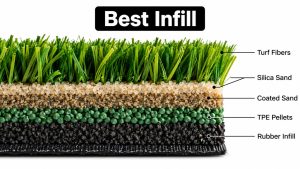
Natural grass can work on some properties, but it has weak spots. It struggles in shade, it thins under foot traffic, and once a patch opens, water starts exploiting it. That's one reason high-quality artificial turf has become a practical erosion-control option in Austin, especially on side yards, dog runs, utility corridors, and smaller slopes where homeowners want full coverage without seasonal bare spots.
Here's the comparison:
| Option | Best use | Common weakness |
|---|---|---|
| Native planting | Broad slopes, naturalized areas, low-traffic zones | Takes time to establish |
| Conventional sod | Open lawns with manageable runoff | Bare patches can return erosion quickly |
| Artificial turf | High-use areas, thin side yards, clean finished slopes | Needs proper base prep and drainage design |
A turf installation only works if the subgrade, drainage path, edging, and base compaction are right. If those steps are skipped, the surface may look finished while water keeps undermining it underneath. When done correctly, turf gives you a consistent cover layer that doesn't thin out every time the weather swings.
Homeowners comparing low-water options often find that drought-resistant lawn alternatives solve both maintenance and erosion concerns at the same time.
Field note: Plants control erosion best when roots can establish before the next major runoff event. If timing is tight, temporary surface protection matters.
For smaller DIY prep in light planting areas, a compact cultivator can help loosen the top layer before adding compost or installing plugs. If you want an example of the kind of hand-held tool people use for that sort of prep, this Value Tools Co Ryobi power tool shows the category well. It's useful for garden-scale loosening, but it won't replace proper grading or stabilization on a true erosion problem.
When to Use Hardscape for Erosion Control
You usually know this section applies to your yard when a storm leaves a fresh rut, mulch ends up at the bottom of the slope, and the soil line keeps dropping near a patio, fence, or slab. At that point, plants alone are no longer doing enough. The site needs structure that slows water, holds grade, and sends runoff where it can leave the property safely.

The point where walls enter the picture
On a mild slope, roots and surface cover can often keep soil in place. On a steep Austin lot with clay soil and fast runoff, water gains speed quickly and starts cutting into the face of the hill. That is when retaining walls and terracing become the right fix.
A wall changes the slope into shorter, more stable sections. That lowers runoff speed and gives the site a better chance to hold its grade through repeated storms. It also creates usable space, which matters on lots where the backyard is otherwise too steep to enjoy.
The wall itself is only part of the job. True performance comes from the base, the footing conditions, the gravel backfill, the filter fabric, and the drain line that relieves pressure behind the wall. Homeowners often focus on block color and shape first. I pay closer attention to what happens below grade, because that is what determines whether the wall still looks straight after a few heavy rains.
Drainage types solve different erosion problems
Different drains handle different water behavior, and choosing the wrong one is a common reason erosion work falls short.
- French drain: Useful where water is saturating the soil, collecting behind a wall, or lingering along a foundation edge.
- Channel drain: Best for intercepting surface flow that sheets across patios, pool decks, and other paved areas.
- Subsurface drain pipe: Used to carry intercepted water away from the problem area to a safe outlet.
- Catch basin: Fits low spots where runoff needs a collection point before it enters a drain line.
One drain does not solve every problem. A channel drain will not stabilize a slope that is failing from saturation below the surface. A French drain will not correct runoff crossing a patio if the hard surface was pitched the wrong way to begin with.
Hardscape needs structural planning
Erosion jobs shift from yard cleanup to construction. Steps, terraces, walls, edging, and drainage all affect one another, especially on Austin properties where clay expands, contracts, and sheds water fast during intense storms.
Homeowners who want a simple reference for below-grade support can look at products such as deck footings. The lesson is straightforward. Any load-bearing outdoor build depends on proper support under the surface, not just a clean finish on top.
Before hiring anyone for a wall or terrace, ask these questions:
- Where does the water go after it reaches the wall?
- What base material are you using, and how will it be compacted?
- How are you separating soil from the drainage stone so fines do not clog the system?
- What protects the bottom of the slope from undermining?
- How does this tie into the rest of the yard drainage?
Clear answers matter. If the proposal only talks about appearance, the contractor may be selling a visual upgrade instead of a lasting erosion fix.
On more difficult sites, the strongest results usually come from one coordinated plan that combines grading, drainage, turf or planting, and hardscape construction services in Austin rather than treating each symptom as a separate project.
Putting It All Together with the Right Project Sequence
A lot of erosion projects fail before the first rain because the steps happen in the wrong order. The most common mistake is installing finish surfaces too early. New turf goes in, then somebody decides a wall is needed. A planting bed gets rebuilt, then a drain trench cuts right through it. That's expensive rework.

The sequence that protects the finished yard
The cleanest projects usually follow a logical progression:
Assessment and layout
Confirm water paths, finished elevations, and where stabilization is needed.Earthwork and rough grading
Shape the site first. You can't design drainage around the wrong grade.Structural installation
Build retaining walls, terraces, and footing-dependent elements before surface finishes.Drainage and final grading
Install subsurface drainage, capture points, and discharge lines, then fine-tune the surface.Soil prep and final cover
Amend soil, install planting or turf, and protect all exposed ground immediately.
Why sequencing matters so much in Austin
On Austin properties, one trade can easily undermine another if the schedule is loose. Excavation can destabilize a finished lawn. A wall crew can trap runoff if nobody planned the outlet. Turf can hide a base problem for a while, but heavy rain will expose it.
Build the bones first. Finish the skin last.
This matters even more on sloped lots where access is tight. Equipment routes, spoil removal, and material staging all affect whether a finished area stays intact. That's why full-site coordination is usually more important than any single material choice.
A useful detail for aggregate stabilization
For certain applications, especially utility paths, parking pads, or erosion-prone transition zones, contractors may use geotextile, geocell, and angular aggregate together. One practical guide from Backyard Bases on landscaping erosion control techniques recommends excavating 4 to 6 inches below finished grade, maintaining at least a 1 to 2% drainage slope away from structures, overlapping geotextile seams by 6 inches, and compacting angular crushed stone in 2 to 3 passes. The same guide notes geocell panels are typically 8×4 feet and edge restraint stakes are installed every 3 to 4 feet.
That kind of build sequence matters because each layer does a specific job. The fabric separates. The cell system confines. The stone carries load and resists movement. Skip one layer, and the system usually loses reliability.
Protecting Your Investment with Proper Care
Even a well-built erosion-control system needs maintenance. Not constant repair. Just attention in the right places before a small issue opens back up.
What homeowners should check after storms
The most useful inspection happens after rain, not during a dry week. Look for change, not just damage.
- Bare spots in planted or turfed areas: Thin coverage is where runoff starts re-cutting the surface.
- Mulch movement: If mulch keeps migrating, water is moving too fast for that area.
- Clogged inlets and grates: Debris at one collection point can back water up across the whole yard.
- Wall discharge or staining: Muddy seepage can mean fines are moving where they shouldn't.
- Edge undermining: Patios, borders, and steps often show washout before the main slope does.
Small maintenance prevents bigger reconstruction
For planted slopes, keep vegetation dense. Replace struggling material before roots disappear from that patch of ground. For hardscape systems, make sure drains stay open and visible relief points aren't buried under soil or mulch. If you have artificial turf in an erosion-prone area, pay attention to edges, seams, and any low spots that suggest the base is shifting.
Many erosion issues return because homeowners treat them as surface problems. They top off rock, add mulch, or re-sod a washout. That can improve the look for a while, but it won't change how water behaves.
Most repeated erosion repairs trace back to one thing. The original water path never got corrected.
Know when a consultation saves money
Some situations are worth calling on immediately:
- A slope is getting steeper or cutting deeper after each storm
- Water is reaching the foundation or pooling near the slab
- A retaining wall is leaning, separating, or draining poorly
- New construction or recent grading left exposed soil
- You're planning turf, planting, or hardscape on a problem slope
Those are decision points where professional guidance protects both the property and the home. The right plan usually combines grading, drainage, structural support, and surface stabilization in one system. That's what keeps you from paying twice for the same yard.
If your Austin property is losing soil, staining hardscapes, or showing signs that runoff is getting ahead of your outdoor areas, Modern Yard Landscapes can help you solve the full problem, not just cover it up. Their team handles turf, retaining walls, drainage, and site-specific erosion control with the kind of planning that protects your yard long after installation day. Schedule a consultation and get a professional assessment before the next storm turns a manageable issue into a costly repair.