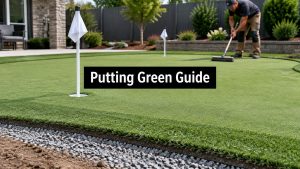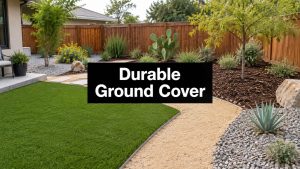

If you're in Austin, there's a good chance your lawn has already put you through the usual cycle. Spring starts with hope. Then the heat rolls in, the grass thins out, weeds show up where they weren't invited, and every stretch without rain makes the yard look tired. When the storms finally hit, water sits where it shouldn't, mud gets tracked onto the patio, and the whole thing starts feeling like a project instead of a place to enjoy.
That's why more homeowners are looking seriously at artificial turf for residential use. Not because it's trendy, but because a well-built turf yard solves problems that natural grass keeps repeating in Central Texas. You get a surface that stays green, handles traffic, and doesn't demand your weekends.
This isn't a pitch for fake perfection. Artificial turf has trade-offs, especially in Austin. Heat matters. Drainage matters even more than commonly understood. Product quality matters. Installation matters a lot. If those pieces are handled correctly, turf can be one of the smartest upgrades you make to your property. If they're handled poorly, it can turn into an expensive lesson.
Tired of the Texas Lawn Struggle
Austin homeowners usually aren't looking for a lawn because they love mowing in July. They're looking for a yard that looks finished, stays usable, and doesn't punish them every season.
Natural grass can be beautiful here when conditions line up. The problem is that conditions often don't. Long dry stretches stress the lawn. High maintenance demands pile up. Then you add kids, dogs, shade pockets, full-sun areas, uneven irrigation, and clay soil that behaves differently from one side of the yard to the other. Suddenly you're paying for water, fertilizer, mowing, weed control, and patch repair, and the result still looks inconsistent.
Turf stopped being a niche product a while ago
Artificial turf for residential properties is no longer some oddball substitute pulled from athletic fields. It's become a mainstream outdoor surface material. Grand View Research says the global artificial turf market was valued at USD 7.27 billion in 2025 and is projected to reach USD 13.67 billion by 2033, with growth tied in part to water conservation and the high maintenance cost of natural grass.
That matters because it shows how homeowners are using turf now. Front lawns. Side yards. Pet runs. Courtyards. Pool surrounds. Small spaces where grass never did well. Backyards where families want something clean and dependable instead of another maintenance cycle.
If you're weighing the trade-offs between living turf and synthetic options, this side-by-side look at artificial turf vs natural grass is a good place to compare them in practical terms.
A good residential turf project doesn't try to imitate a golf course. It tries to solve the exact problems your yard keeps giving you.
What most homeowners actually want
Many homeowners aren't asking for a miracle. They're asking for a yard that does four things well:
- Stays presentable: no bare patches by the gate, under the playscape, or along the dog path.
- Cuts routine upkeep: less mowing, less edging, less guesswork.
- Handles real use: patio traffic, pets, furniture, and kids shouldn't destroy the surface.
- Feels worth the investment: the yard should improve daily life, not just curb appeal.
That last point matters. A residential turf lawn isn't just about appearance. It's about getting your outdoor space back. A clean, green surface changes how often people use the yard. The space feels finished. It feels easier to maintain. And because it doesn't swing wildly with weather, it stays more predictable year-round.
There are still honest questions to ask before installing it. Is the site graded correctly? Will it get too hot? How will it drain near the house? What kind of turf holds up? Those are the questions that separate a durable upgrade from a shortcut. In Austin, those details aren't optional.
Why Smart Homeowners Choose a Modern Yard
For most Austin homeowners, the case for artificial turf residential projects starts with math and ends with lifestyle. The numbers get your attention. The day-to-day convenience closes the deal.

Water is the first big reason
A natural lawn can be thirsty, especially when you're trying to keep it green through Austin heat. GreenMatch notes that a single residential artificial turf installation can save around 50,000 gallons of water per year, and that a typical 800-square-foot lawn may use about 44,000 gallons annually under natural grass.
That kind of reduction changes the conversation fast. In a drought-prone region, saving water isn't just an environmental talking point. It's a practical household decision. You stop pouring resources into a surface that still may not cooperate in summer.
The real benefit is fewer recurring chores
A natural lawn always has another task coming. Mow it. Edge it. Feed it. Water it. Treat weeds. Repair thin spots. Adjust irrigation. Clean up after rain. Turf doesn't eliminate maintenance, but it changes the kind of maintenance you deal with. You move from constant growth management to occasional cleanup and grooming.
That difference matters if your weekends are already full.
Here's what homeowners usually appreciate most after the install:
- No mowing schedule: you don't have to organize life around grass growth.
- Cleaner use after weather: the yard stays more functional when conditions would usually create mud.
- More consistent appearance: shaded spots and sun-blasted spots stop fighting each other.
- Better use of small areas: side yards, dog runs, and narrow strips become useful again.
Practical rule: Turf makes the most sense when the part of your yard that's hardest to keep looking good is also the part you use the most.
It also changes how the whole outdoor space feels
When the lawn stops being the weak link, the rest of the yard starts making more sense. Hardscape looks cleaner next to it. Outdoor seating feels intentional. Lighting has more impact. If you're improving the broader backyard environment, ideas like enhance your outdoor living space can help you think through how lighting and outdoor upgrades work together instead of as separate projects.
A modern yard isn't just low maintenance. It's easier to enjoy on an ordinary Tuesday. That's the point.
Where turf usually delivers the most value
Not every square foot of every property needs synthetic grass. Some of the best residential uses are targeted:
| Area | Why turf works well |
|---|---|
| Front entry lawn | Keeps curb appeal consistent without constant upkeep |
| Backyard play area | Creates a durable, cleaner surface for regular traffic |
| Pet zone | Easier cleanup and fewer worn dirt paths |
| Courtyard or patio edge | Softens hardscape and reduces muddy transitions |
The smartest projects aren't built around hype. They're built around friction. Wherever your current yard is wasting time, water, or effort, turf can remove that friction if it's selected and installed correctly.
Decoding Turf Quality What Really Matters
A lot of homeowners shop turf the same way people shop paint colors. They look at the blade color, touch the sample, and decide what seems nicest. That's understandable, but it misses the details that determine whether the lawn still looks good after real use.
The best way to think about turf quality is like shopping for a truck. The shiny exterior matters, but what really decides long-term performance is what's under it, how it's built, and whether it fits the work you're asking it to do.

Start with the fiber, not the sales pitch
For residential lawns, polyethylene is usually the right conversation starter. It has the softness homeowners want underfoot, but it also has the resilience needed for normal backyard traffic. If you're comparing products and want a deeper primer on categories, these artificial grass types can help you understand where each option fits.
The bigger mistake is buying by feel in the showroom without asking how the product behaves after compression. The test isn't how it feels in your hand for five seconds. The test is whether the blades recover after dogs run over it, patio chairs sit on it, or kids cut the same corner every day.
Face weight tells you more than color names ever will
This is one of the most useful specs to understand. Face weight is a practical clue about how much material is built into the product. In plain terms, it works a bit like thread count in fabric or density in carpet. More isn't automatically perfect, but too little usually shows up fast in wear patterns.
That combination matters because it helps the blades stand back up instead of staying crushed and matted.
Pile height should match the use
Homeowners often assume taller blades mean premium turf. Not always. Taller turf can look plush, but if the density isn't there to support it, it can flop over and look tired. Shorter turf can be easier to groom, but it may feel less natural and show wear sooner in hard-use areas.
A simple way to think about it:
- Front yard display areas: slightly shorter profiles often keep a tidier, freshly finished look.
- Backyards and pet areas: a somewhat taller residential profile usually gives a softer feel and better visual recovery.
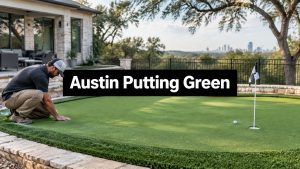
- Putting greens or specialty zones: those are their own category and shouldn't be judged by lawn standards.
Cheap turf usually gives itself away after installation, not before. It looks acceptable on day one, then starts flattening, shifting, or losing realism under normal use.
Backing and drainage matter more than homeowners expect
The backing is the structural layer that holds the fibers together and allows the whole system to perform. If the backing is weak or mismatched to the site, the lawn can look fine briefly and then start failing where it matters most. Seams separate. Drainage slows down. Surface stability gets inconsistent.
Many low-bid quotes often hide the compromise. They talk about blade appearance because that's easy to sell. They skip over the package that supports the turf.
A solid residential specification should make you ask:
- What kind of backing does this product use?
- How does water move through the turf and base?
- What infill is being used, and why this one?
- How will this hold up in pet zones, chair legs, and traffic lanes?
Infill is not just filler
Infill supports the blades, helps stabilize the turf, and influences how the surface feels underfoot. The wrong infill, or too little of it, leaves the lawn loose and flat. The right infill helps maintain shape and usability.
For homeowners, the practical lesson is simple. Don't buy turf like a rug. Buy it like a system. Product, backing, infill, and base all work together. When one component is weak, the whole lawn pays for it later.
The Real Cost of a Perfect Artificial Lawn
Price matters. It should. But the right question isn't "What's the cheapest turf I can buy?" It's "What am I paying for, and what happens if one of those steps gets skipped?"

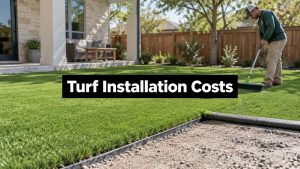
A residential turf quote is really a package made up of several decisions. Turf material is one part. Site preparation is another. Edging, access, hauling, drainage work, seaming complexity, and infill choice all affect the final number. That's why two estimates for "the same square footage" can be very different and both still be legitimate.
What usually drives the cost
The biggest cost drivers tend to be the parts homeowners don't see in the finished photo.
- Site prep and excavation: removing existing grass, correcting grade, and building a proper base can take more work than people expect.
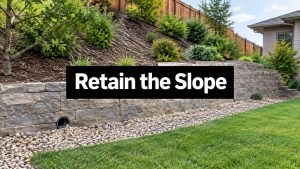
- Drainage conditions: yards with pooling, slope issues, rooftop applications, or foundation concerns often need extra planning.
- Turf quality tier: denser, more durable residential products cost more than entry-level material.
- Edges and transitions: steel edging, paver borders, steps, beds, and curved layouts require more labor and precision.
- Access to the site: a wide side gate is one thing. Tight access through a finished property is another.
If you want a closer breakdown of what goes into local pricing, this guide on the cost of artificial turf is useful because it ties the estimate back to site conditions and material choices.
Low bids usually remove something important
A cheap quote often means one of three things. The turf itself is lower quality. The prep is minimal. Or the installer is assuming the site won't need corrections that it absolutely will.
That doesn't always show up right away. It often shows up after the first strong rain, the first hot stretch, or the first season of regular foot traffic.
Here's where low-price installs often cut corners:
| Cost item | What happens when it's underbuilt |
|---|---|
| Base prep | settling, puddling, soft spots |
| Edge restraint | lifted edges, movement, trip hazards |
| Seaming work | visible lines, separation, wrinkling |
| Infill application | flattening, poor blade support, inconsistent feel |
The most expensive part is fixing a bad job
Replacement and repair work is where homeowners really feel the difference between a careful install and a rushed one. Tearing out failed turf means paying twice for disposal, labor, and disruption. That's why the better investment is usually the project that treats the base, drainage, and finishing details seriously from the start.
A fair quote should be specific. It should explain the turf product, the prep scope, how drainage is handled, what edging is included, and what the final surface is meant to do. If an estimate is vague, the risk gets pushed onto the homeowner.
Our Professional Installation Process Ensures Perfection
A residential turf lawn doesn't succeed because a roll of green material got dropped into the yard. It succeeds because the groundwork is right.
The installation sequence is what determines whether the finished lawn drains, stays stable, and keeps its shape. A lot of failed projects can be traced back to one of two shortcuts. The grade wasn't corrected, or the base wasn't built properly.

The job starts below the finished surface
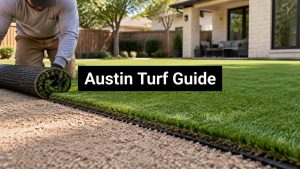
First comes demolition and excavation. Existing grass, roots, and debris come out. Then the site gets shaped with drainage in mind, not just appearance. Near the house, the surface has to move water the right direction. On side yards and low spots, even a visually small grade issue can become a functional problem later.
After that, the sub-base gets built and compacted. This is the backbone of the system. If the base is weak, the lawn may look smooth for a short time and then begin to settle, ripple, or hold water in the wrong places.
Drainage is engineered, not assumed
One technical specification for synthetic turf systems calls for turf permeability greater than 20 inches per hour, with a porous shock pad infiltration rate of not less than 12 inches per hour, along with a vertical draining gravel blanket and a layered backing system. The same specification also calls for infill around 3 lbs/sq ft of rubber plus 3 lbs/sq ft of sand for cushioning, stability, and drainage performance in this turf system specification.
For a homeowner, the takeaway is simple. Drainage performance doesn't happen because somebody says the turf is porous. It happens because the entire assembly is designed to move water and stay firm while doing it.
If an installer can't explain how water leaves your yard after a heavy rain, they haven't finished designing the project.
Then comes the craftsmanship people actually see
Once the base is ready, the turf is rolled out with grain direction in mind. That matters more than is generally understood. Turf panels installed in different directions can reflect light differently and make the lawn look patchy even when the color matches.
The cuts have to be tight around curves, posts, beds, drains, and hardscape edges. Then seams get joined carefully so they disappear into the field instead of telegraphing across the yard.
A careful installation usually includes these checkpoints:
- The edge is restrained properly. That keeps the perimeter crisp and prevents migration.
- The seams are planned before cutting. Good seam placement is a design decision, not an afterthought.
- The infill is spread evenly. Uneven application creates inconsistent footing and appearance.
- The final grooming matches the use of the space. Pet areas, play zones, and decorative lawns don't all get finished the same way.
Why DIY often struggles
DIY turf kits make the surface look simple. The difficult part isn't rolling out the material. It's grading, compaction, seam work, and drainage control. That's where tools, experience, and site judgment matter.
For homeowners comparing options, Modern Yard Landscapes is one Austin installer that handles turf installation along with drainage-related site prep, which is useful when the yard needs more than just surface replacement.
The final walkthrough should leave the homeowner with more than a green yard. It should leave them understanding where water goes, how the surface should feel, and what routine care keeps the system performing.
Optimizing Turf for the Austin Climate and Lifestyle
Austin has two turf questions that matter more than the brochure questions. How hot will it get, and what happens when the sky opens up?
Those aren't side issues here. They're the job.
Heat has to be planned for honestly
Artificial turf can get hot in direct sun. That's not a rumor, and it shouldn't be softened in a sales conversation. University of California Agriculture and Natural Resources notes that artificial turf can run more than 60°F hotter than plants and has been measured as high as 170°F, and that watering cools it only temporarily.
That means comfort planning matters just as much as product selection. If a yard gets full west sun and the family expects to use it barefoot in late afternoon in August, the design needs to reflect that reality.
A better approach includes choices like:
- Shade placement: trees, pergolas, patio cover extensions, or strategic screening can change how and when the lawn is usable.
- Use-specific layout: play space can be positioned where morning sun is more common and harsh afternoon exposure is lower.
- Appropriate turf system selection: some products and infill combinations are better suited to hot-climate residential use than others.
- Surface expectations: a decorative lawn and an all-day barefoot lounge surface are not the same project.
If heat is your main concern, this guide to heat-resistant artificial turf is worth reviewing before choosing a product.
The right question isn't whether turf gets hot. It does. The right question is whether the yard has been designed so the heat is manageable for the way your family will use it.
Austin drainage needs local thinking
The second major issue is rain. Austin yards can go from dry to overloaded fast, and many properties have clay-heavy soil, low spots, or water movement toward patios and foundations. In those conditions, "turf drains well" is too vague to be useful.
Good residential design takes site-specific precautions. Turf should sit below the weep screed, maintain positive slope away from buildings, and use added drainage measures where needed in flood-prone or complicated applications. Consumer guidance from Synthetic Grass Warehouse also highlights the need for drainage grids, catch basins, or piping in some settings to avoid water intrusion and settlement problems.
That practical mindset matters for everyday homes, not just unusual sites. If your backyard already puddles with natural grass, turf won't magically fix the grade by itself. The correction has to happen under the surface.
Matching the system to the family
The most successful turf projects are customized to how the yard is used.
| Lifestyle need | What the design should emphasize |
|---|---|
| Dogs | faster drainage, easy rinse-down access, durable traffic lanes |
| Kids | stable footing, soft transitions, shade planning |
| Entertaining | clean edges, furniture-friendly density, smooth flow to patios |
| Low-visibility side yards | function first, simpler profile, drainage reliability |
That local fit is what turns artificial turf residential work from a generic product install into a yard solution that works in Austin.
Your Investment FAQs and Next Steps
Most homeowners are comfortable with the idea of turf once they understand the product and the install. The final hesitation is usually practical. How much upkeep does it need? Will it hold up? What should I ask before hiring anyone?
The good news is that residential turf is manageable. It isn't zero-maintenance, but it's straightforward maintenance.
What routine care actually looks like
A turf lawn stays looking sharp when homeowners do a few simple things consistently:
- Remove debris: leaves, twigs, and blown-in material shouldn't be left to grind into the fibers.
- Rinse problem areas: pet zones and spill-prone areas benefit from periodic rinsing.
- Brush traffic lanes: this helps keep blades from leaning over in heavily used spots.
- Watch the edges and drains: a quick look after storms helps catch issues early.
That kind of upkeep is very different from maintaining a natural lawn. You're not trying to keep something alive. You're keeping a finished surface clean and properly groomed.
Questions worth asking any installer
Before signing a contract, ask direct questions. Good installers won't be bothered by them.
- How will you prepare the base for drainage and long-term stability?
- How will water move away from the house and low spots?
- What turf product are you recommending for my actual use case?
- What infill are you using, and why?
- How are seams, edges, and transitions handled?
- What routine maintenance will this yard need?
- What warranty applies to the material and the workmanship?
If somebody gives broad answers and no job-specific detail, keep looking.
Frequently Asked Questions About Residential Turf
| Question | Answer |
|---|---|
| Will artificial turf look fake in a front yard? | Cheap turf often does. A well-chosen residential product with the right density, pile profile, and installation detail looks much more natural than most homeowners expect. |
| Is turf safe for dogs and kids? | It can be a very practical surface for both when the system is selected for that use and installed correctly. Pet areas especially need good drainage and easy-clean design. |
| Does turf work in shaded or awkward spaces? | Yes. Those are often the places where natural grass struggles most and turf makes the biggest visual difference. |
| Will weeds grow through it? | They can appear around edges or from debris sitting on top, so occasional cleanup is still part of ownership. |
| Does it require maintenance? | Yes, but it's light compared with mowing, fertilizing, and irrigating a natural lawn. Think cleanup and grooming, not lawn care cycles. |
| How do I know if my yard is a good candidate? | The site needs to be evaluated for grade, drainage, access, and intended use. The answer depends more on those conditions than on yard size alone. |
The next step should be simple
A good consultation shouldn't feel like a pressure call. It should answer the questions that matter on your property. Where does water go now? Which areas get the harshest sun? Is the yard mainly for pets, kids, entertaining, or curb appeal? What level of finish do you want?
Those answers shape the right system. They also tell you whether turf belongs everywhere or only in the parts of the yard where it solves the most problems.
If you're ready to talk through your yard with someone who understands Austin heat, drainage, and real residential use, schedule a site visit with Modern Yard Landscapes. You'll get a practical evaluation, a clear recommendation, and a quote based on your property instead of a generic sales script.