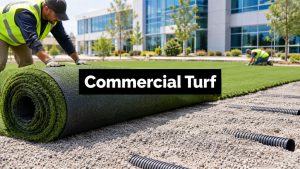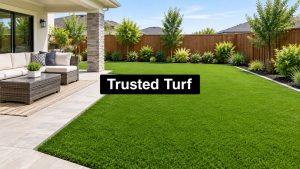

If you're managing a commercial property in Austin, you've probably dealt with the same cycle for years. The grass looks fine for a while, then summer heat hits, restrictions tighten, a freeze rolls through, or a high-traffic area gets chewed up. Then you're back on the phone with commercial lawn care companies, approving another round of fixes that never seem to end.
That cycle isn't just annoying. It's operational drag.
A lot of property managers still treat landscaping as a routine vendor line item. That's a mistake. Your exterior affects first impressions, tenant satisfaction, site usability, and how much time your team burns solving preventable problems. The right partner reduces noise. The wrong one creates it.
Beyond Mowing What to Expect From a True Commercial Partner
The baseline has changed. A crew that shows up, cuts grass, blows clippings, and leaves isn't a commercial partner. That's a commodity service.
The commercial landscaping industry is large because businesses keep outsourcing grounds work instead of handling it internally. In 2025, the U.S. commercial landscaping industry was valued at $188.8 billion, and commercial and industrial properties made up 53.72% of the market, reflecting demand for standardized service and specialized expertise according to IBISWorld's landscaping services industry data.

What a serious provider should handle
A true commercial partner manages the full site, not just the turf. That usually includes routine mowing, edging, fertilization, weed control, irrigation checks, drainage corrections, and improvements that make the property easier to maintain over time.
If your current vendor only talks about weekly service frequency, you're hearing half the story. The better question is whether they can prevent recurring grounds failures.
Look for a provider that can support work in layers:
- Routine maintenance. Mowing, edging, debris cleanup, weed control, and turf health monitoring.
- Irrigation oversight. Inspection, repair coordination, coverage adjustments, and water-use discipline.
- Turf management. Problem diagnosis for bare spots, compaction, runoff, shade stress, and overwatering.
- Drainage and grading. Surface drainage, low-spot correction, and runoff control around entries and walkways.
- Hardscape support. Retaining walls, border definition, walk paths, and site elements that improve durability and traffic flow.
Why integrated service matters
When multiple vendors handle the same property, accountability disappears fast. The mower blames irrigation. The irrigation tech blames drainage. The installer blames foot traffic. You end up managing disputes instead of managing the property.
A better model is integrated responsibility. One team should be able to look at appearance, safety, water behavior, wear patterns, and maintenance burden as part of the same system.
Practical rule: If a vendor can't explain why an area keeps failing, they probably can't fix it.
That matters even more in Austin, where heat, compacted soils, foot traffic, and water pressure all collide. Sometimes the right answer is improved natural turf management. Sometimes it isn't grass at all. If you're weighing lower-maintenance options for high-visibility or high-traffic areas, this breakdown of why synthetic turf works for commercial properties is worth reviewing before you renew another standard maintenance contract.
The standard you should hold them to
Commercial lawn care companies should help you do three things well:
- Protect appearance so your property looks consistent.
- Reduce management friction so you aren't chasing crews and approvals.
- Lower avoidable rework so the same areas don't keep generating invoices.
If a company can't connect its service plan to those outcomes, it's not acting like a partner. It's acting like a weekly expense.
Natural Grass vs Artificial Turf An Austin Business Decision
A tenant walks the entry at 8:30 a.m. and sees brown patches, muddy edges, and sprinkler runoff on the sidewalk. That first impression costs you before anyone steps inside. On Austin commercial properties, the grass decision affects operating cost, water use, safety exposure, and how much time your team spends chasing fixes.

Where natural grass keeps costing you
Natural turf creates a chain of recurring work. Mowing is only the visible part. You also pay for irrigation monitoring, fertilization, weed control, pest treatment, bare spot repair, storm cleanup, and recovery after heat or heavy use.
That is why traditional grounds maintenance stays expensive over time. The monthly contract looks manageable until you add the rework, service calls, water bills, and tenant complaints tied to weak areas that never fully recover.
For a property manager, that means natural grass is not a finished solution. It is an ongoing labor and input commitment.
Why Austin changes the math
Austin exposes every weakness in a grass system. Long heat stretches, water pressure, compacted soil, and concentrated foot traffic push natural turf into a constant cycle of decline and repair. If an area sits near an entry, monument sign, patio, or main pedestrian path, appearance drops fast and recovery is slow.
Artificial turf shifts that risk profile. You spend more upfront, then cut the variables that usually drive callbacks and visible deterioration.
| Decision factor | Natural grass | Artificial turf |
|---|---|---|
| Appearance consistency | Changes with season, stress, and traffic | Holds a consistent look year-round |
| Water dependence | Needs irrigation to stay presentable | Does not need irrigation for growth |
| Traffic tolerance | Thins out on common paths and gathering areas | Handles repeated use better when installed correctly |
| Weather disruption | Suffers during drought, heat, and freeze events | Avoids the usual turf recovery cycle |
| Cost pattern | Lower upfront cost, repeated service costs | Higher upfront cost, lower ongoing upkeep |
Natural grass still has a place. Large, lower-visibility areas with lighter use can justify conventional service. High-exposure zones are different. In those areas, you should favor the surface that protects presentation and cuts repeat maintenance.
Ask a harder question. Which option will generate fewer work orders, fewer appearance complaints, and fewer surprise costs over the next five years?
Water and hardscape issues usually show up together
Water is often the clearest reason Austin properties switch key areas to turf. Smart irrigation tools can improve natural turf efficiency, but they do not remove the need for irrigation, drainage correction, and periodic turf recovery. Artificial turf removes growth-related watering from the equation and gives you more control over presentation during restrictions and heat waves.
The surrounding surfaces matter too. If your lawn edges fail because adjoining walkways, borders, or gathering areas were built poorly, review Paving Supplies' guide to pavers and concrete. Surface materials affect runoff, wear patterns, and long-term maintenance costs more than many owners expect.
If you want a practical side-by-side review, this comparison of artificial turf vs natural grass for commercial properties breaks down where each option makes financial sense.
The business case is control
Artificial turf is not the right choice for every square foot. It is the right choice for the parts of your property that create the most management friction and the highest visibility risk.
Use it where consistency matters most:
- Entry corridors that need to look clean every day
- Tenant-facing courtyards where worn grass hurts perception
- Pet relief zones where durability and cleanup matter
- Amenity spaces that need reliable year-round use
- Problem strips, shade zones, and wear paths that never hold natural turf well
Natural grass keeps asking for more intervention. Artificial turf turns a recurring maintenance problem into a controlled capital decision. For many Austin commercial properties, that is the stronger long-term ROI move.
Decoding Your Estimate Key Cost Factors in Commercial Landscaping
A cheap estimate can cost you for years.
Property managers get burned here all the time. One vendor submits a low monthly number, another shows a higher install total, and both proposals look reasonable until the change orders, repair calls, and complaint emails start showing up. Your job is not to buy the lowest line item. Your job is to buy predictable performance and limit future problems.

What drives maintenance pricing
Routine grounds maintenance looks simple on paper. It rarely stays simple in practice.
The monthly number usually reflects property size, visit frequency, crew time, and whether the contract includes higher-effort services such as fertilization, weed control, irrigation support, seasonal color, and cleanup after weather events. If those items are missing, they do not disappear. They come back later as extra charges or visible site decline.
Recurring service makes up the bulk of what owners spend on outdoor upkeep. That is the point you need to focus on. Natural grass keeps pulling budget into mowing, inputs, water management, and corrective work. Artificial turf shifts more cost to the front end and cuts a long list of repeat service calls.
When you compare bids, break the estimate into four buckets:
- Base upkeep. Mowing, edging, blowing, debris removal
- Input-driven services. Fertilization, weed control, pest treatment
- System support. Irrigation inspections, repairs, troubleshooting
- Recovery work. Re-sodding, erosion repair, drainage correction, bed restoration
If a proposal looks cheap, check which bucket got stripped out.
What drives turf installation pricing
Artificial turf estimates should be more detailed than maintenance proposals because the work is more technical and the payoff lasts longer. A serious scope should cover square footage, turf product, base preparation, drainage, edges, crew access, disposal, and any constraints created by an occupied commercial site.
Many owners make the wrong comparison at this stage. They stack a turf install against one year of mowing and call turf expensive. That is the wrong math. You should compare turf against years of labor, irrigation repairs, brown-out recovery, re-sodding, and the management time required to keep natural grass presentable in Austin conditions.
If your project includes walkways, paver bands, or plaza connections, hard surface choices affect cost and long-term performance too. Paving Supplies' guide to pavers and concrete is worth reviewing because material selection changes drainage behavior, wear resistance, and repair exposure.
A clean estimate identifies the variables. A weak estimate leaves you holding the risk.
For commercial turf, ask whether the bid clearly addresses these issues:
- Base work. Grading and compaction determine whether the surface stays stable.
- Drainage handling. Water needs a defined path off the site.
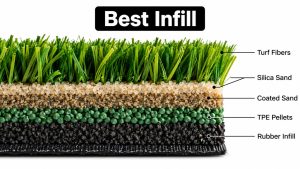
- Material specification. Fiber type, face weight, backing, and infill affect durability and appearance.
- Site access. Tight entries, tenant traffic, and limited staging increase labor.
- Transition details. Curbs, drains, concrete edges, planter beds, and existing hardscape all change the install scope.
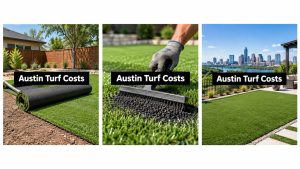
If you want a better benchmark before you request proposals, review this breakdown of what artificial turf actually costs. It will help you spot the difference between a complete scope and a number built to win the job, then grow later.
How to Choose Your Commercial Lawn Care Partner in Austin
Most vendor selection mistakes happen before the first shovel hits the ground. The wrong company often looks fine during the sales process. The problems show up later, when communication slips, change orders stack up, and nobody takes ownership.
Austin adds another layer. Many commercial property managers deal with weather swings, drought pressure, and seasonal disruption, yet few providers explain how alternative surfaces can remove those dependencies and keep a property green through drought or freezes, as discussed on Terracare's locations page.

Use this vendor checklist
You don't need a flashy presentation. You need verification.
When interviewing commercial lawn care companies, ask these questions and expect direct answers:
- Insurance first. Ask for proof of liability coverage and workers' compensation. If they hesitate, move on.
- Local project history. Request examples of commercial work in Austin, not generic photos from unknown jobs.
- Drainage competence. Ask how they handle runoff, low spots, base prep, and water movement on your specific site.
- Material clarity. For turf, ask what product they're proposing, how it's edged, and what warranty applies.
- Crew management. Find out who supervises the work and who your point of contact will be after contract signing.
- Occupied-site planning. Ask how they protect tenants, visitors, and access during installation or maintenance.
- Change-order discipline. Make them explain how unforeseen work gets documented and approved.
Watch how they communicate
A contractor's process tells you more than their pitch. Are they early? Do they take notes? Do they ask about drainage, traffic patterns, maintenance pain points, and visibility zones? Or do they measure quickly and send a generic proposal later?
Good partners diagnose before they prescribe.
If a contractor talks only about product and never about your site's operational problems, they're selling a surface, not solving a property issue.
Communication matters after the install too. Companies that invest in better operations usually present themselves more clearly online, document projects better, and answer questions with more precision. If you're curious how stronger firms sharpen their digital presence, this article on how to optimize your landscaping business online gives useful context on what a well-run outdoor services company tends to do behind the scenes.
Ask one question most buyers skip
Ask this: "What parts of my property should not stay natural grass?"
That question forces the contractor to think like an advisor. Some won't have a useful answer. Others will point out problem strips, entry islands, pet areas, worn paths, and heat-stressed sections that are draining your budget.
If you're screening turf specialists specifically, this guide on how to find the best turf contractors near me is a solid checklist to keep beside you during vendor interviews.
Contract Red Flags to Avoid Costly Mistakes
Cheap proposals are expensive when they leave out the hard parts.
A lot of property managers assume a written estimate means the scope is clear. It doesn't. Plenty of commercial lawn care companies send proposals that look professional but still leave major gaps around drainage, preparation, warranty terms, and responsibility for repairs.
Red flags that should stop the deal
Some issues are immediate disqualifiers:
- Undefined scope. If "landscaping services" is doing all the work in the proposal, the contract is too vague.
- No insurance documentation. Verbal assurance isn't protection.
- Large upfront pressure. High-pressure deposit demands usually signal cash flow problems or weak process.
- No mention of prep work. For turf or hardscape, site prep and drainage can't be optional line items hiding in the shadows.
- Unclear warranty language. If the warranty doesn't state what is covered and who stands behind it, treat it as worthless.
Low bids usually cut the wrong corners
A very low price rarely comes from efficiency alone. It usually means weaker materials, rushed labor, poor base work, or a proposal built on exclusions that become change orders later.
Read every estimate with one question in mind: what has this contractor assumed you won't notice until the project starts?
The cheapest bid often wins the signature and loses the property manager's time for months afterward.
Protect your side before signing
Do three things before you approve anything:
- Match the proposal to the site. Walk the property and verify each problem area is addressed in writing.
- Require a revision if terms are fuzzy. Good contractors clarify. Bad ones deflect.
- Look for accountability after completion. You need a clear service path if drainage fails, edges lift, or workmanship issues show up.
A contract should reduce uncertainty. If it introduces more, keep shopping.
Schedule Your On-Site Consultation with Modern Yard
If you're tired of patching the same lawn problems over and over, stop treating them like routine maintenance issues. They're property design and operations issues. The fix isn't another round of mowing, fertilizer, or seasonal repair. The fix is choosing a site strategy that matches Austin's conditions and your site's actual use.
Modern Yard helps Austin property owners and managers replace recurring lawn headaches with durable, lower-maintenance solutions built for commercial use. That includes artificial turf installation, drainage planning, retaining walls, and other site improvements that make exterior spaces easier to manage and easier to keep looking sharp.
You should expect clear scoping, transparent estimates, strong materials, and a team that understands how water movement, access, traffic, and appearance all connect on a commercial property. That's the standard.
If you want a property that looks professional year-round without the constant operational drag of natural grass, the next step is simple. Schedule an on-site consultation and get a plan built around your site, not a generic maintenance template.
If you're ready to stop cycling through the same outdoor maintenance problems, contact Modern Yard Landscapes to schedule your on-site consultation. We'll walk the property, identify the trouble spots, and give you a clear recommendation based on durability, appearance, drainage, and long-term maintenance burden.