
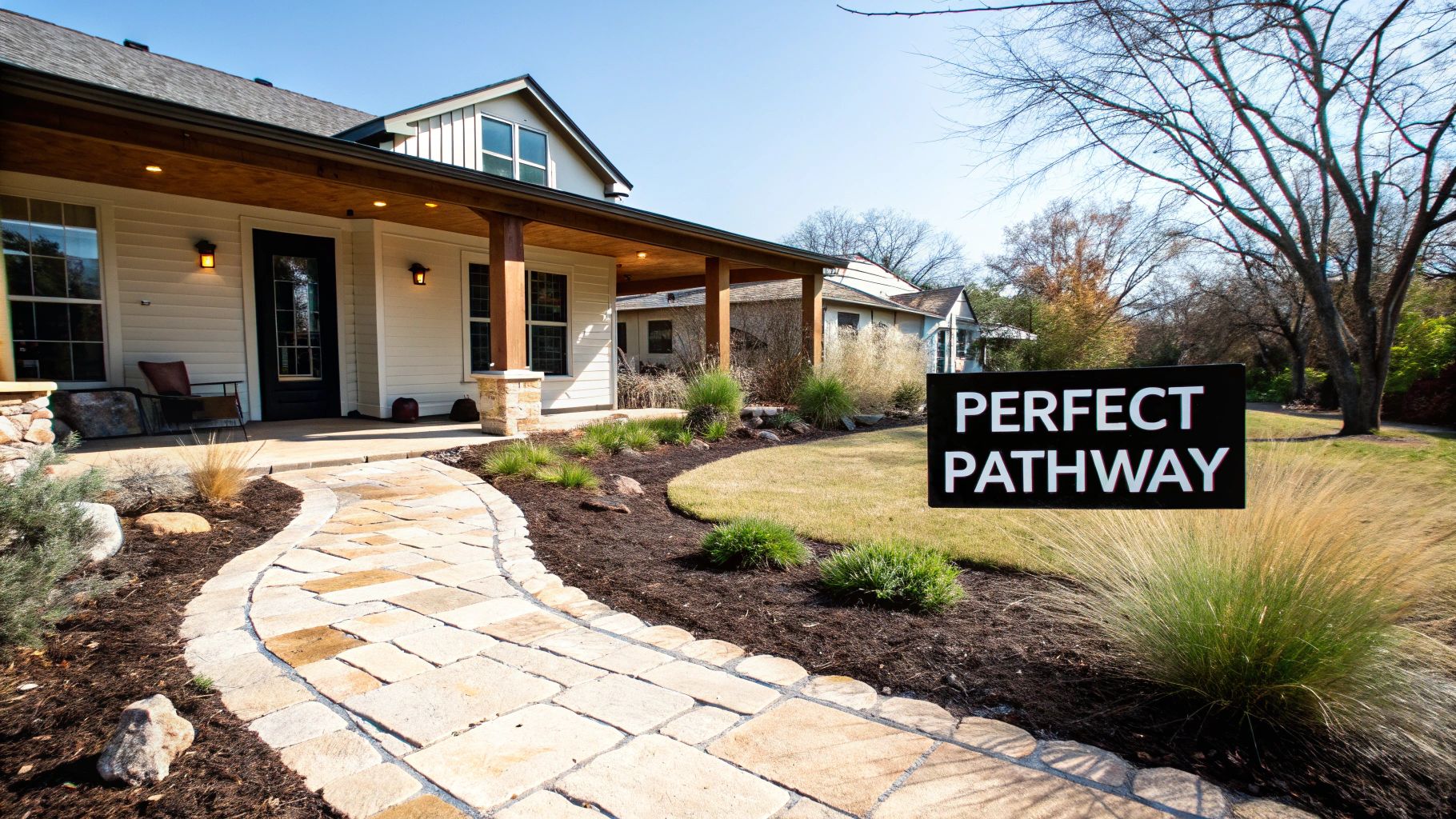
A stunning paver pathway is more than just a place to walk. It's the first welcome your home offers, and in our unique climate, it needs to be built with expertise and care. Entrusting your project to a professional for your paver pathway installation in Austin, TX is the key to creating a beautiful, lasting investment and avoiding common headaches like wobbly stones and persistent weeds. Our goal is to give you a pathway that boosts your home's appeal for decades to come.
Why Your Austin Pathway Needs an Expert Touch
We understand the challenges homeowners face in Central Texas. That heavy clay soil, the blistering summer sun… how do you build a walkway that truly lasts? These aren't just minor details; they are the core challenges we've mastered. Building a path that stands up to it all takes more than a shovel and a few pavers—it requires deep local knowledge and a commitment to quality from the ground up.
A well-built pathway doesn't just get you from point A to point B. It dramatically improves your curb appeal, makes your yard more functional, and adds real value to your property. On the flip side, we've seen how a poorly planned job can quickly become a frustrating eyesore.
A DIY or improperly managed project often leads to:
- Uneven Surfaces: Austin's notorious expansive clay soil will shift and heave, turning a weak paver base into a tripping hazard. Our process is designed specifically to counteract this.
- Weed Infestations: If pavers aren't set tightly with professional-grade jointing sand, the gaps become a perfect breeding ground for stubborn weeds. We prevent this from happening.
- Poor Drainage: Without proper grading, you'll get puddles on your path, which can cause damage and create slick, dangerous spots. We build drainage solutions into every project.
Navigating Austin's Unique Landscape Challenges
The desire for beautiful, usable outdoor spaces has exploded. Looking back at installation data in major Texas cities, Austin has seen a 40% increase in demand for paver pathways since 2020, thanks to the boom in outdoor living. In a city growing as fast as ours, well-designed paver projects are crucial for handling the hilly terrain and clay-heavy ground so common in our neighborhoods.
Our commitment is to give you the confidence to make the right call for your home. We want to guide you through the whole process, sharing insights we've picked up from years of designing and building pathways made to thrive right here in Austin. Your peace of mind is our top priority.
Your pathway is a key piece of your entire outdoor living area, often connecting to a porch or patio. For a truly unified space, check out these tips for designing a captivating patio.
When you understand the why behind our professional methods, you can feel secure in the value of a pathway built to last. Let's get started on creating the perfect path for your Austin home.
Choosing Pavers That Complement Your Austin Home
Picking out the right paver is one of the most exciting parts of planning your new walkway. But here in Austin, it’s about much more than just picking a color you like. Between the scorching Texas sun, sudden downpours, and our unique mix of architectural styles, you need a material that’s going to look great and perform beautifully for years—not just the first season.
Frankly, we've seen it happen too many times: a homeowner chooses a paver that looks great online but ends up being a real headache. Maybe it gets too hot to walk on barefoot in July, becomes a slip-n-slide after a thunderstorm, or just looks out of place next to their home.
Your walkway is a permanent addition to your property, so getting it right from the start is essential. Our experience with paver pathway installation in Austin, TX, has given us a firsthand understanding of how different materials really hold up in this climate, and we're here to share that knowledge with you.
Matching Materials to Austin's Climate and Style
From a sleek Zilker bungalow to a classic Tarrytown estate, Austin's architectural character is wonderfully diverse. The secret is finding the perfect balance between your personal taste and what genuinely works for your home and our tough environment.
Here’s a look at the top contenders we recommend and work with most often:
- Natural Stone (Limestone, Flagstone): You can't beat the real thing for timeless, authentic beauty. Local Austin limestone is a fantastic choice; it fits into the landscape and stays noticeably cooler underfoot. Flagstone, with its rustic shapes, is perfect for creating charming, meandering garden paths.
- Concrete Pavers: These are the true chameleons of the hardscaping world. They come in a staggering variety of styles, colors, and textures, giving you the look of natural stone or classic brick for a fraction of the cost. Their uniform shape creates incredibly strong, interlocking patterns that last.
- Brick Pavers: Nothing says classic, warm, and inviting like brick. It’s the go-to for adding traditional charm, and its rich color only gets better with age. Plus, brick offers fantastic slip resistance, which is a huge bonus during our rainy spells.
A tip we always give homeowners: think about how you'll actually use the path. Will kids be running on it barefoot? Is it next to a pool where safety is paramount? Answering these simple questions together will help us point you to the right material far better than any catalog.
Beyond Looks: Practical Paver Considerations
A beautiful pathway that isn't functional is just a pretty frustration. We always walk our clients through these critical factors to make sure their new walkway is as hardworking as it is good-looking.
Heat Resistance
The Texas sun is no joke. Dark, dense pavers can feel like hot coals in August. We often recommend lighter-colored materials, especially natural stone like limestone, because they reflect sunlight and stay much cooler. This is a must for pool decks or any spot where you'll be barefoot.
Slip Resistance
Austin weather can turn on a dime. A paver's texture is your best friend when it comes to preventing slips and falls. Materials with a more natural, textured finish—like most flagstone or brushed concrete pavers—provide far better grip than something with a slick, polished surface.
Durability and Maintenance
All pavers are built to be tough, but they aren't created equal. We'll help you understand the differences:
- Concrete pavers are engineered to be incredibly strong and highly resistant to cracking.
- Natural stone is a lifetime material, dense and durable. Some softer stones might benefit from a sealant to prevent staining, and we can advise if that's right for you. Get a deeper look at material pros and cons in our guide to stone paver installation in Austin, TX.
- Brick is very durable but more porous. In shady, damp areas, this can make it prone to mildew if the base isn't prepped correctly for drainage—a detail we never overlook.
Choosing the perfect paver is a balance between your home's style, your family's lifestyle, and the realities of living in Austin. It can feel like a lot to juggle, but that's why we're here. We’re not just installers; we’re your partners in making a smart, informed decision that you'll be happy with for decades.
Building a Foundation That Lasts on Texas Clay Soil
A gorgeous paver pathway can completely change the look of your property, but here in Austin, its beauty is only skin deep. The true secret to a pathway that stays flat, stable, and stunning for decades lies beneath the surface. This foundation work is where most DIY projects fail—and it's precisely where our professional expertise ensures your investment is protected.
Austin’s infamous clay soil is a major challenge for any construction project. When it’s dry, it shrinks and cracks. When it rains, it swells with incredible force. This constant movement will destroy a poorly built pathway, causing pavers to heave, sink, and separate in just a few seasons.
We’ve seen the aftermath of jobs where the foundation was an afterthought. The result is always the same: a disappointed homeowner looking at expensive repairs. That's why we don't just follow "best practices"; we follow a proven process engineered to conquer Texas clay.
The Science of a Bulletproof Paver Base
Building a stable pathway here isn't about digging a trench and dumping in some gravel. It's about creating a multi-layered system designed to insulate your beautiful pavers from the volatile soil below. We believe in transparency, so we want you to understand the science behind our method and why it provides such incredible value.
It all starts with a deep, precise excavation. A common mistake is only digging down a few inches, which is a recipe for failure. For a standard pedestrian path, we excavate a minimum of 7 to 9 inches. That depth is non-negotiable. It’s what allows us to build up a substantial base that acts as a buffer against soil movement.
We always tell our clients to think of the paver foundation like the foundation of their house. You wouldn't build a home on a flimsy slab, and the same principle applies here. This deep foundation is the single most important factor in protecting your investment for the long term.
Choosing and Compacting the Right Materials
Once we've excavated the trench, we begin building the base. This isn't the place for just any old rock or gravel. We exclusively use a specific grade of crushed limestone for its unique properties.
- Angular Structure: Unlike rounded river rock that just rolls around, crushed limestone has jagged, angular edges that lock together tightly when compacted.
- Superior Compaction: This interlocking nature creates an incredibly dense, stable base that won't shift, providing a solid platform for the pavers.
- Excellent Drainage: While it compacts tightly, the base still lets water filter through, keeping it from pooling and saturating the clay soil underneath.
Compaction is the next critical step. We use professional-grade plate compactors to methodically compact the limestone base in 2-3 inch layers. Each layer is compacted until it's rock-solid before the next one is added. This painstaking process removes all air pockets and ensures the base won't settle over time—the number one cause of sunken pavers.
The flowchart below shows how this kind of thoughtful planning—from materials to layout—is at the heart of a successful project.
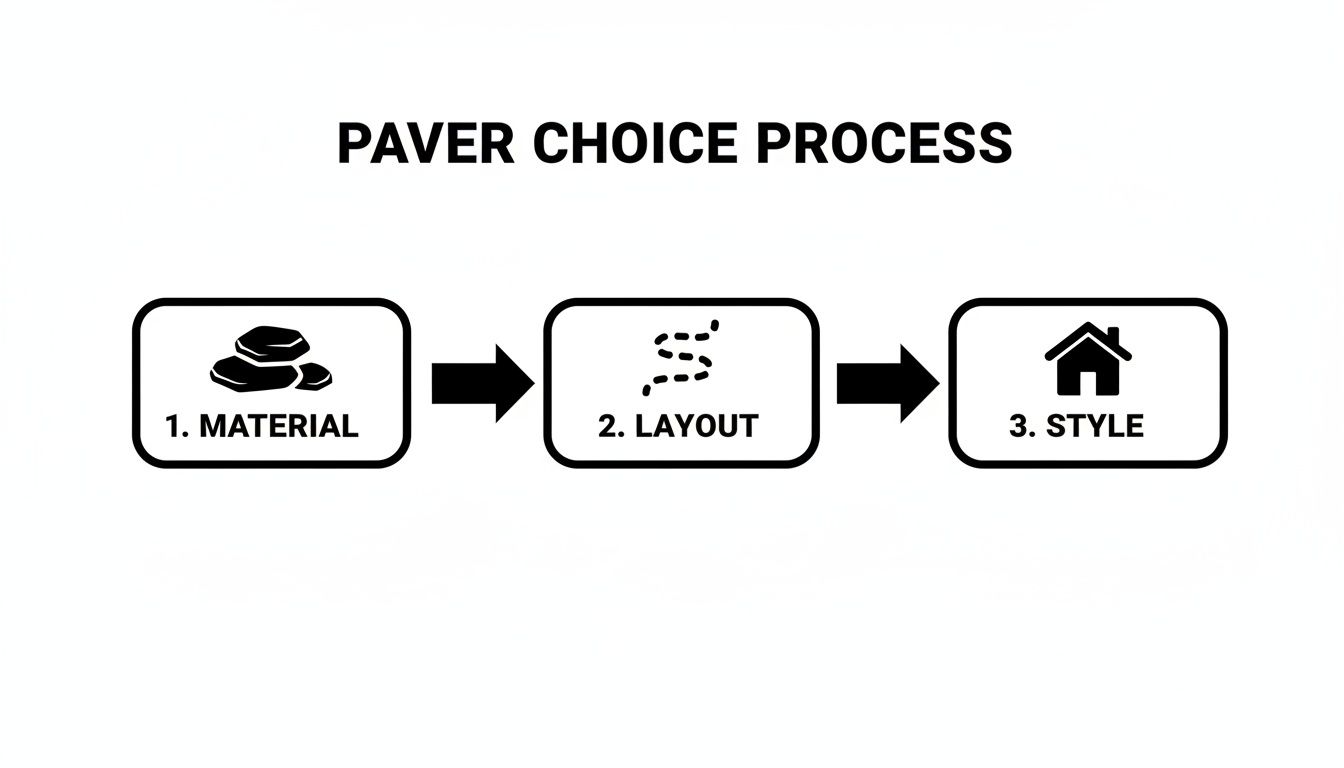
As you can see, a successful project starts long before the first paver is laid. It begins with a solid plan that you can feel confident in.
Why Drainage Is a Critical Part of the Foundation
A solid base is only half the battle. If water can't escape, it will find a way to cause problems. That’s why proper grading and drainage are built into our foundation from the very first scoop of dirt.
The entire excavated area is graded with a slight slope—usually about a quarter-inch per foot—to channel water away from your home's foundation and off the pathway surface.
For properties with existing drainage challenges, this step is even more critical. Ignoring water management can lead to erosion under your new path, foundation issues for your home, and a perpetually soggy yard. We specialize in creating robust, integrated drainage solutions that protect your entire landscape.
Given Austin's clay soil, knowing how to prevent water from sitting around is vital. You can learn more about how to improve soil drainage in your garden for a deeper dive into managing water in our unique climate.
By focusing so intently on excavation, materials, compaction, and drainage, we build a foundation that gives you total peace of mind. Your paver pathway won't just look incredible the day we finish; it will remain a stable, beautiful part of your home for a lifetime. This commitment to what's underneath is our promise of quality.
The Pro-Level Details That Guarantee a Lasting Pathway
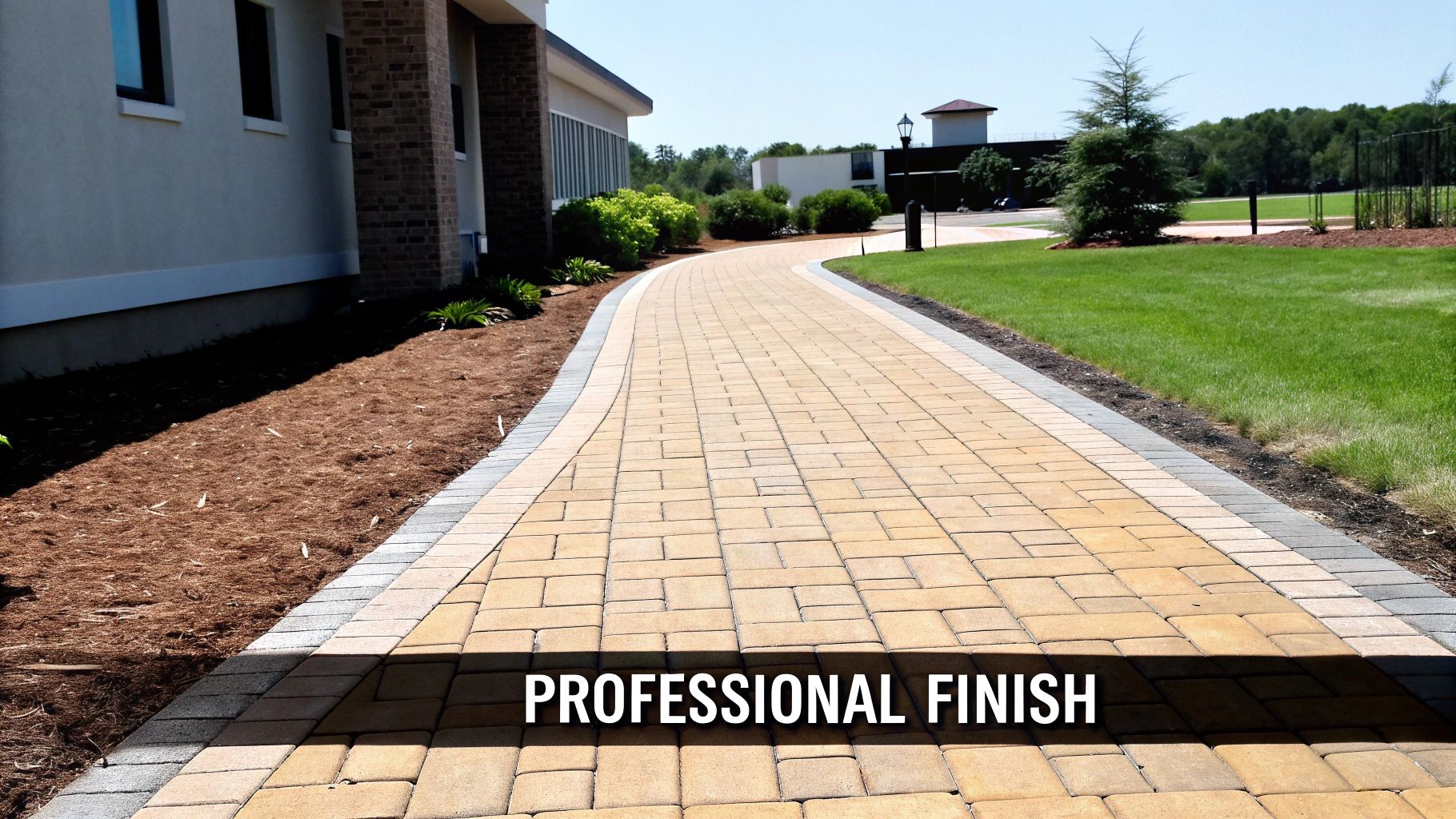
With a bulletproof foundation in place, we can finally get to the most satisfying part—laying the pavers and bringing your vision to life. This is where true craftsmanship really shines. The finishing details are what lock everything together, ensuring your walkway stays smooth, stable, and beautiful for decades.
Anyone can lay stones in a pattern. The real difference is in the subtle techniques and professional-grade materials that create a cohesive, durable surface. This is where a professional paver pathway installation in Austin, TX, demonstrates its true value and provides lasting peace of mind.
The Unsung Hero: A Perfect Sand Bedding Layer
Before a single paver touches the ground, we spread a specific type of bedding sand over the compacted base. This isn't just any sand. It’s a precisely graded material that we smooth—or "screed"—to a perfect one-inch depth.
This layer is critical. It acts as a firm yet forgiving cushion, allowing us to set each paver perfectly level and snug. It accounts for the tiny variations in paver thickness, giving you that flawlessly smooth surface with no tripping hazards. Rushing this step or getting the depth wrong leads to wobbly pavers, a mistake we never make.
Locking It All In With Edge Restraints
Ever seen a paver walkway where the stones along the edge are slowly migrating into the grass? That’s what happens when the edge restraint fails. This component is the frame of your pathway, holding all the pavers tightly in place and stopping them from shifting or spreading apart over time.
While you can find flimsy plastic edging at big-box stores, we exclusively use commercial-grade options. Your investment deserves better.
- Heavy-Duty Materials: We use rigid, durable plastic or aluminum restraints designed to handle the pressure and Austin's shifting soil.
- Serious Anchoring: These are anchored deep into the compacted base with long steel spikes, creating an immovable border that becomes a permanent part of the structure.
This hidden component is one of the most important parts of the entire system. A weak edge restraint is a fatal flaw. We install strong restraints to maintain the tight, interlocking pattern that gives a paver surface its incredible strength and longevity.
The Game Changer: Polymeric Sand
Once the pavers are set and the edges are locked down, the final step truly elevates the project. We sweep a material called polymeric sand into every single joint. This high-tech mix of fine sand and a polymer binding agent activates with water and hardens, almost like mortar.
This creates a solid yet flexible joint that offers huge benefits:
- It locks pavers together, forming a powerful bond that turns the entire pathway into a single, unified surface.
- It blocks weeds by creating an impenetrable barrier, so you're not spending your weekends pulling sprouts from between the cracks.
- It deters pests like ants that love to excavate sand from underneath your walkway, which can cause pavers to sink.
This one step elevates the project from a simple path to a low-maintenance, long-lasting hardscape. For us, it’s a non-negotiable part of a quality job you can trust. If you're curious about how these professional details come together, learn more about what it's like working with a top-tier paver contractor in Austin, TX on our main services page.
To Seal or Not to Seal?
The last question we always get is about sealing the pavers. A high-quality sealer can be a fantastic final touch, but it's not always necessary. Think of it as a protective shield that can enhance color, guard against stains, and make cleanup a whole lot easier.
Reasons you might want to seal your pathway:
- Stain Protection: It offers great resistance to drips from the grill, oil spots, and stubborn tannins from wet leaves.
- UV Protection: It helps prevent colors from fading under the intense Texas sun.
- Easier Maintenance: Sealed surfaces are a breeze to sweep or rinse clean.
The trade-off is that sealers need to be reapplied every 3-5 years. We’ll always provide a straightforward recommendation based on the specific pavers you choose and where your pathway is located, so you can make an informed decision. This commitment to getting every detail right is how we ensure your pathway is truly crafted to last.
Talking Dollars and Sense: Budgeting for Your Austin Paver Pathway
Let's talk about the investment. Understanding the real-world cost of a professionally installed paver pathway in Austin, TX, is a critical first step. We believe in being completely upfront about pricing because a clear financial picture helps you plan and appreciate the long-term value of a job done right the first time.
Think of a professionally installed pathway not as an expense, but as an investment in your property. It’s an upgrade that boosts curb appeal, adds daily functionality, and brings you years of enjoyment. When you receive a quote from us, you're not just paying for materials; you're investing in the expertise, quality, and peace of mind that prevents the heaving, cracking, and drainage nightmares that plague poorly built projects.
What Really Drives the Cost of a Paver Pathway?
The final price isn't a simple one-size-fits-all number. Several key factors come into play, and we want you to understand them so you can see exactly where your money is going.
Here are the main elements we assess for every Austin project:
- Paver Choice: Your material selection is a major part of the budget. Stylish and durable concrete pavers are often a more accessible starting point, while premium natural stone like Texas limestone will have a higher upfront cost. We'll help you find the best fit for your budget and style.
- Design Complexity: A straight path from the driveway to your front door will be more budget-friendly than a winding path with a complex herringbone pattern. Intricate designs require more cutting and labor, which is reflected in the final cost.
- Site Accessibility: This is a factor people often forget. Can we get our equipment to the work area easily? A backyard with a narrow gate or a steep slope means more manual labor, which can affect the budget. We'll assess this during our free consultation.
- Total Square Footage: A bigger project costs more overall. However, the price per square foot can sometimes come down on larger jobs because we gain efficiencies of scale.
Our professional quote bundles everything into one clear price. It covers the deep excavation our clay soil demands, the commercial-grade base materials, the skilled labor, the final cleanup, and the warranty that backs our work. It’s a complete investment in a permanent, beautiful addition to your home.
The True Cost of DIY vs. Professional Installation
It’s tempting to price out some pavers and bags of sand at a home improvement store and think you’ll save a fortune going the DIY route. But that calculation often misses the hidden costs and the sheer physical effort involved.
Let’s be honest about the real-world expenses of a DIY attempt:
- Heavy-Duty Rentals: You'll need to rent a commercial-grade plate compactor, a powerful demolition saw for cuts, and maybe even a mini-excavator. Those fees add up fast.
- Material Delivery: Tons of gravel, sand, and heavy pallets of pavers don’t magically appear. You'll be paying delivery fees for each component.
- Waste Disposal: What will you do with that massive pile of excavated clay soil? You’ll have to pay to have it hauled away.
- The Value of Your Time: A project our experienced crew can complete in a few days could easily consume several of your weekends. This is back-breaking work.
When you factor in these costs, plus the very real risk of making a mistake that requires a complete do-over in a few years, the value and security of a professional installation become incredibly clear.
DIY vs Professional Paver Installation Cost Comparison (Austin TX)
To make this even clearer, let's compare the estimated costs for a typical 150 sq. ft. paver pathway in Austin. This table breaks down what you might spend on a DIY project versus hiring our trusted team.
| Cost Factor | DIY Estimate | Professional Installation (Modern Yard Landscapes) |
|---|---|---|
| Paver Materials | $450 – $900 | Included in project total |
| Base/Sand Materials | $250 – $400 | Included in project total |
| Equipment Rental | $300 – $500 | Included in project total |
| Delivery & Disposal Fees | $200 – $350 | Included in project total |
| Your Labor Time | 25-40 Hours | N/A |
| Total Estimated DIY Cost | $1,200 – $2,150 + Time | $2,250 – $3,750 (All-Inclusive) |
As you can see, while the initial DIY number looks lower, it doesn't account for your time, the physical toll, or the potential for costly errors. Our all-inclusive price covers everything from professional-grade materials and equipment to expert labor and a warranty, giving you a perfect result without the headache.
A Glimpse at Real Austin Paver Costs
To give you an idea of the local market, recent analysis for the Austin area provides some solid benchmarks. For 2025-2026, standard concrete pavers are averaging around $15-$25 per square foot installed, while brick can run $20-$30. Another breakdown of a local 535-square-foot project showed a final cost of $8.47 per square foot, with labor and materials making up almost the entire budget. This underscores how critical expert labor is to a successful, long-lasting project. You can dig into a more detailed cost analysis on paver installation pricing in Austin from a recent guide.
Ultimately, the only way to get a firm number for your vision is to have a conversation. We can walk your property, discuss your goals, and provide a detailed, no-obligation estimate that breaks down every line item.
Ready to see what’s possible for your yard? Explore our complete paver installation services in Austin, TX and let's start planning your beautiful new pathway today.
Common Questions About Austin Paver Pathways
Every landscaping project kicks off a ton of questions, and that’s a good thing. Over our years of building pathways all over Austin, we've heard them all. We believe starting with clear, honest answers is the best way to begin any project, so we've put together some of the most common ones we get from homeowners just like you.
How Long Does a Typical Installation Take?
This is almost always the first thing people ask. For a standard residential path—say, around 150-200 square feet with easy access for our crew—we can usually complete the entire project in about 2 to 4 days.
That timeline includes everything: excavation, building our multi-layer base, carefully laying each paver, locking in the edges, and applying the final jointing sand. Of course, a complex design or a backyard with tough access might add some time, but we will always provide you with a solid, realistic schedule in your estimate. No surprises.
What Kind of Maintenance Am I Looking At?
Honestly, this is one of the best parts about a professionally installed paver pathway—it's incredibly low-maintenance. Because we use high-quality polymeric sand to lock the joints, you won't be stuck pulling weeds every weekend.
For the most part, your to-do list will be pretty short:
- A Quick Sweep: Use a broom or leaf blower to clear off leaves and dirt as needed.
- Spot Cleaning: If you spill something, a little soap and water with a quick rinse from the hose usually does the trick.
- An Annual Glance: Once a year, just take a walk down the path and make sure the sand in the joints still looks solid.
When the foundation is built right and the materials are top-notch, you get a beautiful path that practically takes care of itself.
Can I Walk on My New Pathway Immediately?
We get it—you’re excited to start using your new space! For a perfect, lasting finish, a little bit of patience goes a long way. After we sweep in the polymeric sand and lightly mist it with water, it needs about 24 hours to fully cure and harden.
We can't stress this enough: please keep everyone—people, pets, patio furniture—off the surface for that first day. After that, you’re good to go.
It's a small wait for a huge payoff. Giving that polymeric sand uninterrupted time to set is what creates the rock-solid, weed-blocking bond between pavers that makes all the difference for years to come.
Is My Yard Going to Be a Wreck During the Project?
We understand your concern. A paver installation is a construction project, and there's digging and materials involved. But we promise to treat your property like it's our own. Our team is focused on being as efficient and contained as possible, keeping the work area tidy throughout the day.
When we're done, we perform a full-scale cleanup. We haul away all our debris, leaving your yard looking immaculate. Our goal is for the only sign we were ever there to be the stunning new pathway you get to enjoy.
There’s a reason paver projects have taken off in Austin. They don't just look great; they add real function and value. In fact, local real estate experts often find that a professionally designed hardscape can bump up a home's value by as much as 15%. A pathway built correctly for Austin's unique soil and weather can easily last more than 25 years. It’s a smart upgrade, and you can read more about why pavers are a lasting investment in Austin from other local pros.
We hope this helps clear things up and gives you the confidence to move forward. Everything we do is built on experience, transparency, and a commitment to creating something you'll love.
Ready to transform your landscape with a beautiful, durable paver pathway built to last? The team at Modern Yard Landscapes is here to bring your vision to life with professionalism and care. Let’s start the conversation about your project today.